
What Is Dialectical Behavior Therapy (DBT)? A Complete Guide to DBT Skills, Emotional Regulation, and Healing
Dialectical Behavior Therapy (DBT) is a structured, skills-based form of psychotherapy developed in the early 1990s by Dr. Marsha M. Linehan. It was originally created to help individuals experiencing overwhelming emotions, suicidal thoughts, self-harm behaviors, and severe emotional instability. Over time, DBT has also shown effectiveness in helping people struggling with borderline personality disorder, eating disorders, substance use problems, chronic emotional dysregulation, treatment-resistant depression, anxiety-related conditions, and relationship difficulties.
Today, DBT is widely recognized as one of the most practical and comprehensive therapies for improving emotional regulation, distress tolerance, interpersonal functioning, and self-awareness. The primary goal of this approach is not simply symptom reduction. Instead, it focuses on helping people develop healthier coping mechanisms, strengthen emotional resilience, improve relationships, and create a more stable and meaningful life.
The Core Philosophy of DBT: Balancing Acceptance and Change
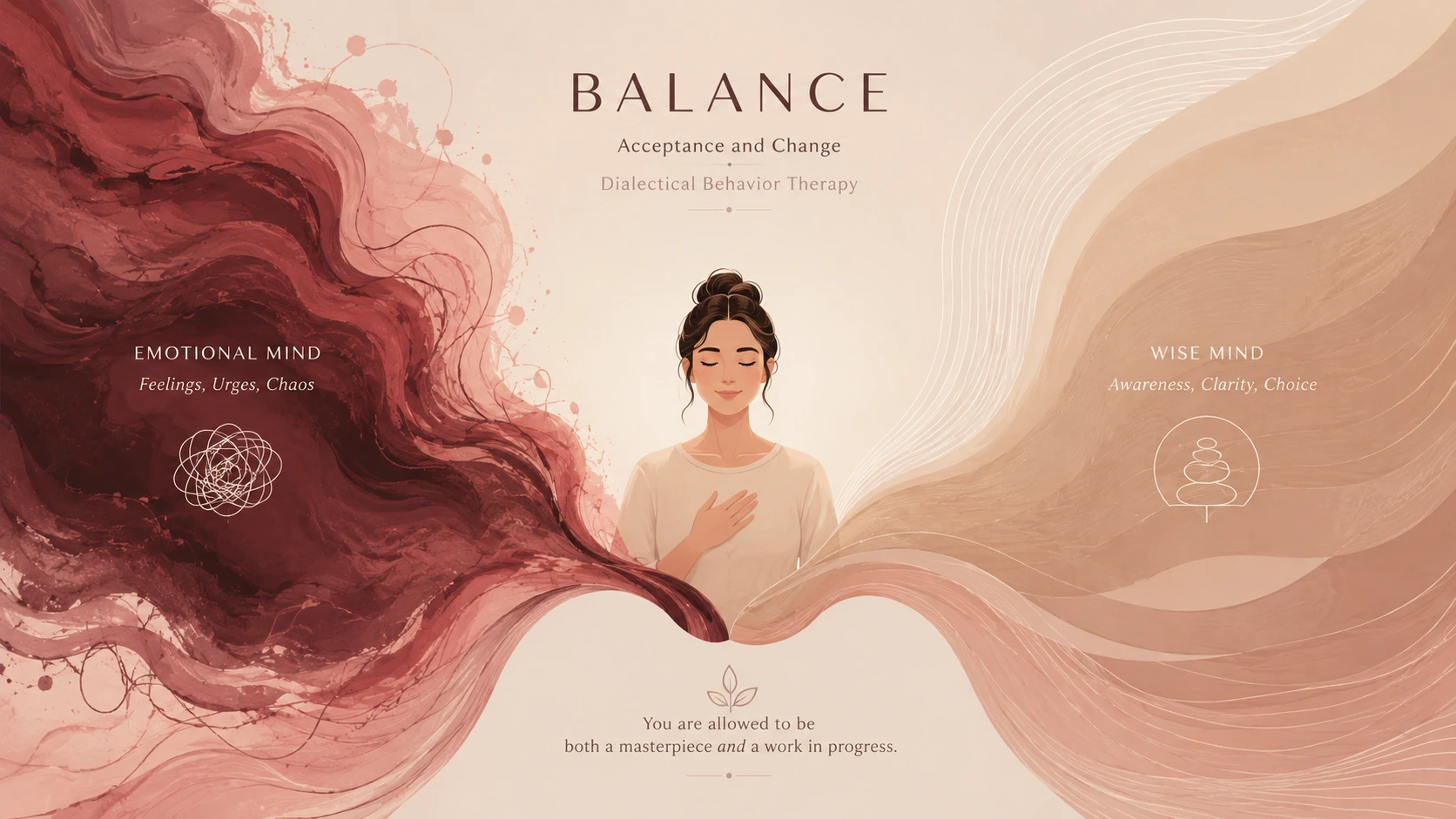
To understand DBT properly, it helps to first understand the meaning behind the word "dialectical." In simple terms, dialectics refers to the idea that two seemingly opposite things can both exist at the same time. Rather than becoming trapped in rigid extremes, DBT encourages individuals to find balance between them, a process often referred to as "Walking the Middle Path."
One of the most important dialectical balances within DBT is the balance between Acceptance and Change.
-
Acceptance involves acknowledging reality as it exists in the present moment without constantly resisting, denying, suppressing, or judging it. Acceptance includes practicing Radical Acceptance, which means fully recognizing painful emotions, situations, thoughts, or experiences as real, even when they feel uncomfortable or unfair.
-
Change involves actively working toward healthier emotional responses, better coping strategies, improved behaviors, stronger relationships, and personal growth.
DBT teaches that emotional healing becomes more effective when people learn to hold both of these perspectives simultaneously instead of viewing them as contradictory. For example, a person can fully acknowledge that they are struggling emotionally right now while still taking meaningful steps toward recovery and improvement. Similarly, someone may accept painful life experiences without allowing those experiences to permanently define their identity or future.
Understanding the Balance Between Acceptance and Change
Many people naturally become stuck on one side of this balance.
Some individuals become intensely focused on self-criticism, productivity, or constant self-improvement. Over time, this can create exhaustion, shame, perfectionism, and emotional burnout. Others may move too heavily toward resignation or passivity, eventually stopping efforts toward growth or change altogether.
This therapy attempts to create a healthier middle ground between these extremes. One of the core principles within DBT is the understanding that lasting change often begins with acceptance. Constantly fighting reality usually increases suffering, frustration, and emotional distress. Accepting reality does not mean approving of painful situations or giving up on change. Instead, it means honestly recognizing what currently exists so that healthier decisions and problem-solving become possible.
DBT also encourages people to move away from rigid "either-or" thinking patterns. Instead of believing, "I either completely accept myself or I must completely change who I am," this approach encourages a more balanced perspective: "I can accept myself as I am today while still wanting to grow, heal, and improve."
Dialectics refers to the idea that two seemingly opposite things can both exist at the same time. Rather than becoming trapped in rigid extremes, we learn to walk the Middle Path.
Vaishalya HealingMindfulness skills play an important role in maintaining this balance. Through mindfulness practices, people learn to notice when they are becoming trapped in emotional extremes, impulsive reactions, harsh self-judgment, or avoidance behaviors. This awareness helps individuals return to a more centered and balanced mental state known as Wise Mind, where emotional understanding and rational thinking work together rather than competing against each other.
This balance also applies to relationships. People are encouraged to practice acceptance toward others while still communicating boundaries, expressing emotional needs, improving communication patterns, and working toward healthier relationship dynamics. By learning to balance acceptance with meaningful change, people can reduce emotional suffering while continuing to move toward a healthier and more stable life.
Why Do Some People Struggle So Intensely with Emotions? The Biosocial Theory
DBT explains emotional dysregulation through what is known as the Biosocial Theory. According to this theory, emotional difficulties often develop through a combination of biological vulnerability and environmental experiences.
1. Biological Emotional Sensitivity
Some individuals are naturally born with heightened emotional sensitivity. Their nervous systems may react more intensely to stress, criticism, conflict, disappointment, rejection, or emotional pain. These individuals often:
- Experience emotions more intensely
- React emotionally more quickly
- Take longer to return to emotional balance
- Struggle with impulsive reactions during distress
This emotional sensitivity is not a character flaw or weakness. In many cases, it reflects differences in emotional processing and nervous system responsiveness.

DBT encourages walking the "Middle Path," balancing both acceptance and change.
2. Invalidating Environments
The second part of the Biosocial Theory involves exposure to invalidating social environments. An invalidating environment repeatedly dismisses, ignores, criticizes, minimizes, or punishes emotional experiences. Examples may include:
- Being told to "stop overreacting"
- Being mocked for emotional expression
- Having feelings constantly dismissed
- Growing up in highly unpredictable or emotionally unstable environments
- Experiencing emotional neglect or chronic criticism
Over time, individuals may stop trusting their emotional experiences or fail to learn healthy emotional regulation skills. When biological sensitivity combines with invalidating environments, emotional regulation can become significantly more difficult.
The Four Core Skill Modules of DBT
DBT is built around four major categories of skills that work together to improve emotional functioning and daily life management.
1. Mindfulness Skills
Mindfulness forms the foundation of this approach and supports all other skills taught within it. Mindfulness involves intentionally paying attention to the present moment with awareness, openness, and reduced judgment. Rather than becoming consumed by painful thoughts about the past or worries about the future, mindfulness teaches individuals how to reconnect with what is happening right now.
Mindfulness skills help people become more aware of emotional reactions, reduce impulsive behaviors, improve concentration and emotional control, strengthen self-awareness, and respond more thoughtfully during stress. A central mindfulness concept within this framework is Wise Mind.
Emotion Mind vs Reason Mind vs Wise Mind:
Emotion Mind: Decisions and behaviors are driven primarily by emotions and impulses.
Reason Mind: Relies heavily on logic, analysis, and facts while suppressing emotional experiences.
Wise Mind: The optimal balance between emotion and reason, where emotional awareness and rational thinking work together in a grounded way.
2. Distress Tolerance Skills
Painful situations are an unavoidable part of life. However, suffering often becomes worse when people attempt to escape, suppress, deny, or fight emotional pain in unhealthy ways. Distress Tolerance skills help individuals survive emotionally overwhelming situations without making things worse through impulsive or destructive coping strategies.
These skills are especially important during moments of intense emotional distress, panic, anger, urges for self-harm, substance cravings, relationship conflict, or emotional breakdowns. Within this framework, the core understanding is that emotional crises are temporary, even when they feel unbearable in the moment.
- Crisis Survival Skills: These help individuals tolerate emotional pain safely until emotional intensity naturally decreases. Examples include grounding exercises, controlled breathing techniques, temporary distraction strategies, self-soothing activities, and physical regulation methods.
- Radical Acceptance: One of the most important Distress Tolerance skills. Radical Acceptance means fully acknowledging reality as it currently exists instead of constantly mentally fighting against it. This does not mean approval; instead, it reduces the extra suffering created by thoughts like "This should not be happening."
3. Emotion Regulation Skills
Emotion Regulation skills help people better understand emotions, reduce emotional vulnerability, and respond to feelings more effectively. The goal here is not to eliminate emotions entirely. Instead, people learn to manage emotions without becoming controlled by them.
- Checking the Facts: Strong emotions are not always fully aligned with objective reality. This skill teaches people to pause and evaluate whether their emotional interpretation matches the available evidence.
- Opposite Action: When emotional urges become unhelpful or destructive, practicing Opposite Action is encouraged. For example, avoidance may strengthen anxiety, so gradual exposure becomes important. Opposite Action helps interrupt automatic emotional patterns.
4. Interpersonal Effectiveness Skills
Relationships can become extremely difficult when emotions feel overwhelming, communication patterns become reactive, or boundaries remain unclear. Interpersonal Effectiveness skills help individuals communicate more clearly, express emotional needs appropriately, set healthy boundaries, manage conflict, improve relationship stability, and protect self-respect.
Several structured communication tools are taught within this module:
- DEAR MAN: A strategy for assertively asking for needs, setting boundaries, or communicating requests clearly.
- GIVE: Skills focused on maintaining healthy and respectful relationships during communication.
- FAST: Skills designed to help individuals maintain self-respect and personal integrity during difficult interactions.

Interpersonal Effectiveness skills encourage balanced communication, setting boundaries, and maintaining self-respect.
How Is a DBT Program Structured?
A traditional program often includes multiple treatment components working together:
-
Group Skills Training This usually takes place in a structured classroom-style setting where individuals learn and practice DBT skills from all four modules.
-
Individual Therapy One-on-one sessions help people apply DBT skills to personal emotional struggles, behavioral patterns, relationships, and life circumstances.
-
Phone Coaching Some DBT programs provide access to brief between-session coaching to help individuals apply skills during real-life emotional crises.
-
Therapist Consultation Teams DBT therapists themselves often participate in professional consultation groups designed to improve treatment quality, maintain therapist motivation, and support effective care.
What People Are Asking About Dialectical Behavior Therapy (DBT)
What is the primary goal of Dialectical Behavior Therapy (DBT)?
The primary goal of DBT is not just symptom reduction, but rather helping people develop healthier coping mechanisms, build emotional resilience, and create a more stable, meaningful "life worth living."
What does the word "dialectical" mean in DBT?
Dialectics refers to the idea that two seemingly opposite things can exist at the same time. In DBT, the central dialectic is finding the balance between radically accepting yourself and your reality, while simultaneously working toward meaningful change.
What is Wise Mind?
Wise Mind is a state of mind central to this therapeutic approach that represents the optimal balance between Emotion Mind (driven by feelings) and Reason Mind (driven by logic). It is the state where emotional understanding and rational thinking work together.
What are the four core skill modules of DBT?
The four core modules are Mindfulness (staying present), Distress Tolerance (surviving crises without making them worse), Emotion Regulation (understanding and managing feelings), and Interpersonal Effectiveness (navigating relationships and boundaries).
What is Radical Acceptance?
Radical Acceptance is a Distress Tolerance skill that involves fully acknowledging reality as it currently exists without fighting it. It does not mean you approve of a painful situation, but rather that you stop resisting the reality of it, which reduces extra suffering.
Final Thoughts: DBT as a Long-Term Emotional Skill System
DBT goes beyond crisis management. It is a comprehensive emotional skill-building system designed to help people create healthier coping patterns, stronger relationships, improved emotional regulation, and greater psychological stability.
This framework recognizes that emotional suffering is complex. Healing rarely comes from extreme self-criticism, emotional suppression, or impulsive reactions. Instead, long-term improvement often develops through balance, self-awareness, emotional acceptance, consistent practice, and gradual behavioral change.
Through mindfulness, emotional regulation, distress tolerance, and interpersonal effectiveness skills, practical tools are provided that can help individuals navigate emotional pain more safely and effectively while continuing to move toward growth, stability, and emotional well-being.

Struggling with loneliness, relationships, or grief?
A real conversation can change everything.
At Vaishalya Healing, we offer compassionate, human-centred therapy that no algorithm can replicate. Whether you are navigating the complexities of modern relationships, healing from loss, or simply feeling disconnected and we are here for you.
Book Now Explore Our ServicesVisit the Clinic
Vaishalya Healing
Consultation available in-person & online
Read More
Explore more articles on mental wellness, modern relationships, and healing at:
Counseling
Help Center
Contact Us
Office Timings: Monday to Saturday, 10:00 AM to 5:00 PM
Address: Mohal Gugga Saloh
Tehsil Palampur, Distt. Kangra
Himachal Pradesh - 176102
Email: help@vaishalyahealing.com
Phone/WhatsApp: +91 7018148449