

Understanding Depression: It's Not Just Sadness — A Complete Guide
When most people think of depression, they picture a state of profound sadness or a temporary case of the blues. But this is a dangerous oversimplification. The true opposite of depression is not happiness. It is vitality — the ability to experience a full range of spontaneous human emotions. Understanding depression properly, what it actually does to a person, and what recovery genuinely looks like, may be the most important thing someone struggling silently, or someone who loves them, reads this year.
Understanding Depression: What It Really Is
Depression is a grave, whole-person condition that affects the mind, body, emotions, and spirit simultaneously. It is not weakness, laziness, or a temporary mood. It is a deeply human condition shaped by emotional pain, stress, fear, trauma, thought patterns, nervous system exhaustion, and disconnection from self.
We confuse depression, sadness, and grief so often that people who are suffering genuinely believe they should simply be able to snap out of it. The depressed mind often loses its emotional reference point for what feeling normal even means. Expecting someone to push through that alone ignores the reality of what depression actually does to a person internally.
If we want to genuinely understand depression and recovery, we have to move beyond myths and look at the complex relationship between anxiety, trauma, cognitive distortions, emotional suppression, and self-sabotaging patterns that keep people emotionally trapped. None of that happens by willpower alone, and none of it is a reflection of personal failure.
Depression is recognized as a medical condition by the World Health Organization, the American Psychiatric Association, and India's Mental Healthcare Act 2017. Seeking professional support for depression is a right protected under Indian law, and it is also one of the most effective decisions a person can make for their own wellbeing.
Understanding Depression in India: The Scale of the Problem
Depression is not a condition confined to a particular kind of person or a particular city. In India, it is a widespread reality that most families are quietly touching in some way, whether they name it or not.
India carries one of the largest shares of the global depression burden, yet the treatment gap remains enormous. Stigma, limited awareness, and a tendency to frame emotional suffering as a personal failing all contribute to the fact that most people who need help do not reach out for it. Many spend years functioning under the weight of depression without ever naming what they are carrying.
What makes this particularly serious is that untreated depression tends to deepen over time. The emotional coping patterns that develop in the absence of proper support often make recovery harder the longer they go unaddressed. Understanding depression early, recognizing it in yourself or someone close to you, and knowing that effective help exists are genuinely life-changing things.
Depression is the leading cause of disability worldwide. In India, the situation is made more difficult by the silence around it. Most people who are suffering are suffering alone.
World Health Organization, Global Mental Health Report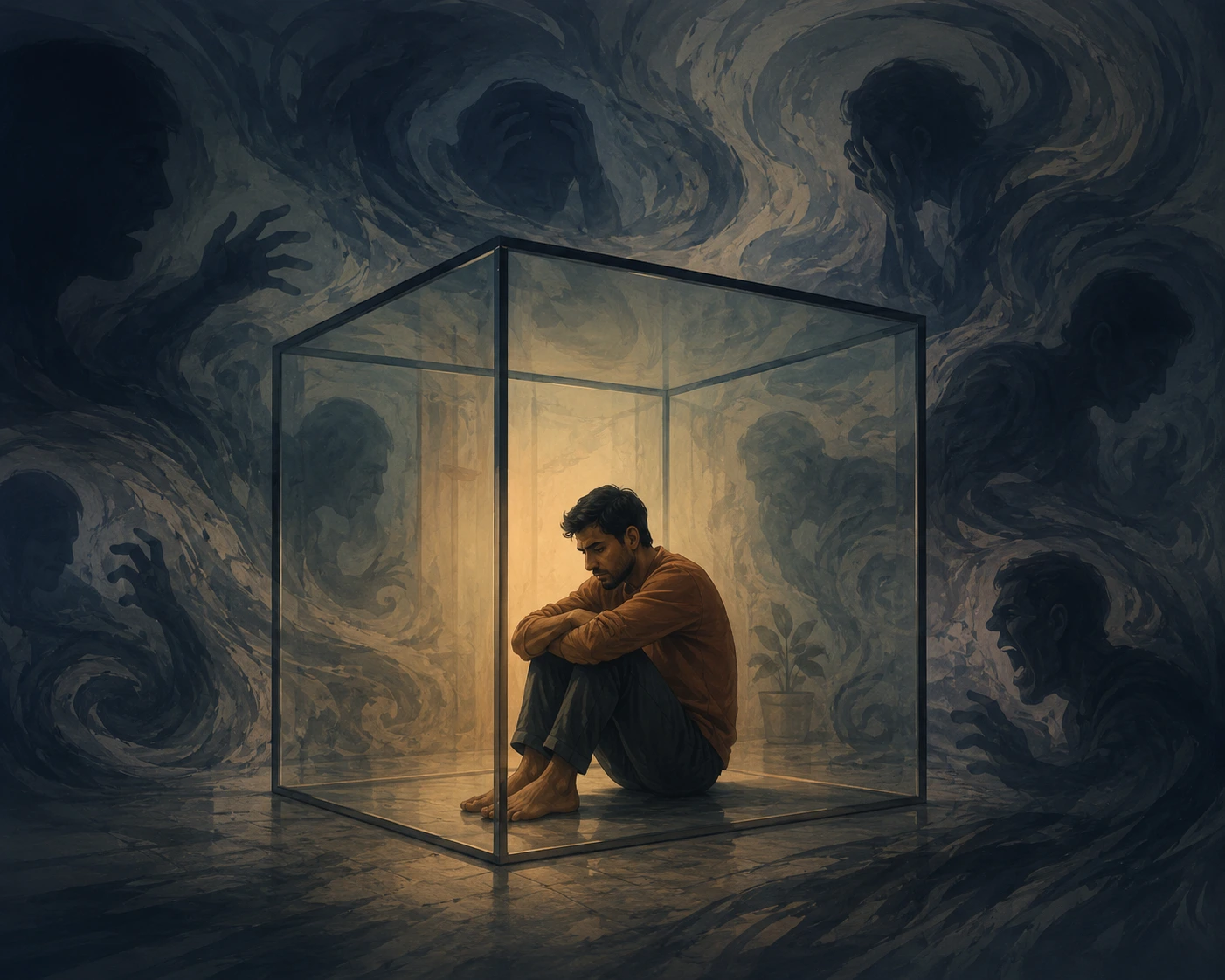
Depression in India is often carried silently for years. Recognising it early makes a significant difference to how long recovery takes.
The Emotional Patterns of Depression: What Is Actually Happening
It is a significant misconception that people with depression are simply lazy or unmotivated. In reality, many individuals with depression are exhausted from the constant effort of surviving emotionally while trying to appear functional to the world around them.
Over time, people can unknowingly develop emotional coping patterns that temporarily reduce pain but ultimately deepen the condition. These patterns are not character flaws. They are survival responses that made sense at some point but have become traps.
Emotional Numbness and Withdrawal
When emotional pain becomes overwhelming, the mind can begin shutting feelings down to protect itself. This numbness feels like relief at first but creates a growing sense of disconnection from life, from relationships, and from oneself.
False Appearances of Normalcy
Many people construct a convincing appearance of being fine, attending work, socializing on the surface, meeting expectations, while privately feeling alienated and emotionally empty. This double life is exhausting in ways that are hard to explain to others.
Procrastination and Lethargy
When the brain is under chronic emotional stress, motivation and executive function are genuinely affected. Procrastination in depression is not laziness. It is often a sign of a nervous system under sustained pressure, where even ordinary tasks feel disproportionately heavy.
Depression also has a very real physical impact on the brain and nervous system. Long periods of emotional stress and chronic depression can reduce emotional resilience, affect motivation, and make it harder for the brain to experience pleasure naturally. The constant presence of stress hormones interferes with emotional regulation, concentration, sleep, memory, and overall mental clarity. This is not a metaphor. It is measurable and it is also reversible with the right support.
Understanding Depression Through Anxiety, Stress, and Trauma
To truly understand depression, we have to also understand anxiety and chronic stress, because they are almost never separate. Anxiety and depression are deeply interconnected. Often, anxiety begins as the body's attempt to survive overwhelming emotional pressure, and depression develops later as that sustained effort leads to exhaustion.
Many emotional responses are shaped by past experiences, sometimes by experiences we have never consciously processed or named. Difficult childhood environments, emotional neglect, criticism, rejection, traumatic experiences, or prolonged stress can leave the nervous system in a state of constant alertness. Even ordinary situations can begin triggering intense fear or emotional discomfort because the nervous system has learned to anticipate danger.
The anxiety loop: When the nervous system becomes stuck in survival mode, the body and mind can fall into a recognizable cycle. A physical sensation, a racing heart, dizziness, tightness in the chest, or breathlessness, triggers fear. The fear increases attention toward the sensation, which intensifies the discomfort further. Over time, the nervous system becomes overwhelmed and emotionally exhausted. This is where many people find themselves when depression takes hold.
Beneath chronic anxiety, there is often hidden self-criticism and deep feelings of unworthiness. A person may unconsciously expect rejection, failure, or embarrassment because internally they no longer feel emotionally safe or good enough. This is one of the most painful parts of understanding depression: it is frequently not about the present situation at all. It is about what the nervous system has learned to expect.
Understanding Depression: A Mind at War with Itself
Depression changes the way people interpret themselves, others, and the future. The depressed mind often views itself as defective, reads the world as hostile or demanding, and expects the future to bring continued disappointment or failure. These are not dramatic exaggerations. They are the quiet, automatic conclusions the mind arrives at when it is under this kind of sustained distress.
Negative thinking patterns become automatic. A person may overgeneralize one failure into a sense of lifelong failure, catastrophize small problems into disasters, or see life entirely in extremes: success versus failure, worthy versus worthless, lovable versus unlovable. What makes this particularly difficult is that these patterns stop feeling like thoughts over time. They begin feeling like facts.
Many people also carry a harsh inner critic, an internal voice that constantly judges, blames, or attacks them. Philosophical and mindfulness-based traditions often describe these restrictive thought patterns as mental constructions built from fear, comparison, and emotional conditioning. Constantly measuring our struggles against other people's appearances creates anxiety, insecurity, shame, and emotional exhaustion. When we stop measuring our worth against everyone else's, emotional heaviness often begins to soften. That is not a small shift. It can be the beginning of a significant one.
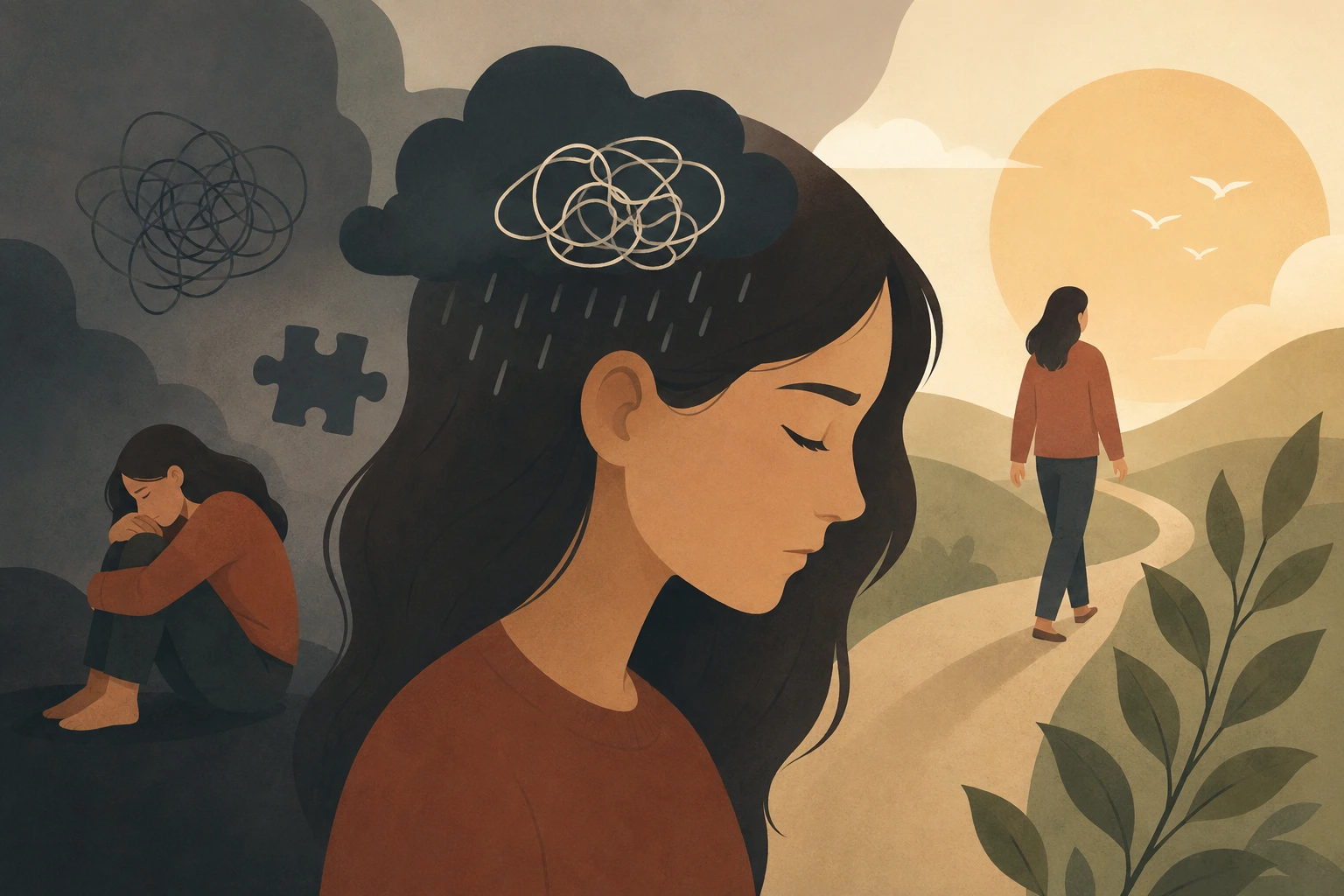
The inner critic in depression stops feeling like a thought and starts feeling like the truth. Recognising this pattern is one of the first steps toward changing it.
Warning Signs of Depression You Might Be Missing
Depression can be well-hidden, including from the person experiencing it. Many people describe realizing in retrospect that they had been depressed for years before they recognized it. These are the signs worth knowing.
-
Persistent emotional flatness or numbnessThis is not always about feeling deeply sad. Depression often presents as a kind of grey nothing, where things that used to bring pleasure, connection, or meaning no longer do. The absence of feeling can be just as significant as the presence of distress.
-
Exhaustion that sleep does not fixDepression-related fatigue is not ordinary tiredness. It is a heaviness that persists regardless of how much rest a person gets. Even getting up, making decisions, or carrying out simple tasks can feel disproportionately difficult.
-
Withdrawal from people and things that used to matterSlowly stepping back from relationships, hobbies, responsibilities, and social situations. Not because of a specific event but because engaging feels like more than the person can manage. Isolation tends to deepen depression rather than ease it, but it still feels like the only option.
-
Persistent negative self-talk and low self-worthA running internal commentary that is consistently critical, dismissive, or punishing. Feeling fundamentally flawed, not good enough, or like a burden to others, even when there is no evidence for it and even when others clearly feel differently.
-
Physical symptoms without a clear medical causeDepression is not only in the mind. Headaches, digestive difficulties, changes in appetite, unexplained physical pain, and sleep disruption are all well-documented physical manifestations of depression. Many people seek help for these symptoms first, without connecting them to their emotional state.
-
Difficulty concentrating or making decisionsA fogginess that affects memory, focus, and the ability to think clearly. Tasks that were once straightforward begin to feel overwhelming. This cognitive impact of depression is real and measurable, not a sign of intellectual decline.
If you recognize these signs in yourself or someone you care about, it is worth taking them seriously. Depression that goes unaddressed does not typically resolve on its own over time. It tends to deepen. Reaching out to a mental health professional is not a dramatic step. It is a reasonable and often necessary one.
Understanding Depression and the Illusion of Safety Through Avoidance
To escape emotional pain, many people begin avoiding situations that trigger discomfort. This may include avoiding conversations, responsibilities, relationships, public places, social interactions, work pressure, or anything that feels emotionally challenging. It makes complete sense as a response. The problem is that it makes things worse.
Although avoidance creates temporary relief, it slowly shrinks a person's world. Fear grows stronger every time we move away from it. What initially feels like safety gradually becomes a kind of emotional imprisonment where fewer and fewer situations feel manageable, and the walls keep closing in.
People also commonly fall into the belief that peace will finally arrive after reaching a certain milestone: financial security, a relationship, recognition, achievement, or approval from a particular person. But emotional suffering does not automatically lift once external circumstances change. Many people reach goals they believed would save them and find that the heaviness is still there. Emotional healing requires inner work. It requires addressing what is happening inside, not just rearranging the outside.
Understanding Depression Recovery: What the Process Actually Looks Like
Recovery is possible. This is not reassurance for the sake of it. It is a clinical and lived reality for enormous numbers of people who have come through depression with the right support. What recovery requires is honesty about what the process involves.
Changing Your Relationship with Anxiety
Healing often begins when we stop treating anxiety like a dangerous enemy to be defeated. Instead of constantly fighting fear, recovery frequently involves learning how to tolerate discomfort without panic. This includes reducing catastrophic thinking, allowing uncomfortable emotions instead of resisting them, grounding attention in the present moment, continuing daily activities despite anxious feelings, and learning that discomfort does not always mean danger. As the nervous system slowly learns safety again, fear gradually loses its intensity. That process is gradual but it is real.
Mindfulness and Present Moment Awareness
Mindfulness helps people observe thoughts and emotions without immediately becoming consumed by them. Instead of automatically reacting to fear, shame, or self-criticism, mindfulness creates space for awareness and regulation. Simple practices such as deep breathing, meditation, journaling, quiet reflection, body awareness, and time in nature all contribute to this. Mindfulness-based approaches also encourage letting go of excessive control over things we cannot change. Constantly reliving the past or catastrophizing the future keeps the nervous system trapped. Learning to be fully present, even briefly, can bring genuine clarity and calm.
Rebuilding Life Through Consistent Action
Insight alone rarely cures depression. Recovery requires action, even when motivation feels entirely absent. Physical movement genuinely supports emotional healing by improving mood, reducing stress hormones, increasing energy, and helping regulate brain chemistry. Motivation often follows action rather than the other way around, so breaking overwhelming tasks into smaller manageable steps helps rebuild confidence gradually. And connection matters enormously. Depression grows stronger in isolation. Honest conversations, emotional support, therapy, and meaningful relationships play a powerful role in healing that cannot be replicated by solitude alone.
Gratitude and Emotional Awareness: Training the mind to notice small moments of peace, connection, comfort, beauty, or kindness can slowly shift emotional attention away from constant negativity. This is not toxic positivity. It is a genuine practice of redirecting attention, and it becomes more natural over time. Even ordinary moments can become emotionally meaningful again when we begin paying attention to them.
Professional Support: Cognitive Behavioural Therapy (CBT), individual counseling, and family therapy are all evidence-supported approaches for depression. In India, both government and private mental health services are accessible, and the national helpline 1800-599-0019 can connect you to the right support wherever you are.
Common Questions About Understanding Depression
Sadness is a natural emotional response to a difficult situation. It tends to be connected to a specific event and eases over time as circumstances change. Depression is different in important ways. It persists regardless of what is happening externally, affects energy, concentration, sleep, appetite, and the ability to feel pleasure, and often involves a persistent sense of worthlessness or hopelessness that is not tied to anything specific. The true opposite of depression is not happiness. It is vitality, the capacity to experience a full range of emotions spontaneously. If low mood has lasted more than two weeks and is affecting daily functioning, it is worth speaking with a professional.
Mild depression can sometimes improve with time and changes in lifestyle, relationships, or circumstances. However, moderate to severe depression very rarely resolves fully without some form of professional support. More commonly, untreated depression deepens as the emotional coping patterns that develop around it become more entrenched. Early support, whether through counseling, therapy, medication if clinically indicated, or a combination, significantly improves outcomes and reduces the time a person spends suffering. Waiting and hoping for it to pass is understandable but often not the most effective approach.
No. This is one of the most harmful myths about depression, and it causes real damage. Depression is a medical condition with documented neurological, psychological, and physiological dimensions. It is shaped by genetics, early experiences, chronic stress, trauma, and brain chemistry, none of which are choices or reflections of personal strength. Many people with depression are in fact working incredibly hard just to function day to day. Recognizing and seeking help for depression takes considerable courage, not weakness.
Anxiety and depression are deeply interconnected and very often appear together. Anxiety often begins as the nervous system's response to overwhelming emotional pressure. When that pressure is sustained long enough without relief or support, the system exhausts itself and depression develops. Both conditions share common roots in trauma, chronic stress, and negative thought patterns, and they often respond to similar treatment approaches including CBT, mindfulness-based therapy, and in some cases medication. Addressing one without the other is rarely fully effective.
The most important thing is to approach them with genuine care rather than judgment or urgency. Let them know you have noticed and that you are concerned, without framing it as a problem they need to fix immediately. Avoid minimizing what they are going through with phrases like "just think positive" or "others have it worse." Practical support, sitting with them, helping with daily tasks, and staying connected rather than waiting for them to reach out, matters a great deal. Encouraging professional support gently and repeatedly, without pressure, is also valuable. And looking after your own wellbeing through this is equally legitimate.
Yes, depression is highly treatable. The most effective approaches combine psychological therapy with lifestyle support and, in some cases, medication prescribed by a psychiatrist. Cognitive Behavioural Therapy is one of the most well-researched treatments for depression and focuses on identifying and changing the thought patterns that sustain it. Individual counseling, mindfulness-based approaches, and family therapy can all play important roles depending on the person's situation. Recovery is rarely a straight line and relapse is a recognized part of the process for many people, not a sign of failure. Consistent support over time produces the most durable outcomes.
Yes. Government hospitals across India have psychiatry departments that provide mental health services at subsidized or no cost. NIMHANS in Bangalore and IHBAS in Delhi are major national centres. The national mental health helpline 1800-599-0019 is free, available 24 hours, and can connect you to services in your region. iCall, run by the Tata Institute of Social Sciences, offers affordable counseling on a sliding scale. Many private counselors also offer reduced fees for those who need it. The first step is almost always the hardest, but the services exist.
Mental Health Helplines and Emergency Contacts in India
Toll-free, 24 hours, available in multiple languages. Ministry of Health and Family Welfare.
24-hour mental health and crisis support helpline across India.
National Institute of Mental Health and Neurosciences, Bangalore.
Affordable psychosocial counseling. Monday to Saturday, 8 am to 10 pm.
24-hour emotional support helpline. Available for crisis and distress situations.
For immediate medical emergencies. Available 24 hours across India.
Understanding Depression Is the Beginning of Something
Depression is not weakness, laziness, or failure. It is a deeply human condition shaped by emotional pain, stress, fear, trauma, thought patterns, nervous system exhaustion, and disconnection from self. And it responds to care.
Healing is not instant, and it rarely moves in a straight line. But recovery is genuinely possible. By facing buried emotions, challenging destructive thinking patterns, reducing avoidance, rebuilding healthy habits, practicing mindfulness, and reconnecting with life gradually, people do regain emotional vitality and resilience. It happens. Not in spite of the pain they have been through, but sometimes because of what it taught them.
Pain may leave cracks within us. But those cracks are not evidence of being broken. In many ways, they become the places where growth, wisdom, compassion, and healing begin. If something in this article has felt familiar, please do not wait to speak with someone. Help exists, it works, and you do not have to continue carrying this alone.

You do not have to navigate depression alone.
We are here to help.
At Vaishalya Healing in Palampur, Himachal Pradesh, we offer counseling support for individuals and families navigating depression, anxiety, trauma, and emotional wellbeing. Available in person and online across India.
Book a Free Consultation Explore Our ServicesVisit the Clinic
Vaishalya Healing, Palampur
Himachal Pradesh, India
In-person and online sessions available
Get in Touch
For depression counseling, anxiety support, or a free initial call:
Related Reading
More articles on mental health, emotional wellbeing, and recovery in the Indian context:
Online Counseling India
Qualified counseling support accessible from anywhere in India, including rural Himachal Pradesh.
Counseling
Help Center
Contact Us
Office Timings: Monday to Saturday, 10:00 AM to 5:00 PM
Address: Mohal Gugga Saloh
Tehsil Palampur, Distt. Kangra
Himachal Pradesh - 176102
Email: help@vaishalyahealing.com
Phone/WhatsApp: +91 7018148449