

The Role of AI in Psychology: The Good, The Bad, and The Digital Mind
Artificial intelligence is rapidly reshaping almost every corner of modern life, and psychology is no exception. Whether it is a chatbot guiding someone through a 3 a.m. anxiety spiral or a deep learning model spotting patterns in human behavior that no researcher could find alone, AI is changing how we understand, treat, and teach about the mind. This is not a distant future conversation. It is happening right now, in clinics, classrooms, and research labs. So what is the role of AI in psychology, really? Let us look honestly at both sides.
What Is AI, and Why Does Psychology Care?
AI broadly refers to computer systems that can perform tasks we typically associate with human thinking, things like learning from data, recognising patterns, processing language, and problem-solving. The term has been around since the 1950s, but it is the internet, massive computing power, and neural networks that have brought AI from science fiction into everyday life.
Because AI mimics specific neurocognitive processes like language and visual analysis, rather than possessing genuine human intelligence in any full sense, some researchers prefer the term "intelligence analogue." Whatever we call it, generative AI, machine learning, natural language processing, and deep learning tools are now actively woven into how psychology is researched, practiced, and taught.
And that matters enormously, because psychology is fundamentally about human experience. Bringing a technology that simulates cognition into a discipline devoted to understanding cognition creates fascinating possibilities and genuinely serious risks at the same time.
The Good: How the Role of AI in Psychology Is Driving Real Progress
When used thoughtfully, AI opens up possibilities in psychological science and clinical care that simply did not exist a generation ago. Here is where the progress is genuinely exciting.
1. Unlocking New Frontiers in Psychological Research
One of the most significant contributions of AI to psychology is its ability to process and analyse vast datasets with speed no human researcher could match. Historically, psychology relied on small-scale lab studies and self-report questionnaires. Today, machine learning algorithms can monitor and analyse real-world data streams including smartphone usage patterns, GPS movements, social media activity, and even spending behaviour. This lets researchers observe actual human behaviour as it unfolds in daily life, not just in controlled settings.
Deep learning models can scan this enormous volume of data for patterns, draw connections across variables that would never be obvious to the human eye, and even generate novel research hypotheses. Several major universities have already built specialised labs dedicated to this kind of work. Beyond hypothesis generation, AI also saves researchers enormous time by automating repetitive tasks like transcribing interviews, running speech analytics, and coding qualitative data.
AI is helping researchers and clinicians understand human behaviour in ways that were previously out of reach.
2. Making Therapy More Accessible and Affordable
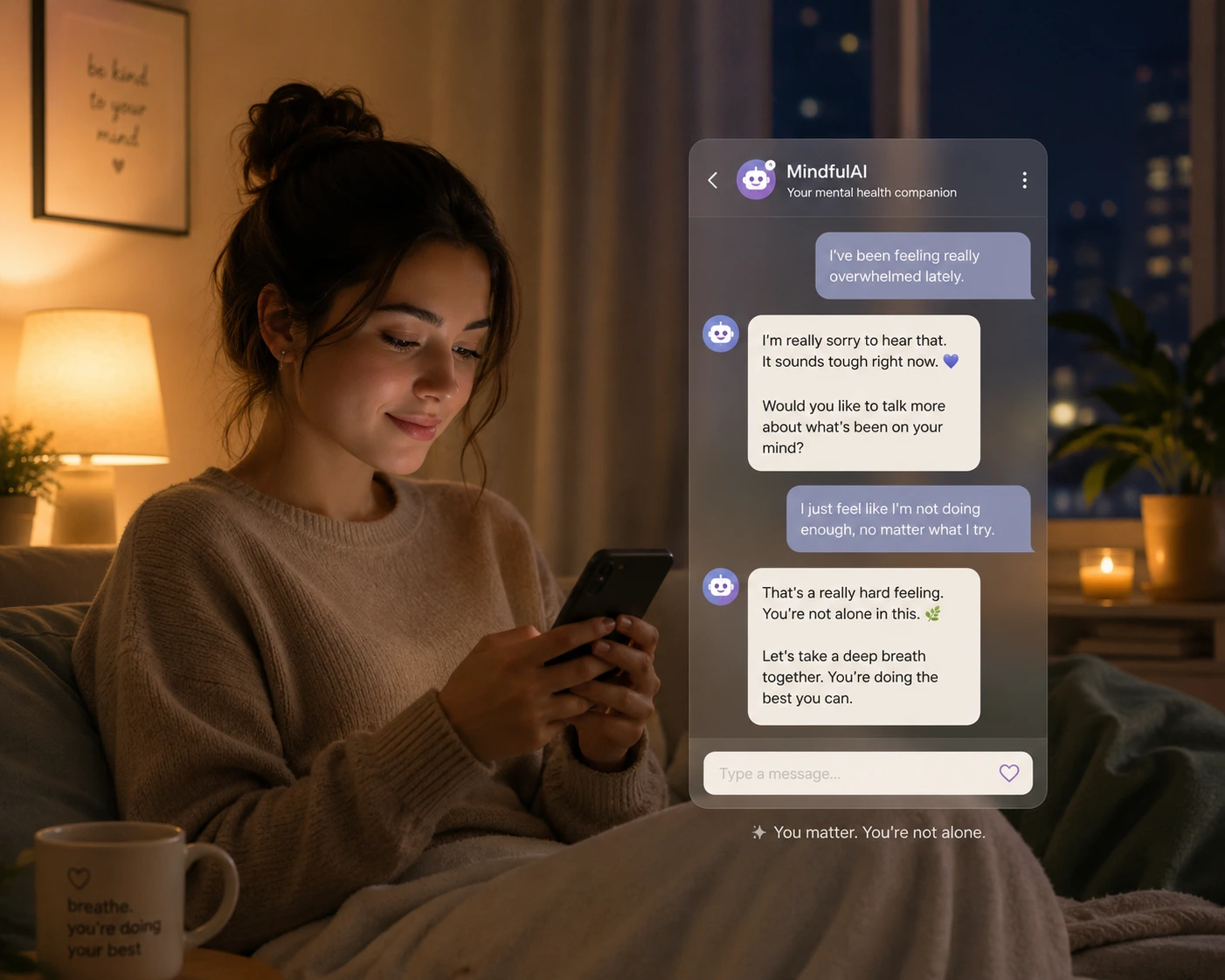
Mental health services are buckling under unprecedented demand. Traditional clinical waitlists leave millions of people without timely care, and in many parts of the world, access to a psychologist is simply not a realistic option. AI-powered therapeutic chatbots offer a promising, low-cost way to bridge this gap.
Apps like Woebot use machine learning to mimic human conversation, providing users with psychoeducation and self-guided interventions grounded in Cognitive Behavioural Therapy. They can challenge unhelpful thought patterns, guide users through mindfulness exercises, and offer support at any hour of the day or night. This round-the-clock availability is especially valuable for people who are reluctant to engage with a human therapist, such as someone with severe social anxiety, or someone in a remote area with no local services.
Other tools, like Wysa, take a more cautious hybrid approach. They deliver CBT-based support using only responses that have been drafted or approved by qualified clinicians, deliberately sidestepping the unpredictable outputs that fully generative AI can produce.
Worth knowing: AI therapy tools are not a replacement for professional care. They are best understood as a first layer of support, particularly useful for mild to moderate symptoms, building coping skills, or bridging the gap while waiting for a human therapist. If you are dealing with significant distress, please reach out to a qualified professional.
3. Easing the Administrative Burden on Clinicians
For practising psychologists and counsellors, AI can act as a highly efficient administrative assistant. Natural language processing tools can listen to therapy sessions, automatically generate session notes, and flag critical themes or risk factors for the clinician to review. By taking over the most time-consuming administrative work, AI has real potential to increase how many people a clinician can meaningfully support without burning out.
The Role of AI in Psychology Education and Clinical Training
This might be one of the most genuinely exciting areas of all. Generative AI now allows psychology students to practise their clinical skills on sophisticated virtual patients. These AI models generate natural language conversations and simulate emotional responses and psychological disorders realistically enough to provide genuinely useful practice. Students can develop and refine their diagnostic and therapeutic techniques in a completely safe environment, without any risk of harm to real people.
The ability to practice an entire intake assessment on a virtual patient who presents with depression, then do it again with someone showing signs of psychosis, and receive detailed feedback on both, is a training opportunity that simply did not exist before.
On the promise of AI-assisted clinical training in psychologyThe feedback AI can provide is also remarkably specific. A natural language model reviewing a practice session can flag missed clinical opportunities with precision. For instance, it can identify that a trainee neglected to ask a suicidal patient whether they have access to a firearm at home. That level of granular, consistent feedback would be extraordinarily difficult to deliver at scale through human supervision alone.
Virtual patient simulations are giving psychology students a safer, richer training experience than was previously possible.
Beyond simulation, personalised learning platforms powered by AI can adapt the difficulty and type of coursework in real time based on each student's progress. AI can also serve as a tireless teaching assistant, synthesising large amounts of background material, automating test grading, and identifying learning gaps that a human instructor might miss across a large cohort.
The Bad: Where the Role of AI in Psychology Gets Complicated
For all the genuine promise, the integration of AI into psychology also brings serious challenges that demand careful attention, strong ethics, and consistent human oversight.
1. AI Cannot Replace Human Empathy or Clinical Judgment
This is perhaps the most important limitation to understand. AI can process information and generate responses. It cannot establish genuine therapeutic rapport. It cannot pick up on the subtle emotional undercurrent in a room, hold someone's experience with real compassion, or make the kind of nuanced clinical judgements that come from years of working closely with human beings in distress.
Large language models are not equipped for complex clinical decision-making. They frequently fail to grasp the deeper context behind what a person is expressing. Their outputs can be unpredictable, and on occasion they produce responses that are factually inaccurate or dangerously context-free. Using these tools in clinical settings without a qualified human actively in the loop creates real risk to patient safety.
2. The Problem of Bias in AI Clinical Tools
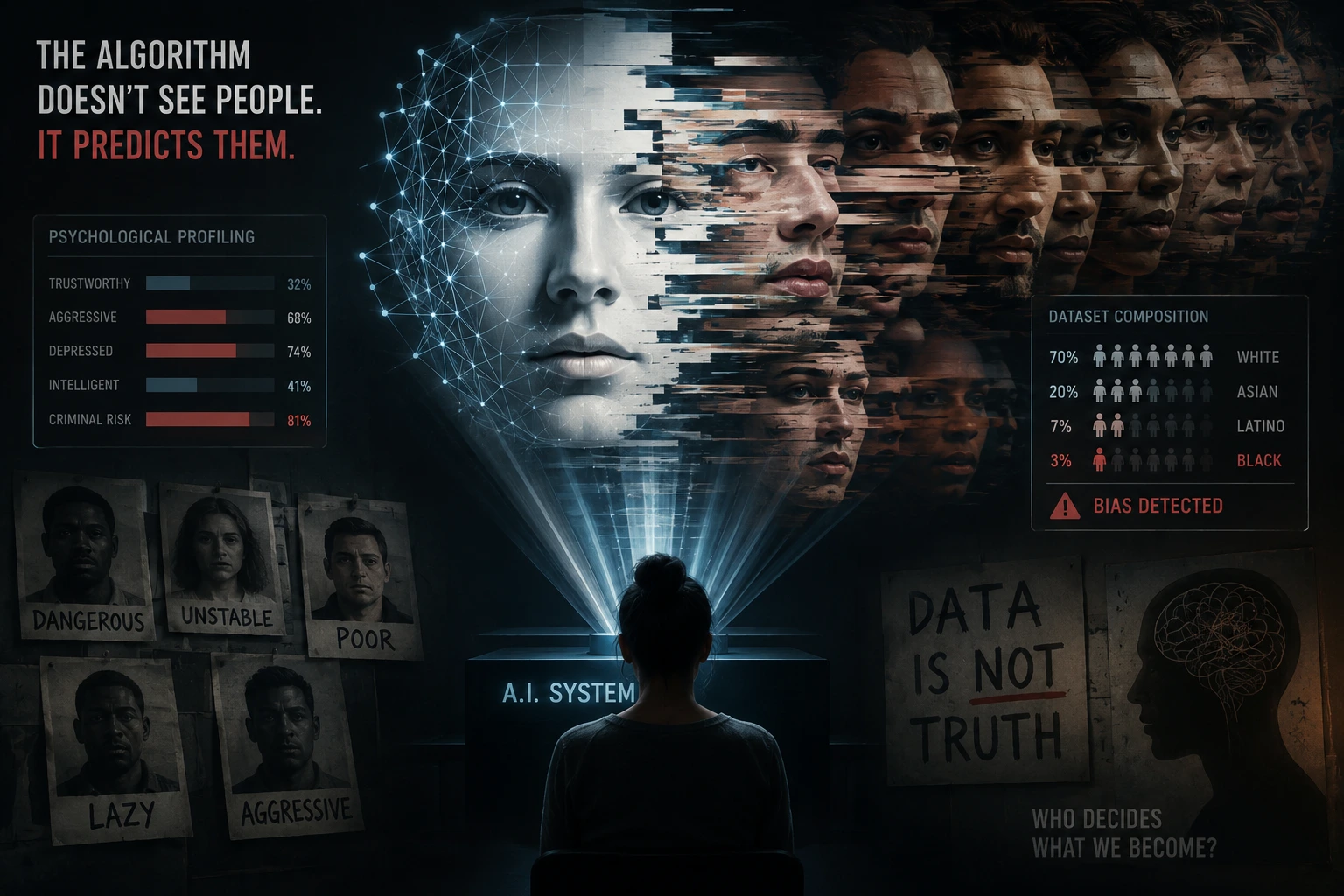
AI algorithms are not inherently neutral or objective. They reflect the values, assumptions, and blind spots of the people who built them and the datasets used to train them. Any bias embedded in the training data tends to persist through the system and is often amplified over time rather than corrected.
If biased algorithms are deployed in clinical tools, they risk compounding existing social marginalisation, disproportionately affecting people who are already vulnerable. This is not a theoretical concern. It is an active problem in AI development across many fields, and psychology is no exception.
-
Amplifying DiscriminationDiscriminatory patterns in training data do not disappear when fed into an algorithm. They become embedded, scaled, and harder to challenge. For clinical tools, the consequences can fall hardest on already marginalised communities.
-
Flawed Clinical GuidanceChatbots and AI tools can produce incomplete, inaccurate, or heavily skewed responses without any warning. Heavy reliance on them without professional oversight is genuinely risky.
-
Bias in Academic AssessmentThere is currently no completely reliable method for detecting AI-generated student work. Existing AI detection tools have themselves been shown to perform inequitably, flagging non-native English speakers at disproportionately high rates.
3. What Happens to Genuine Learning?
In education, AI is a double-edged tool. It can support learning in powerful ways, but it can also bypass it entirely. The core cognitive processes that training in psychology requires, including focused attention, deep encoding of information, and active retrieval, are all at risk if students use AI to do their thinking for them.
If AI becomes the captain rather than the co-pilot in a student's academic journey, the learning experience is fundamentally undermined. And the problem is compounded by the fact that current AI detection tools are unreliable and inequitable, making enforcement genuinely difficult.
4. Privacy, Liability, and the Question of Corporate Influence
Using AI in clinical and research settings raises serious questions about data security and patient privacy. In the absence of clear regulation, it is still not settled who bears legal responsibility for harm caused by an AI-driven clinical tool.
There is also the broader harm that AI-driven platforms are already inflicting on the public. Many clients that psychologists see are being actively harmed by engagement-optimising algorithms built into social media and online gambling services. These systems are designed by profit-driven companies to exploit behavioural and emotional vulnerabilities. The concern is real that the agile, well-resourced tech sector will use AI's efficiency to further commercialise what should be a human and publicly-supported system of care.
The Future: Navigating the Role of AI in Psychology Responsibly
AI is here, and it is not going away. The psychological community now faces a choice not about whether to engage with it, but about how to engage with it wisely.
To manage the risks without losing the benefits, humans must remain actively in the loop at every stage. That means clinical AI tools should never operate autonomously, patients should always be informed and consenting when AI is involved in their care, and practitioners need genuine training in both the capabilities and the limitations of these tools.
Educational assignments in psychology programs need to be redesigned to move beyond simple information recall. When AI can produce a passable essay in seconds, the real learning has to happen somewhere it cannot reach, in critical analysis, ethical reasoning, clinical supervision, and reflective practice.
What the profession is calling for: Authoritative professional bodies are calling for dedicated working groups to review codes of ethics, institutional policies, and privacy laws governing AI use in psychology. The conversation is no longer optional. It is urgent.
Ultimately, AI is a tool. It has no moral compass of its own. It will not replace the human psychologist. But psychologists who learn to use it responsibly will be far better placed to serve their clients, advance their research, and train the next generation of practitioners. As long as that integration stays anchored to human dignity, patient safety, and rigorous ethical standards, AI has genuine potential to expand access to psychological care in ways the field has needed for a very long time.
Real Questions About the Role of AI in Psychology
Can I actually get therapy from a chatbot, or is it just a gimmick?
It depends on what you need. For mild anxiety, low mood, or building basic coping skills, apps like Woebot and Wysa have shown genuine usefulness in research settings. They are available at any hour, cost far less than traditional therapy, and can be a helpful first step. But for anything more serious, ongoing trauma, complex mental health conditions, or a crisis, a real human therapist is not optional. Think of chatbots as a bridge, not a destination.
My therapist mentioned using AI for session notes. Should I be worried about my privacy?
It is a fair question to ask. AI note-taking tools do process the audio or transcript of your session, and data security practices vary a lot between providers. You are entitled to ask your therapist which tool they use, where your data is stored, who can access it, and whether you can opt out. A good therapist will welcome the question, not dodge it.
Is AI going to replace psychologists one day?
Honestly, no, at least not in any meaningful sense. The core of psychological work is human connection, clinical judgment developed over years of experience, and genuine empathy. AI can automate administrative tasks, assist with research, and extend access to basic support. But the relational, contextual, and ethically complex work of a psychologist is not something an algorithm can replicate. The more realistic future is psychologists who use AI tools working alongside those who do not, with the former being far more capable.
I tried a mental health app and it felt hollow and generic. Is that normal?
Yes, and your instinct is worth trusting. Current AI tools are genuinely better at structured, skill-based support like CBT exercises than they are at nuanced, responsive conversation. If the interaction felt scripted or like it was not really hearing you, that is a real limitation of the technology right now, not a failure on your part. Some people find them helpful for specific exercises, others do not connect with them at all. Neither response is wrong.
How do AI tools in psychology handle cultural differences? I feel like most mental health content is very Western.
This is one of the most important and underacknowledged problems in the field. Most AI clinical tools have been built on datasets that skew heavily Western, English-speaking, and educated. That means the assumptions baked into their responses, about what healthy relationships look like, how emotions should be expressed, or what counts as a problem worth addressing, may not fit your experience at all. The short answer is that AI tools handle cultural differences poorly right now, and advocates are pushing hard for this to change.
Can AI detect if someone is at risk of suicide or self-harm?
Researchers have made real progress here. Machine learning models can flag patterns in language and behaviour that correlate with elevated risk, and some clinical tools use this to alert practitioners to review a case more urgently. But these tools are screening aids, not diagnostic instruments. They can produce false positives and miss real risk. No AI system should be making independent decisions about someone's safety. Human clinical judgment must always be part of the picture.
The Role of AI in Psychology Is Still Being Written
AI is not the villain in this story, and it is not the saviour either. It is a powerful tool that reflects the intentions of the people who build and use it. In psychology, where the stakes are human wellbeing and dignity, that responsibility sits heavily.
The best version of this future is one where AI handles the administrative, the analytical, and the accessible, freeing human psychologists to do what only humans can: be genuinely present with another person in their most difficult moments. That version is possible. But it requires the profession to engage critically, ethically, and without rushing.
If you are navigating your own mental health journey and wondering what support looks like today, we are here. Real conversation, real care, no algorithm required.

Still have questions about your mental health?
A real conversation can change everything.
At Vaishalya Healing, we offer compassionate, human-centred therapy that no algorithm can replicate. Whether you are dealing with anxiety, relationship challenges, grief, or simply feeling like something is off, we are here for you, in person or online.
Book a Free Consultation Explore Our ServicesVisit the Clinic
Vaishalya Healing
Consultations available in-person and online
Read More
Explore more articles on mental wellness, modern relationships, and healing:
Counseling
Help Center
Contact Us
Office Timings: Monday to Saturday, 10:00 AM to 5:00 PM
Address: Mohal Gugga Saloh
Tehsil Palampur, Distt. Kangra
Himachal Pradesh - 176102
Email: help@vaishalyahealing.com
Phone/WhatsApp: +91 7018148449