
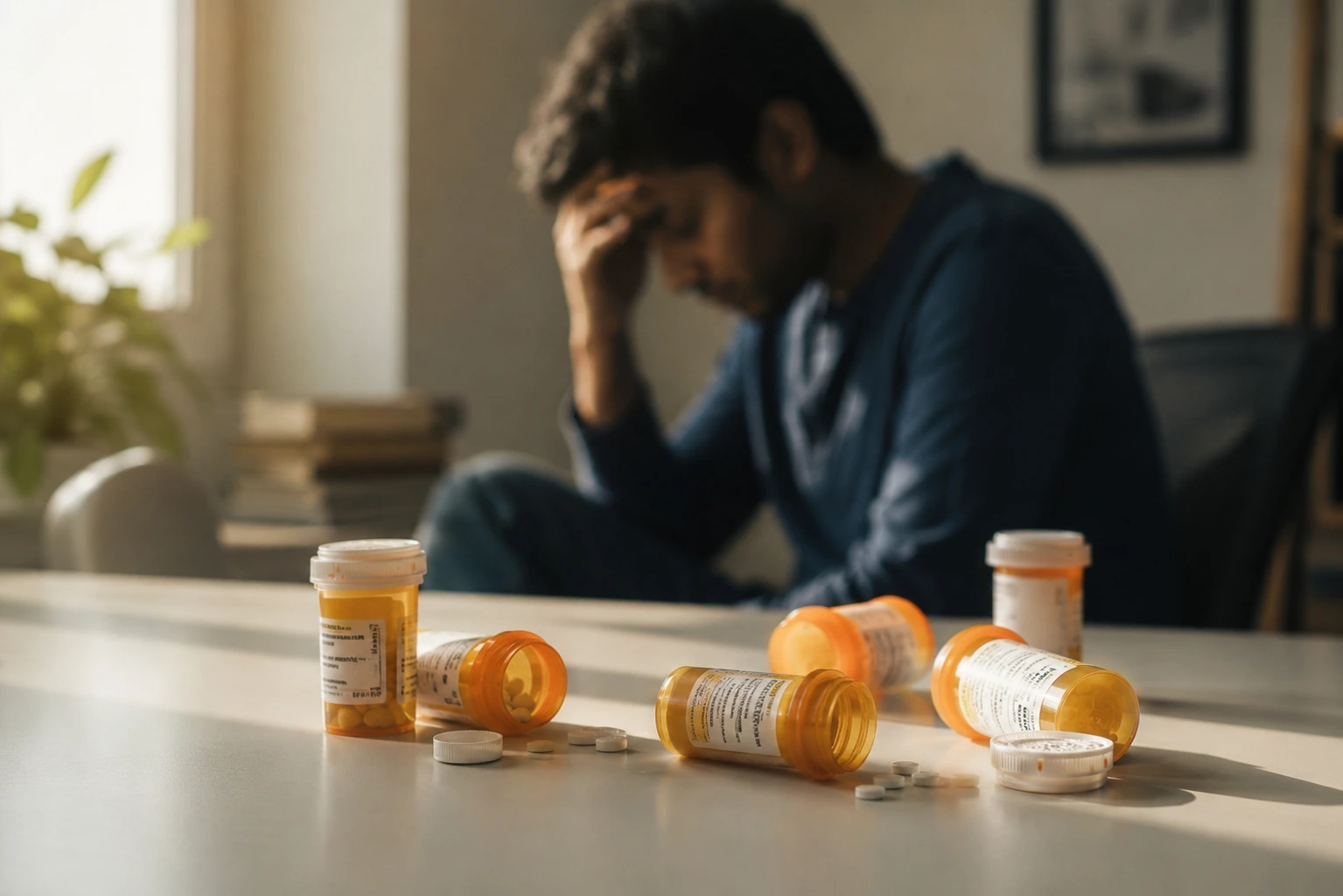
Prescription Drug Addiction in India: Opioids, Pregabalin, Benzodiazepines and the Silent Crisis No One Talks About
Prescription drug addiction in India is not a crisis that looks like the ones we imagine. There are no dark alleys. There are no strangers. There is a strip of capsules in a drawer, a refill that became routine, a pill taken to get through the board exams that turned into something that could not be stopped. This is the reality of prescription drug addiction in India today, and it is growing quietly inside homes, hostels, offices, and clinics that are supposed to be places of care.
The drugs involved are legal. Many are genuinely useful medicines. Tramadol is a painkiller. Pregabalin treats nerve pain and epilepsy. Alprazolam manages anxiety. Codeine cough syrups suppress irritating coughs. The problem is not the medicines themselves; it is what happens when they are misused, over-prescribed, taken without proper supervision, or sought out specifically for their mood-altering effects. Understanding prescription drug addiction in India requires looking honestly at the medicines, the system that distributes them, and the people who end up dependent on them.
These numbers represent a real and growing public health issue. The NDDTC-AIIMS National Survey of 2019, the most comprehensive of its kind in India, found that roughly 1 percent of Indians aged 10 to 75 had misused pharmaceutical opioids in the past year alone. That is a conservative estimate, because survey-based data underrepresents stigmatized behaviors. The actual number is almost certainly higher.
What Is Prescription Drug Addiction? Understanding Dependence vs. Misuse
Prescription drug addiction, or prescription drug use disorder, is a pattern of using a prescribed medication in a way not intended by the prescribing doctor — including taking it in higher doses, more frequently, for longer than prescribed, or for its mood-altering effects — to the point where the person cannot function normally without it and experiences withdrawal if they stop.
The terminology matters here, because many people in India do not recognise that what they are experiencing is addiction. They see it as taking their medicine. The distinction between physical dependence, tolerance, and addiction is important to understand before anything else.
Physical Dependence vs. Addiction: Not the Same Thing
Physical dependence means the body has adapted to the presence of a drug and will produce withdrawal symptoms if the drug is stopped suddenly. This can happen even with correct, medically supervised use. A person who has taken a benzodiazepine every day for six months under a doctor's care is physically dependent on it. That dependence is a biological reality, not a moral failing, and tapering off with medical guidance is the appropriate response.
Addiction involves additional layers: a psychological compulsion to use the drug, loss of control over how much is taken, continued use despite knowing it is causing harm, and often a pattern of hiding the use from others or going to significant lengths to obtain more. Addiction frequently has dependence as a component, but dependence alone does not equal addiction.
Misuse vs. Abuse: How It Starts in India
Misuse and abuse are related but distinct. Misuse covers a wider range of non-prescribed use — taking a medicine prescribed to someone else, doubling a dose because the prescribed amount is not working, or continuing a prescription that a doctor would not renew. Abuse refers specifically to taking a substance for its psychoactive effects, the high, the sedation, or the altered mental state, rather than for its therapeutic purpose.
In India, the journey from prescribed use to misuse to dependence often happens without any single dramatic moment. It happens incrementally, and it happens to people who had no intention of becoming dependent on anything. That is what makes it different from what most people imagine when they hear the word addiction.
Most prescription drug addiction begins with a legitimate prescription. The person was not trying to get high. They were trying to manage pain, anxiety, insomnia, or another real symptom. Understanding this changes how we approach both prevention and treatment.
How the Brain Gets Hooked: The Science of Prescription Drug Addiction
Prescription drug addiction is not a weakness of character. It is a predictable neurological outcome of repeated exposure to certain molecules. Understanding why some drugs carry such high addiction potential helps explain why prescription drug addiction can happen to anyone who takes these substances long enough, and at high enough doses.
The Role of the Brain's Reward System
The brain has a reward circuit, centered on a region called the nucleus accumbens and the neurotransmitter dopamine. This system evolved to reinforce behaviors essential to survival, such as eating, bonding, and reproduction, by releasing dopamine and producing a sense of pleasure or relief. Addictive substances hijack this system by triggering dopamine release far beyond what natural rewards produce.
Opioids do this by binding to mu-opioid receptors in the brain, producing both pain relief and euphoria. Benzodiazepines enhance the activity of GABA, the brain's primary inhibitory neurotransmitter, producing sedation and anxiety relief. Pregabalin and gabapentin work on calcium channels in neurons, producing a calming and euphoric effect similar to alcohol. Each of these mechanisms, when triggered repeatedly, leads the brain to recalibrate its baseline. The brain starts to need the drug simply to feel normal.
Tolerance: Why More Is Never Enough
As the brain adapts to the continued presence of a drug, it becomes less sensitive to it. The same dose that produced relief or pleasure initially no longer has the same effect. This is called tolerance. The person needs more of the drug to achieve the same outcome. For someone managing genuine pain or anxiety, this means returning to the doctor for a higher dose. For someone misusing a drug, it means seeking larger quantities through whatever means available.
Tolerance develops at different speeds for different drugs and different people. It can develop within weeks for opioids and benzodiazepines, and sometimes faster in individuals who are younger, under chronic stress, or have a history of other substance use.
Withdrawal: The Biological Trap
When someone who is physically dependent stops taking a drug suddenly, the body reacts to its absence. Withdrawal from opioids produces intense flu-like symptoms, muscle cramps, severe anxiety, insomnia, and in some people, suicidal ideation. Withdrawal from benzodiazepines is one of the most medically dangerous withdrawal processes that exists, potentially producing life-threatening seizures if not managed properly. Pregabalin withdrawal produces anxiety, insomnia, nausea, sweating, and in some cases seizures as well.
The experience of withdrawal is one of the most powerful drivers of continued use. The person is not using the drug because they want to anymore. They are using it because stopping feels physically and psychologically unbearable. This is not a choice in any meaningful sense. It is a biological reality that requires medical intervention to manage safely.
Prescription drug addiction is not what addiction looked like in the movies. It is the person who started Alprazolam after a panic attack and cannot sleep without it two years later. It is the laborer who took Tramadol for a back injury and cannot work without it a year later. It is ordinary, quiet, and medically explainable.
On the nature of prescription drug dependence in IndiaThe Most Commonly Misused Prescription Drugs in India
India's prescription drug misuse problem does not look the same everywhere. In Punjab, pregabalin has become so widespread it has acquired the street name "Budweiser" for its alcohol-like intoxicating effects. In Uttarakhand, codeine-containing cough syrups are misused by adolescents. In urban metros, benzodiazepines like Alprazolam are increasingly combined with alcohol for a more intense effect. Here is a detailed look at each major category.
1. Opioids — Tramadol, Codeine, and Tapentadol
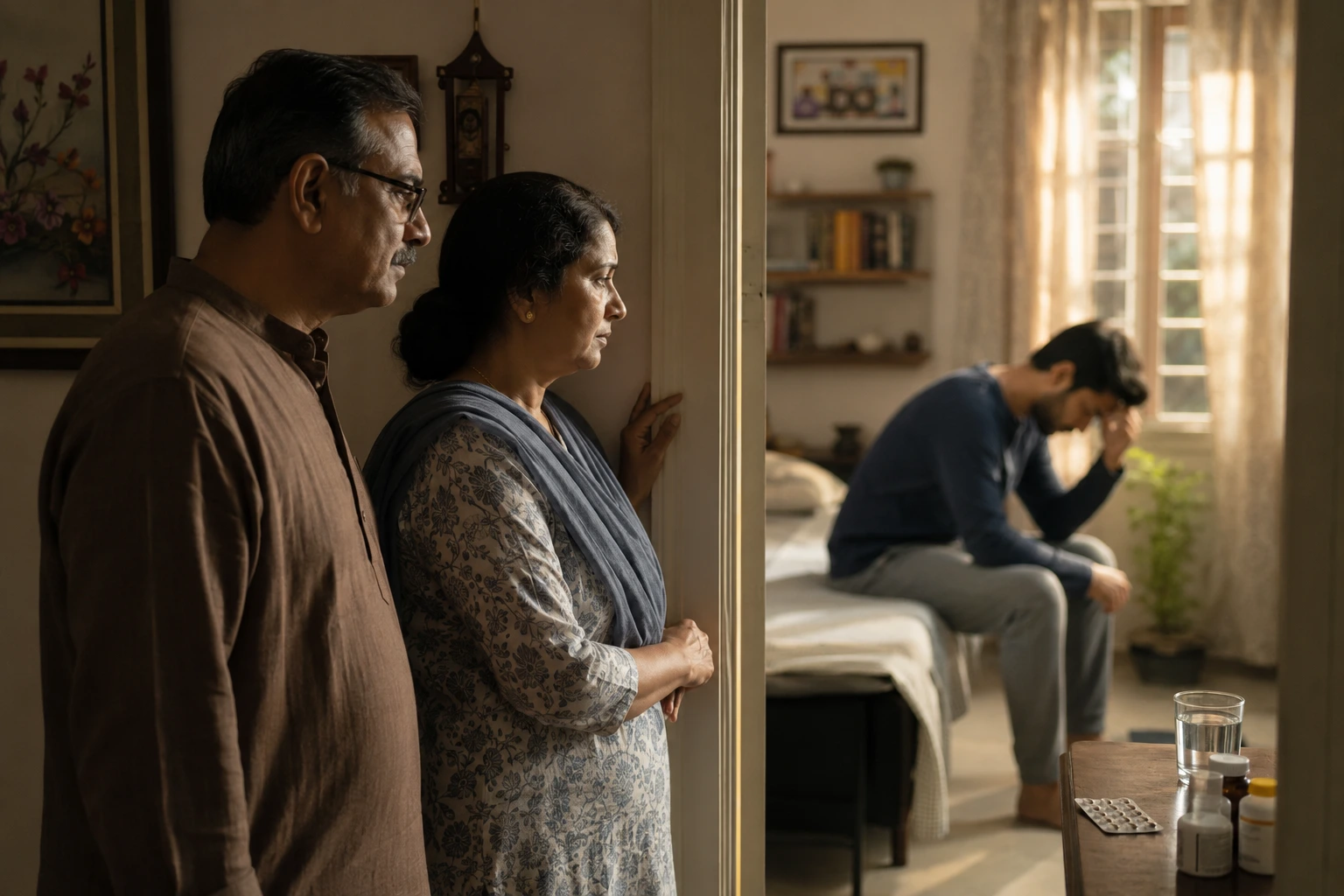
Prescription drug addiction disrupts families across India, often beginning with a legitimate medical prescription that no one expected would become a source of dependence.
Opioids are the most misused class of prescription drugs in India by volume. The NDDTC-AIIMS survey found that pharmaceutical opioids accounted for a substantial share of the country's drug use disorder burden. Unlike the opioid crisis in the United States, which was driven by synthetic fentanyl and long-acting oxycodone, India's pharmaceutical opioid problem is centered primarily on tramadol, codeine, and more recently tapentadol.
-
TramadolA synthetic opioid prescribed for moderate to severe pain. In India, it was classified as a psychotropic substance under Schedule H of the Drugs and Cosmetics Act. It is widely misused for its euphoric and stimulant-like effects, particularly among truck drivers, manual laborers, and young men in Punjab, Haryana, and UP. Tramadol dependence develops rapidly, often within weeks of regular use. Seizures are a serious risk during withdrawal and at toxic doses.
-
Codeine Cough SyrupsCodeine is an opioid included in many over-the-counter cough preparations sold in India. When consumed in large quantities, it produces a sedative, opioid-like effect. Cough syrup abuse, especially in adolescents and young adults across North and Northeast India, is well-documented. Because these syrups are cheap, readily available, and do not attract the same social stigma as illegal drugs, they serve as a gateway to harder opioid use for many young Indians.
-
TapentadolA newer opioid painkiller that is stronger than tramadol and is increasingly being misused across Karnataka, Tamil Nadu, and other southern states. Police in Tumkur, Karnataka, seized over 1,700 tablets in a single crackdown in December 2024. Tapentadol is informally considered a stronger version of tramadol and is used by people with existing opioid tolerance. The government is currently considering bringing tapentadol under stricter Schedule X controls due to rising misuse.
2. Benzodiazepines — Alprazolam, Diazepam, Clonazepam
Benzodiazepines are a class of sedative medications prescribed for anxiety disorders, panic attacks, insomnia, and certain neurological conditions. In India, the most commonly misused benzodiazepines are alprazolam (Alprax, Restyl), diazepam (Calmpose, Valium), and clonazepam (Clonaz, Lonazep). These drugs are listed under Schedule H, meaning they technically require a prescription, but enforcement is patchy and many are dispensed without one, particularly in smaller towns and rural areas.
Benzodiazepine misuse in India is growing, particularly in urban centers. Research published in 2024 flagged alprazolam as a potential drug of major concern in India's near future, noting its pharmacological profile, wide availability, cultural tendency toward long-term prescribing, and increasing diversion for non-medical use. The fact that many people start using benzodiazepines under genuine medical advice makes it harder for them, their families, and even their doctors to recognise when use has crossed into dependence.
A particularly dangerous pattern documented in Indian metro cities involves mixing benzodiazepines or sleeping pills with alcohol. A clinical observer from Mumbai quoted in recent reporting described this combination as potentially lethal due to its combined suppression of the central nervous system. Both benzodiazepines and alcohol are CNS depressants, and their combined effect on breathing can be fatal at relatively modest doses.
3. Pregabalin — India's Fastest-Growing Prescription Drug Crisis
Pregabalin is a gabapentinoid, a drug class that works on calcium channels in the central nervous system. It is legitimately prescribed for neuropathic pain, epilepsy, and generalized anxiety disorder. It produces a calming, sedative, and mildly euphoric effect that people have described as similar to alcohol — which is precisely why it has acquired the street name "Budweiser" in Punjab.
A study published in 2024 from a North Indian addiction treatment centre found that pregabalin dependence accounted for 3.58 per 100 registered patients, with a median daily dose of 1,200 mg — roughly eight to twelve times the standard therapeutic dose. In Kashmir, a separate study found pregabalin abuse prevalence of 11.3 percent at a de-addiction centre, noting a clear shift from traditional opioid use toward pharmaceutical drugs, especially during periods of heroin shortage.
The regulatory gap that enables pregabalin misuse: Until very recently, pregabalin was not listed under Schedule H1 of India's Drugs and Cosmetics Rules, which would require prescription-only dispensing with record-keeping. This meant it could be sold over the counter in many states. States like Punjab and Telangana have implemented prescription-only restrictions independently, but national-level enforcement remains incomplete. The Drugs Consultative Committee chaired by the DCGI is currently deliberating including pregabalin in Schedule H1 — a change that is long overdue.
4. Sleeping Pills and Sedative-Hypnotics — Zolpidem, Nitrazepam
Sedative-hypnotics prescribed for insomnia, including zolpidem (Stilnox, Zolfresh) and nitrazepam, are misused both for their sleep-inducing effects and for the drowsy, dissociative state they produce at higher doses. In India, insomnia is massively under-treated, and when a doctor finally prescribes a sleeping pill, patients are often not informed that these medications are intended for short-term use only and carry significant dependence potential. Many end up taking them nightly for years without any review from their doctor.
5. Prescription Stimulants — Methylphenidate and the ADHD Conversation
Prescription stimulants like methylphenidate (Ritalin) are used to treat ADHD in India, though diagnosis and prescription rates for ADHD remain far lower here than in Western countries. Where these drugs do appear in the misuse landscape, it is typically in the context of students seeking cognitive enhancement during exam periods, or individuals combining them with other substances. This category is currently less prevalent in India's prescription drug misuse data than opioids or sedatives, but warrants monitoring as ADHD diagnosis and treatment becomes more common.
Key Prescription Drugs Misused in India — At a Glance| Drug / Class | Common Brand Names in India | Legitimate Use | Misuse Pattern | Regulatory Status |
|---|---|---|---|---|
| Tramadol | Ultracet, Tramazac, Contramal | Moderate–severe pain | Euphoria, energy boost; widespread among laborers, truckers | Schedule H (psychotropic) |
| Codeine Cough Syrups | Corex, Phensedyl, Benylin | Cough suppression | OTC misuse for sedation; adolescents, NE India | Schedule H / partially OTC |
| Tapentadol | Tapal, Aspadol | Severe pain | Stronger opioid high; South India crackdowns 2024 | Under review for Schedule X |
| Alprazolam | Alprax, Restyl, Alzolam | Panic disorder, anxiety | Sedation, mixed with alcohol; urban India | Schedule H (benzodiazepine) |
| Clonazepam | Clonaz, Lonazep, Rivotril | Epilepsy, anxiety, panic | Sedation, recreational; mixed with alcohol | Schedule H |
| Pregabalin | Lyrica, Pregeb, Gabapin | Neuropathic pain, epilepsy, GAD | Street name "Budweiser"; Punjab, J&K, Karnataka | Under review for Schedule H1 |
| Zolpidem | Stilnox, Zolfresh, Nitrazep | Short-term insomnia | Long-term dependence; often initiated by legitimate prescription | Schedule H |
Prescription Drug Addiction in India's Students: Exams, Pressure, and a Very Quiet Crisis
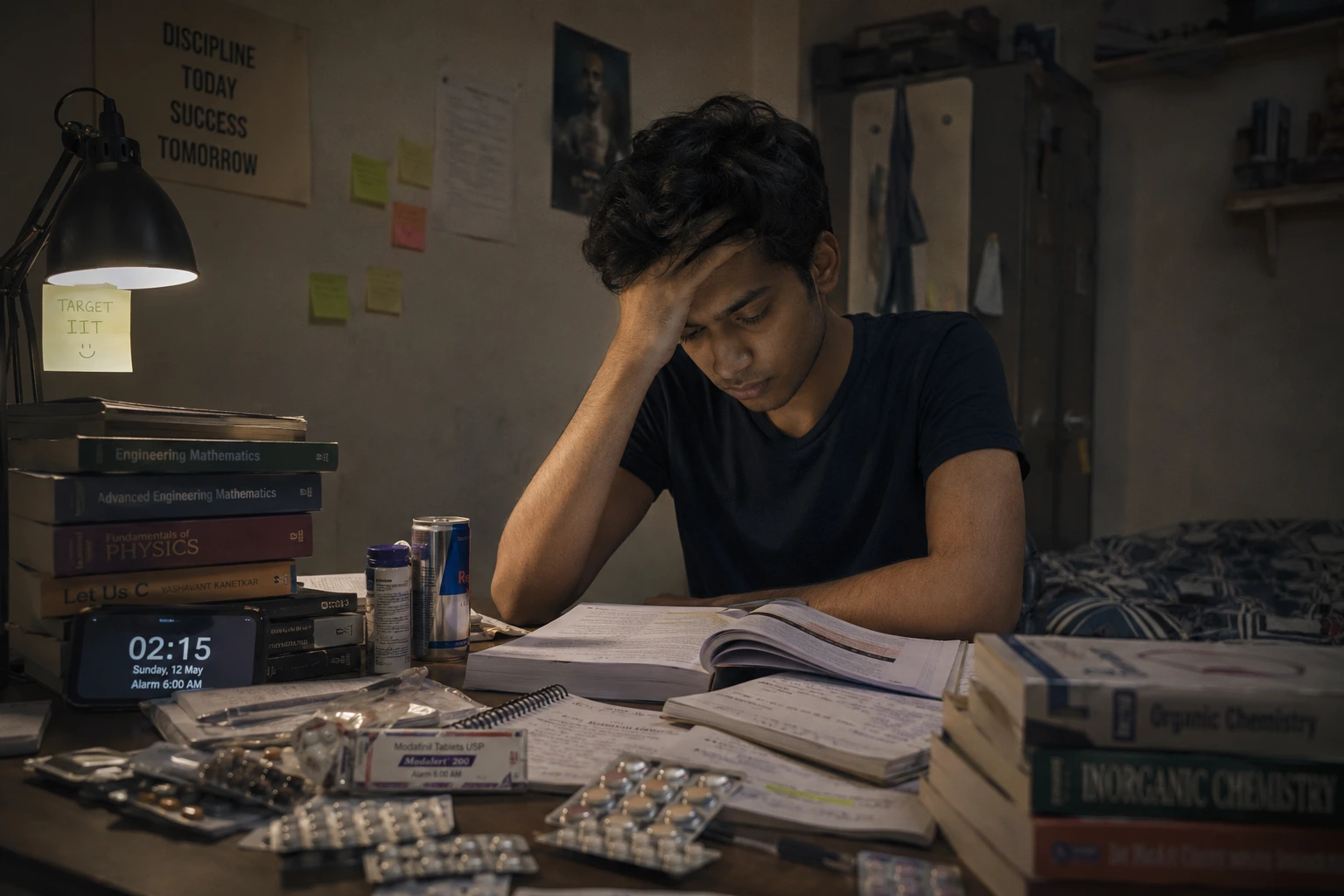
The pressure of board exams, JEE, NEET, and competitive entrance preparation has created conditions where prescription drug misuse among Indian students is rising with little public acknowledgment.
The conversation about prescription drug addiction in India rarely focuses on students, even though young people are among the most vulnerable groups. The academic pressure that characterises Indian school and college life, particularly in Class 11 and 12 and during competitive exam preparation, creates a set of conditions that make prescription drug misuse more likely and more dangerous.
How Students Get Trapped — The Specific Pathways
-
Anxiety medication used as a crutch during examsA student develops severe exam anxiety. They see a doctor, who prescribes a short course of alprazolam or clonazepam. The medication works. The anxiety retreats. The exam passes. But the student, now aware of how effective the pill is, reaches for it again before the next high-stakes moment. This becomes a pattern. Within months, they cannot sit in an examination hall without taking one first. Then they cannot sleep without one. Then they cannot manage a regular day without one.
-
Sleeping pills for "studying all night"Zolpidem and nitrazepam are sometimes used by students not to sleep but to crash quickly after an all-nighter and recover before the next revision session. The logic is that a few hours of drug-induced deep sleep after studying all night will be more effective than lying awake for eight hours. The problem is that this pattern rapidly establishes dependence, and the quality of sleep produced by sedative-hypnotics is inferior to natural sleep in ways that actually impair memory consolidation and learning.
-
Codeine cough syrup as a cheap accessible highIn many parts of India, particularly in states like Uttarakhand, Himachal Pradesh, and across the northeast, adolescents use codeine-containing cough syrups recreationally. These are relatively inexpensive, available from many chemists without a prescription in practice, and socially less visible than drinking alcohol or smoking. Codeine is an opioid, and its misuse in adolescence is associated with a significantly elevated risk of developing opioid use disorder in adulthood.
-
Sharing prescriptions within peer groupsA student who has been prescribed a benzodiazepine shares it with a friend who is also anxious before an exam. That friend finds it helpful, asks for more, and eventually obtains their own prescription or buys the medicine without one. This pattern of prescription sharing is common and largely invisible to the healthcare system.
-
Pregabalin misuse in coaching hubsIn cities like Kota, where tens of thousands of students prepare for JEE and NEET under extreme pressure, reports of pregabalin misuse among students have emerged. Pregabalin's accessibility, its ability to reduce anxiety, and its euphoric effects at higher doses make it particularly attractive in high-stress environments where official mental health support is minimal.
Prescription drug misuse in students is often invisible precisely because the substances involved are legal, and the students using them often believe they are using legitimate medicines. Behavioral changes, increased secretiveness, spending money on "medicines," declining academic performance despite apparent effort, and a marked personality change are signals worth taking seriously. These are not signs of laziness or bad character. They may be signs of dependence that requires compassionate intervention.
The Over-Prescription Problem: How the Healthcare System Contributes to Prescription Drug Addiction in India
It would be incomplete to discuss prescription drug addiction in India without examining the role of the healthcare system in creating and sustaining it. Doctors are not the villains in this story. Most prescribe these medications because they genuinely help, and because the alternatives, adequate psychotherapy, structured pain management programs, or non-pharmacological insomnia treatment, are either not available, not affordable, or take considerably more time than a brief consultation allows. But the systemic conditions that surround prescribing in India do create vulnerability.
The Three-Minute Consultation
The average consultation time with a general practitioner or even a specialist in India's public health system is often between three and seven minutes. In that window, a doctor is expected to take a history, examine the patient, review any tests, make a diagnosis, and explain the treatment plan. A patient presenting with sleep difficulties, anxiety, or chronic pain in that context is likely to leave with a prescription. There is simply not enough time to explore non-pharmacological alternatives, to assess addiction risk, or to discuss the limited duration of use that sedatives and opioids require to be safe.
Lack of Prescription Monitoring Systems
India does not have a national prescription drug monitoring programme comparable to those in the United States or the United Kingdom. This means a patient can visit multiple doctors, collect multiple prescriptions for the same controlled substance, and have them filled at different chemists, with no single system flagging the pattern. Doctor shopping, the practice of visiting several doctors to obtain multiple prescriptions, is a well-documented consequence of this gap. Dr. Atul Ambekar of NDDTC, AIIMS has publicly confirmed that patients often seek medical help to quit tapentadol and pregabalin after prolonged misuse, confirming these are genuine clinical presentations in Indian addiction medicine.
Chemists Dispensing Without Prescriptions
Schedule H drugs technically require a valid prescription in India. In practice, many pharmacies and chemists dispense these medicines to regular customers without one, particularly in smaller towns and in chemist shops attached to or near clinics. The regulatory gap around pregabalin until recently is a striking example: because it was not on Schedule H1, no prescription record was required at all. Large-scale seizures of pregabalin from licensed chemists in Punjab in 2023 underline the extent to which commercial distribution networks profit from misuse.
The Mental Health Care Gap That Drives Over-Medication
India has a documented shortage of mental health professionals. The psychiatrist density is approximately 0.3 per 100,000 population. When someone with a severe anxiety disorder or chronic insomnia cannot access evidence-based psychological therapy because there are no trained therapists in their district, medication becomes the default response. The problem is not that doctors reach for the prescription pad. It is that the prescription pad is often all they have to offer, and the system has not invested sufficiently in the alternatives.
Signs and Symptoms of Prescription Drug Addiction in India to Watch For
The signs of prescription drug addiction vary depending on the drug class involved, but there is significant overlap. What follows covers the most important behavioral, physical, and psychological indicators, mapped to the drug categories most relevant in India.
Behavioral Signs Across All Categories
-
Taking medication in larger amounts or more often than prescribedThe prescription says one tablet at night. The person is taking two or three. They run out before the month ends and find ways to get more from multiple sources.
-
Unable to function without the medicationThey describe being unable to work, eat, sleep, or be in a social situation without first taking the drug. The medicine has become a prerequisite for daily life rather than a therapeutic tool.
-
Continuing to use despite knowing it is causing problemsThey know the medication is affecting their memory, their relationships, or their work performance, but they cannot or will not stop. When they try, the physical and psychological distress of withdrawal drives them back.
-
Doctor shopping or obtaining medicine without prescriptionVisiting multiple doctors for the same medication, or purchasing it from pharmacies without a prescription, or obtaining it from others who have been prescribed it.
-
Hiding the amount usedDiscarding packaging, hiding strips of tablets, or being vague or dishonest about how much of a medication they are using when asked by family or by a doctor.
Physical Signs by Drug Class
Constricted pupils, drowsiness, slowed breathing, constipation, nausea, itching, nodding off mid-conversation, flushed skin, poor coordination. At high doses or in combination with alcohol, breathing can become dangerously slow.
Slurred speech, unsteady gait, extreme drowsiness, confusion, memory gaps (especially around the time of taking the pill), disinhibition, slowed reactions. Long-term use causes cognitive dulling.
Euphoria, dizziness, unsteady gait, blurred vision, weight gain, peripheral edema, difficulty concentrating, mood instability. At high doses, near-comatose states. Withdrawal produces severe anxiety, sweating, insomnia, tremors, and seizure risk.
Daytime drowsiness, impaired memory, complex sleep behaviors (sleepwalking, sleep-eating), cognitive impairment, rebound insomnia that is worse than the original sleep problem when the drug is stopped.
Who Is at Risk of Prescription Drug Addiction in India?
Prescription drug addiction can affect anyone who is exposed to these substances long enough and in sufficient doses. But certain factors do increase vulnerability, and in India, some of these factors are particularly prevalent or carry unique cultural dimensions.
-
Individuals with untreated mental health conditionsAnxiety, depression, PTSD, and chronic stress significantly increase the risk of prescription drug misuse. When mental health conditions go untreated — as they do for the vast majority of affected Indians due to access and stigma barriers — people self-medicate with whatever provides relief, and prescribed sedatives and painkillers fit that role readily.
-
People in chronic painLegitimate chronic pain conditions, including diabetic neuropathy, back pain, arthritis, and post-surgical pain, require sustained pain management. In India, where structured multi-disciplinary pain clinics are rare outside a handful of major cities, opioid and pregabalin-based prescribing for pain is often the primary treatment offered, creating risk of long-term dependence.
-
Adolescents and young adultsThe developing brain is significantly more vulnerable to the neurological effects of addictive substances. Research consistently shows that earlier onset of use is associated with higher likelihood of developing addiction. In India, where academic pressure begins early and peaks in the mid-teens, adolescents are exposed to the conditions that make prescription drug misuse appealing at exactly the stage when their brains are most susceptible to its effects.
-
People with a personal or family history of addictionGenetic factors account for roughly 40 to 60 percent of the variance in addiction risk. Someone with a parent or sibling with an alcohol or substance use disorder carries elevated biological vulnerability to developing one themselves. This is not a certainty but is a factor worth being aware of when prescribing or taking addictive medications.
-
Low-income groups and manual laborersThe NDDTC-AIIMS data as well as published research on opioid use in India consistently identify socioeconomic stress, manual labor, low income, and unemployment as significant risk factors. Long-distance truck drivers in India have notably high rates of tramadol use, where the drug's stimulant-adjacent effects are used to manage long shifts, exhaustion, and chronic musculoskeletal pain.
-
Individuals who were not counseled about addiction risk at time of prescriptionResearch repeatedly shows that patients who are clearly informed at the time of prescribing that a medication carries dependence potential, has a limited safe duration of use, and should not be combined with alcohol are significantly less likely to develop problematic use. In the short consultations that characterize most of India's healthcare encounters, this counseling rarely happens adequately.
How to Get Help for Prescription Drug Addiction in India
The most important thing to understand about getting help for prescription drug addiction in India is that this is a medical issue and it requires medical support. Trying to stop benzodiazepines or opioids abruptly at home is not just difficult; for some drugs and some levels of use, it is genuinely medically dangerous. Seizures, severe psychiatric episodes, and cardiovascular complications are real withdrawal risks. The path to recovery for prescription drug addiction requires professional involvement.
Medically Supervised Detoxification
The first step for someone with established physical dependence is medically supervised detox. For opioids, this involves a gradual taper, often using buprenorphine or methadone as part of Opioid Substitution Therapy (OST), which the NDDTC-AIIMS has helped scale across India through government-NGO partnerships. For benzodiazepines, the protocol involves a very slow, structured taper of the drug itself, since abrupt cessation carries seizure risk. This cannot be safely managed at home without medical supervision.
Government hospitals, particularly AIIMS in New Delhi, NIMHANS in Bangalore, and state mental health institutions, offer addiction treatment services that include detox. Many private hospitals in metro cities also have de-addiction units. Waiting times at government centres can be long, but services are significantly more affordable.
Psychological Support — The Part That Makes the Difference Long-Term
Medical detox removes the physical dependence. What it does not do is address the underlying reasons the person became dependent in the first place, the anxiety, the pain, the stress, the habit patterns, or the social environment that enabled the use. Without psychological support, relapse rates are high. Evidence-based psychological therapies that are relevant to prescription drug addiction include Cognitive Behavioral Therapy for substance use disorders, Motivational Enhancement Therapy, and family-based interventions, all of which can be provided by a trained clinical psychologist.
At Vaishalya Healing in Palampur, we work alongside medical teams to provide the psychological support component of recovery: helping individuals understand the roots of their dependence, build coping skills for the situations that previously drove their use, and rebuild lives and relationships that addiction has damaged. This is not separate from the medical part of treatment. It is what makes it last.
Support Resources Available in India
iCall (TISS): Provides free psychological counseling via phone and online. Run by the Tata Institute of Social Sciences. Vandrevala Foundation: 24-hour mental health helpline at 1860-2662-345. NDDTC, AIIMS New Delhi: National technical centre for addiction treatment, provides both inpatient and outpatient services. NIMHANS, Bangalore: Offers comprehensive addiction psychiatry services. State-run DACs (Drug De-addiction Centres): Available across most major cities under the Ministry of Social Justice and Empowerment's NAPDDR programme. Many offer free or subsidised treatment.
Myths About Prescription Drug Addiction That Keep Indians from Getting Help
"If a doctor prescribed it, it cannot be addictive."
Doctors prescribe genuinely addictive medications every day. Opioids, benzodiazepines, sleeping pills, and pregabalin are all prescribed for legitimate medical reasons and all carry real addiction potential. The prescription is the starting point of legitimate use. It is not a guarantee of safety over the long term, especially without proper review and monitoring.
"Prescription drug addiction only happens to weak or morally flawed people."
Addiction is a brain-based condition with documented neurological mechanisms. It is not a character flaw. It happens to professionals, students, laborers, homemakers, and doctors themselves. Framing it as a moral issue prevents people from seeking help and prevents families from recognising what they are actually dealing with.
"I can stop whenever I want — I just haven't decided to."
This is one of the most common statements from people in the early stages of prescription drug dependence. The ability to stop at will is precisely what distinguishes dependence from voluntary use. For many people, attempting to stop reveals withdrawal symptoms they did not know they had, which are the body's way of demonstrating that dependence is already established.
"My family will be ashamed. Admitting this will ruin everything."
The shame of addiction in India is real and is one of the most significant barriers to treatment. But the actual consequences of untreated addiction, lost jobs, collapsed relationships, worsening health, and in some cases death — are far more damaging to families than the disclosure and treatment of the problem. Shame keeps people sick. Treatment gives them their lives back.
"Stopping suddenly (cold turkey) is the best and fastest way to detox."
For benzodiazepines and to a lesser extent opioids, sudden cessation is medically dangerous and can be fatal. Benzodiazepine withdrawal can cause seizures. Opioid withdrawal, while rarely fatal in healthy adults, is so intensely unpleasant that it almost always results in relapse without medical support. Medically supervised tapering is the safe and effective approach.
"Pregabalin is not a real drug of abuse. It is just a nerve pain medicine."
Pregabalin is currently one of India's fastest-growing pharmaceutical drugs of abuse. A study from a North India de-addiction centre found 3.58 percent prevalence of pregabalin dependence among registered patients. In Kashmir, one de-addiction study found it at 11.3 percent. Punjab has had to implement independent restrictions on its sale. The idea that it is merely a nerve pain medicine no longer reflects clinical reality in India.
Common Questions About Prescription Drug Addiction in India
Pregabalin is not banned in India but is undergoing regulatory tightening. As of 2025, the Drugs Consultative Committee chaired by the DCGI is reviewing whether to include pregabalin in Schedule H1, which would require prescription-only dispensing with detailed record-keeping at the chemist level. Some states, including Punjab and Telangana, have already implemented prescription-only restrictions independently. It is not classified under the NDPS Act, which is a key gap that activists and clinicians argue needs to be addressed. Possession and sale for legitimate medical purposes is legal with a valid prescription.
Yes. Physical dependence on alprazolam can develop within four to six weeks of daily use, even at prescribed doses and under proper medical supervision. This is a well-documented pharmacological property of all benzodiazepines. A responsible psychiatrist will prescribe alprazolam for the shortest effective period, review the prescription regularly, and avoid long-term prescribing wherever possible. If you have been taking alprazolam daily for more than a few weeks and are noticing that you feel anxious or unwell if you miss a dose, that is a sign of physical dependence that you should discuss with your doctor. Do not stop abruptly.
Tramadol is among the most commonly misused pharmaceutical opioids in India. It is particularly prevalent in Punjab, Haryana, Uttar Pradesh, and Rajasthan, where misuse is widespread among agricultural laborers, construction workers, and truck drivers who use it both for its painkilling effect and its energy and mood-lifting properties. Research consistently identifies tramadol misuse as a gateway to harder opioid use. It has been classified as a psychotropic substance under Schedule H of India's Drugs and Cosmetics Act, but enforcement remains inconsistent.
Key signs include: they run out of their medication before the prescription period is over and become anxious or distressed about getting more; they become irritable, anxious, or physically unwell when they have not taken the medication; they are secretive about how much they are taking; they have visited multiple doctors for the same medication; their personality, mood, or daily functioning has changed in noticeable ways; they are mixing the medication with alcohol. If you recognize several of these patterns, a conversation with a qualified addiction counselor or clinical psychologist is a good starting point. They can help you assess the situation and plan next steps.
Yes, codeine-containing cough syrups are addictive. Codeine is an opioid, and consuming these syrups in large quantities produces opioid-type effects including sedation, euphoria, and respiratory depression. India has restricted and in several cases banned specific formulations of codeine cough syrups, including Corex and Phensedyl in certain states, due to widespread misuse especially among adolescents. The restrictions vary by state and have changed over time. Generally, codeine-containing preparations require a prescription (Schedule H) and are not meant to be available over the counter, though enforcement has been inconsistent.
The Narcotic Drugs and Psychotropic Substances (NDPS) Act of 1985 is India's primary legislation governing the control of narcotic and psychotropic substances. It covers drugs like heroin, morphine, cannabis, and a list of specified psychotropic substances. Tramadol and ketamine are classified as psychotropic substances under the NDPS Act in India. However, pregabalin, tapentadol, and several benzodiazepines fall under the Drugs and Cosmetics Act rather than the NDPS Act, meaning their misuse carries different (and often lesser) legal consequences. Experts and researchers have argued that the regulatory framework needs updating to reflect the actual landscape of pharmaceutical drug misuse in India today.
Treatment involves medically supervised detox followed by psychological support and, where appropriate, long-term follow-up. Government-funded treatment is available at Drug De-addiction Centres (DACs) run under the Ministry of Social Justice and Empowerment's NAPDDR programme across most states. NDDTC at AIIMS Delhi and NIMHANS in Bangalore are the national-level centres of excellence. Many offer free or heavily subsidised services. The Mental Healthcare Act of 2017 legally includes drug use disorders under its ambit, meaning individuals have the right to treatment under Indian law. Private de-addiction facilities are also available in most major cities and offer faster access and more comfort, typically at significantly higher cost.
Yes, and this is increasingly documented in India. Benzodiazepines for exam anxiety and sleeping pills for managing irregular study schedules are both pathways to dependence in adolescents and young adults. The developing brain is more neurologically vulnerable to addictive substances than the adult brain, meaning dependence can develop more rapidly in students. If a student is taking a prescribed sedative or anxiety medication and has been doing so daily for more than a few weeks, it is worth reviewing with a doctor or addiction counselor whether physical dependence has developed. Non-pharmacological approaches to exam anxiety, including cognitive behavioral therapy and structured relaxation techniques, are effective and carry no dependence risk.
This combination is one of the most dangerous drug interactions in existence. Both benzodiazepines and alcohol suppress the central nervous system, and their combined effect on respiratory function can cause breathing to slow to a fatal level, even at doses that would not be individually lethal. Clinical professionals in India have specifically flagged the misuse of anti-anxiety drugs like Xanax and clonazepam mixed with alcohol as a growing and potentially lethal trend in urban areas. This combination is not safe under any circumstances and should never be used recreationally.
Support is available in Himachal Pradesh through government de-addiction facilities at district hospitals and through the state's social welfare department. Vaishalya Healing in Palampur offers psychological support for individuals and families dealing with prescription drug dependence, including one-on-one counseling, family sessions, and online therapy options for those in more remote areas. Reaching out for an initial consultation is always the right first step — we help you understand what kind of support is most appropriate for your specific situation, and connect you with medical treatment where it is needed.
Prescription Drug Addiction in India: What We All Need to Understand
Prescription drug addiction in India is not a fringe problem or an imported one. It begins with medicines that people receive from real doctors for real conditions. It grows in gaps — the gap between what the healthcare system can offer and what patients actually need, the gap between the availability of addictive medicines and the enforcement of safe dispensing rules, the gap between the pressure that young people in India face and the psychological support that is available to them.
The drugs most responsible — tramadol, pregabalin, alprazolam, codeine, zolpidem — are not exotic. They are in medicine cabinets across India. The people most at risk are not defined by any particular demographic. They are defined by circumstances: a chronic pain condition, a period of intense stress, an exam season, an under-supervised prescription, a system that moves too fast to explain the risks properly. Recognising prescription drug addiction as a medical issue rather than a moral one changes what families do when they see the signs. It changes what individuals do when they notice something is not right in themselves. And it changes what is possible in terms of recovery.
Recovery from prescription drug addiction is real and it happens every day. But it requires medical support, psychological care, time, and a social environment that treats the person with the same compassion we would extend to someone dealing with any other serious health condition. If you or someone you know is struggling with prescription drug dependence in India, the path forward exists. It starts with a conversation.

Concerned about prescription drug dependence?
Talk to someone who understands.
At Vaishalya Healing in Palampur, Himachal Pradesh, we provide counseling and psychological support for individuals and families navigating prescription drug dependence, in person and online across India. The first step is a conversation.
Book a Free Consultation Explore Our ServicesVisit the Clinic
Vaishalya Healing, Palampur
Himachal Pradesh, India
In-person and online consultations available
Get in Touch
For appointments, queries, or a free initial call about de-addiction support:
Related Reading
Explore more articles on mental health, therapy, and wellbeing in the Indian context:
Online Support India
Access qualified counseling from anywhere in India — including Himachal Pradesh, Punjab, Delhi, and beyond.
Counseling
Help Center
Contact Us
Office Timings: Monday to Saturday, 10:00 AM to 5:00 PM
Address: Mohal Gugga Saloh
Tehsil Palampur, Distt. Kangra
Himachal Pradesh - 176102
Email: help@vaishalyahealing.com
Phone/WhatsApp: +91 7018148449