
Counselor vs Psychologist vs Therapist: What is the Difference in India?
You have decided to reach out for help. That alone takes courage. But then you open Google and within minutes you are wondering: should you see a counselor, a psychologist, or a therapist? In India, these terms get used almost interchangeably, by friends, by doctors, even by professionals themselves. Understanding the actual difference between a counselor, psychologist, and therapist is not just academic; it directly determines whether you get the right kind of help for what you are going through.
This guide exists to clear that confusion, honestly and completely, without jargon or unnecessary complexity. Whether you are trying to manage anxiety, processing grief, navigating a difficult relationship, or supporting a loved one through a mental health crisis, knowing who does what matters.
The shortage of trained mental health professionals in India makes it even more important to understand who you are actually speaking to, and whether they are qualified to help with your specific situation. Let us go through each role carefully.
What Is a Counselor? The Counselor vs Psychologist vs Therapist Debate Starts Here
A counselor is a trained mental health professional who works with individuals, couples, or groups to help them understand and work through life's challenges, emotional difficulties, relationship problems, and personal crises.
The word "counselor" has become something of an umbrella term in India. It is used for school counselors, career counselors, marriage counselors, and clinical counselors, each of whom works in a different context and often with different qualifications. What unites them is the approach: counseling is primarily a talking-based process focused on exploring emotions, thoughts, and behaviors in a supportive and non-judgmental setting.
Counselors do not typically diagnose mental health conditions. They are not usually equipped to carry out formal psychological assessments, and they do not prescribe medication. What they offer is a structured space to process personal difficulties with someone who has been trained to listen actively and guide the conversation meaningfully.
What Does a Counselor Help With?
Counseling is best suited for life challenges and emotional difficulties that are real and significant, but do not necessarily indicate a clinical disorder. Common areas include:
-
Relationship and marital difficultiesConflict, communication breakdown, trust issues, separation, or rebuilding after a difficult period. A relationship counselor creates a neutral space where both people can speak and feel heard.
-
Grief and lossThe death of a loved one, job loss, or major life transitions. Grief is not a disorder; it is a human experience. Counseling helps people move through it without getting stuck.
-
Academic stress and career confusionSchool counselors and career counselors help students and young adults make sense of their options, build confidence, and manage performance pressure.
-
Mild to moderate anxiety and low moodWhen emotional distress has not reached the level of a clinical diagnosis, but is significantly affecting quality of life, counseling is often an appropriate and effective first step.
-
Addiction and de-addiction supportMany rehabilitation centers in India employ counselors to work alongside medical teams, helping individuals process the emotional roots of dependency.
-
Family conflict and parenting challengesCounselors help families communicate better, navigate cultural and generational tensions, and support children going through difficulties at home.
Types of Counselors in India
In India, the term counselor covers a range of specialists. Here is a practical breakdown:
-
School and College CounselorsWork within educational institutions to support students' emotional wellbeing, academic performance, and career direction. Many schools now employ full-time counselors, particularly in urban private schools.
-
Marriage and Relationship CounselorsSpecialise in helping couples and families navigate relationship difficulties. In India, these professionals often also work with joint family dynamics, which adds a distinct cultural layer to their practice.
-
Career CounselorsHelp individuals identify their strengths, interests, and career options. Particularly valuable after Class 10 and Class 12, when students in India face enormous pressure about stream and college selection.
-
Addiction CounselorsWork with individuals recovering from substance use, often within rehabilitation settings alongside psychiatrists and social workers.
-
Palliative Care CounselorsSupport patients and families dealing with terminal illness, providing emotional and psychological care during one of life's most difficult chapters.
Qualifications Required to Be a Counselor in India
This is where things can get complicated. Unlike clinical psychologists, the title "counselor" in India is not strictly regulated by a central body. However, reputable practitioners typically hold at minimum a bachelor's degree in psychology (B.A. or B.Sc. Psychology) followed by a postgraduate degree such as an M.A. in Psychology with a specialisation in counseling, or a Postgraduate Diploma in Guidance and Counseling. Some universities also offer dedicated M.Sc. or M.A. programs in Counseling Psychology.
Because the title "counselor" is not protected by law in the way "clinical psychologist" is, it is important to ask about a counselor's educational background and any supervised training they have completed before beginning sessions. A genuine professional will always welcome this question.
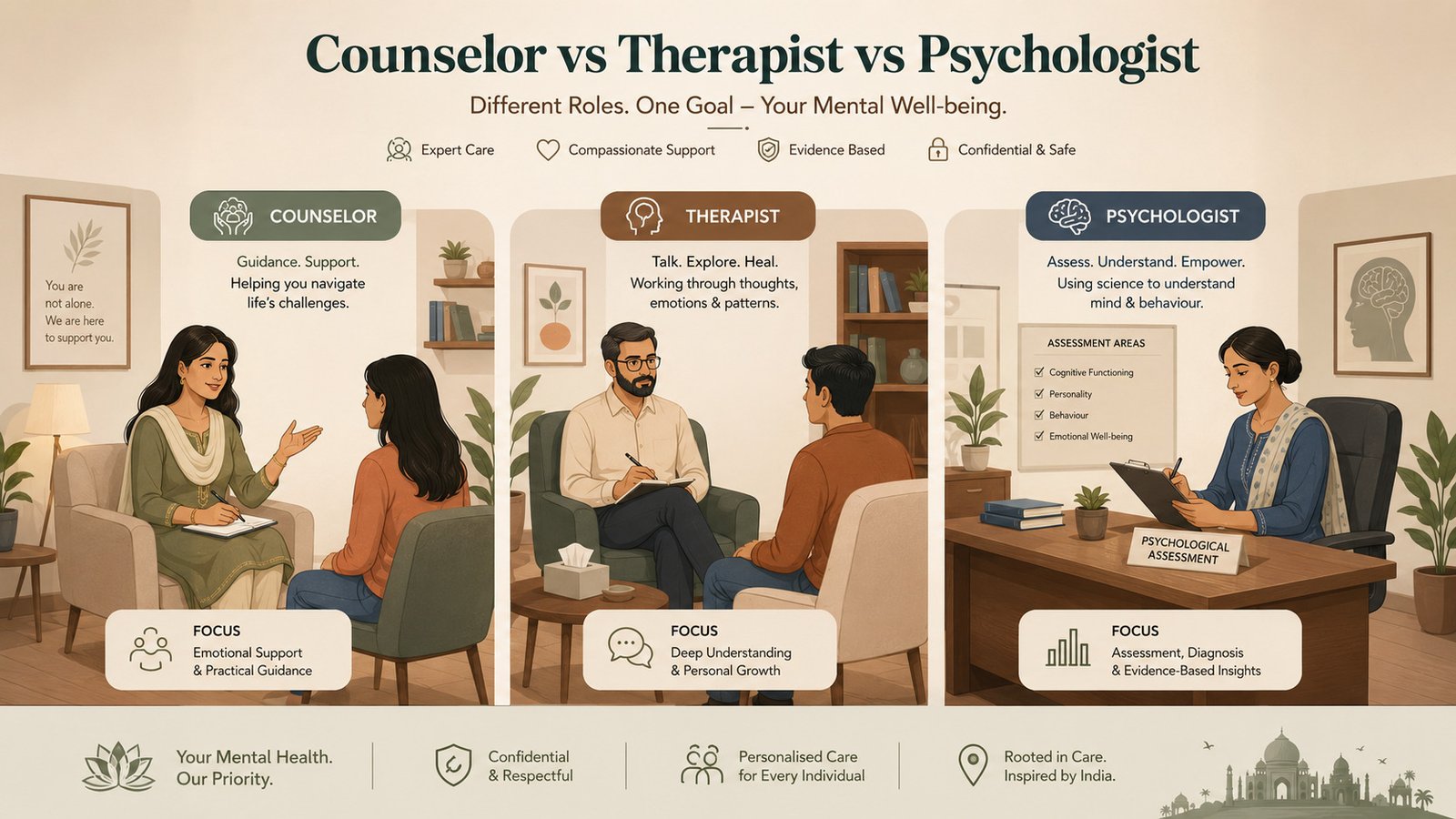
Understanding the overlap and distinct roles of counselors, psychologists, and therapists in the Indian mental health landscape.
What Is a Psychologist? The Counselor vs Psychologist Distinction in India
A psychologist is a trained and typically registered mental health professional who studies human behavior and mental processes, conducts formal psychological assessments, diagnoses mental health conditions, and provides evidence-based therapeutic interventions.
The psychologist sits at a higher level of clinical training than a general counselor. In India, the gold standard is a registered clinical psychologist who holds an M.Phil in Clinical Psychology and is registered with the Rehabilitation Council of India (RCI). This distinction matters enormously, because in India many people call themselves psychologists without holding the qualifications that actually make someone a clinical psychologist in the legal and regulatory sense.
Types of Psychologists in India
-
Clinical PsychologistThe most recognized clinical role. Assesses, diagnoses, and treats mental health conditions using evidence-based approaches. Must hold an M.Phil in Clinical Psychology and RCI registration to practice in a clinical setting in India.
-
Counseling PsychologistBridges counseling and clinical psychology. Typically holds a postgraduate degree with a counseling specialization. Works primarily with adjustment issues, life transitions, and mild to moderate mental health concerns.
-
Child and Adolescent PsychologistSpecialises in the emotional, cognitive, and behavioral development of children and teenagers. Assesses and supports issues like ADHD, learning disabilities, developmental delays, childhood anxiety, and behavioral problems.
-
NeuropsychologistEvaluates how brain function affects behavior, cognition, and emotion. Works closely with neurologists, particularly following brain injury, stroke, epilepsy, or in diagnosing conditions like dementia.
-
Educational PsychologistFocuses on how people learn, particularly within school systems. Assesses learning differences, intellectual disabilities, and advises on educational interventions.
-
Organizational / Industrial PsychologistWorks within corporate settings to improve workplace wellbeing, team dynamics, leadership development, and employee mental health programs.
What Can a Psychologist Treat?
A clinical psychologist in India is trained to assess and treat a wide range of mental health conditions. This includes depression, anxiety disorders, OCD, PTSD, phobias, personality disorders, eating disorders, psychosis (in coordination with a psychiatrist), schizophrenia, bipolar disorder management, addiction, and childhood behavioral conditions such as autism spectrum disorder and ADHD.
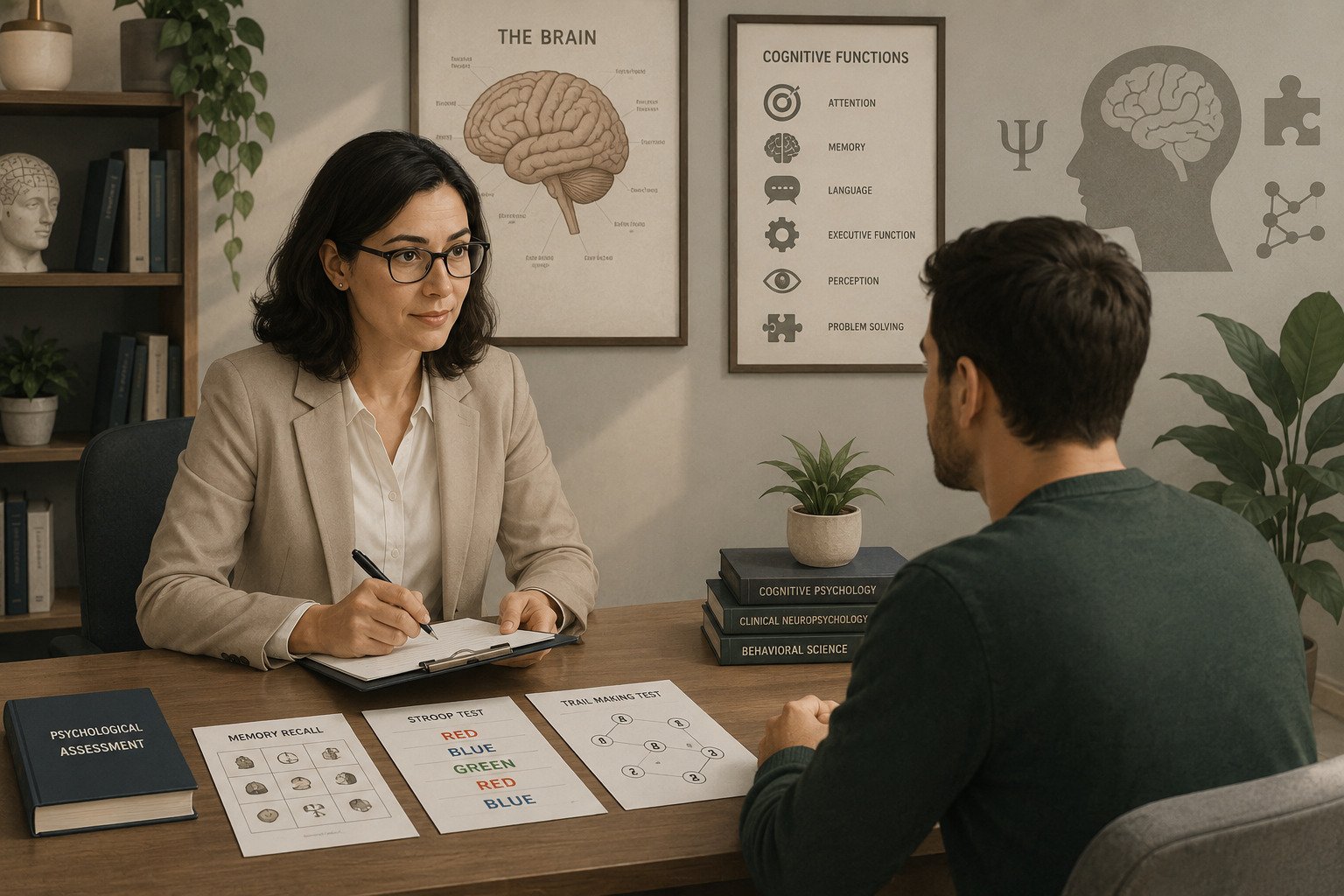
Crucially, psychologists use formal assessment tools to arrive at a diagnosis. These include standardised tests for intelligence, memory, personality, neuropsychological function, and psychopathology. This is a clinical skill that most counselors are not trained to perform.
Psychologist vs Psychiatrist: The Confusion That Hurts People Most
In India, these two are frequently confused. The difference is fundamental. A psychiatrist is a medical doctor who has completed an MBBS and then an MD or Diploma in Psychiatry. Because they are doctors, psychiatrists can prescribe medication. A psychologist cannot prescribe any medication in India.
A psychiatrist handles the medical and pharmacological side of mental health care. A clinical psychologist handles the therapeutic and assessment side. For many conditions, such as severe depression or bipolar disorder, the ideal treatment involves both: a psychiatrist managing medication and a psychologist providing psychotherapy. They are not competing roles; they are complementary ones.
A psychologist without prescribing rights is not a lesser professional. Assessment, diagnosis, and evidence-based psychotherapy are sophisticated clinical skills that take years to develop. Medication is one tool. Therapy is another. Both have their place.
On the clinical role of psychologists in IndiaUnderstanding RCI Registration: Why It Matters for Psychologists in India
The Rehabilitation Council of India (RCI) is a statutory body under the Ministry of Social Justice and Empowerment, established by the RCI Act of 1992. It regulates the training and certification of professionals working in the field of rehabilitation and special education, including clinical psychologists.
To practice as a clinical psychologist in India, a professional must hold an M.Phil in Clinical Psychology from an RCI-recognised institution and register with the RCI. The RCI maintains a public register of enrolled professionals, and it is possible to verify a clinical psychologist's registration on their website before beginning treatment.
How to verify an RCI-registered psychologist in India: Visit the official RCI website (rehabcouncil.nic.in) and use the "Enrolled Persons" search feature. Enter the professional's name or registration number. A genuine clinical psychologist will have an RCI registration number and should be willing to share it with you if you ask. Do not hesitate to check.
The Problem of Fake Psychology Claims in India
This is a serious and underreported issue. India has a significant number of people offering "psychological services" or calling themselves psychologists without any formal training or recognised qualifications. Some have completed short online courses or weekend certification programs that carry no regulatory standing. Others simply use the title because there is no single enforcement mechanism preventing them.
This puts vulnerable people at real risk. Someone in acute distress may pay for months of sessions with an unqualified individual who is simply not equipped to help, and may even inadvertently cause harm. Checking qualifications before beginning any professional relationship is not rudeness. It is appropriate self-advocacy.
What Is a Therapist? The Counselor vs Psychologist vs Therapist Triangle Explained
A therapist is a broad term for a trained professional who uses structured, evidence-based methods to help individuals address psychological, emotional, and behavioral difficulties. The term does not refer to one specific qualification or clinical role.
Here is what makes "therapist" different from the others: it is not a protected title in India, and it is not a specific professional qualification. The word simply describes someone who practices some form of psychological therapy. A clinical psychologist who provides CBT is also a therapist. A certified counselor providing talk therapy is also a therapist. In this sense, therapist is often used informally to describe anyone who provides psychological treatment, regardless of their specific training background.
In Western countries, the word therapist can sometimes be protected in specific contexts, such as "psychotherapist" in some jurisdictions. In India, there is currently no such legal protection for the word "therapist" or "psychotherapist."
Common Types of Therapy a Therapist May Offer
-
Cognitive Behavioural Therapy (CBT)One of the most researched and widely used therapeutic approaches. CBT helps people identify and change unhelpful thought patterns and the behaviours that reinforce them. Effective for anxiety, depression, OCD, phobias, and more.
-
Trauma-Focused TherapyApproaches like EMDR (Eye Movement Desensitization and Reprocessing), trauma-informed CBT, and somatic therapy help individuals process traumatic experiences that continue to affect daily life.
-
Psychodynamic TherapyExplores unconscious patterns, early life experiences, and relational dynamics that shape current emotional and behavioral responses.
-
Family and Systemic TherapyWorks with the family as a unit rather than treating one individual in isolation. Particularly useful in India where family structures and dynamics play a central role in individual wellbeing.
-
Couples TherapyHelps partners communicate better, resolve conflict, rebuild trust, and decide what they each want from the relationship, with a skilled neutral professional facilitating.
-
Mindfulness-Based Cognitive Therapy (MBCT)Combines mindfulness practices with cognitive therapy principles. Particularly effective for preventing relapse in recurrent depression.
-
Acceptance and Commitment Therapy (ACT)Helps individuals build psychological flexibility, accept what cannot be controlled, and commit to value-driven action. Gaining traction across India in clinical and non-clinical settings.
Who Can Legally Practice Therapy in India?
This is the critical question. In India, there is no single licensing board for psychotherapy the way there is for medicine or dentistry. This means both trained clinical psychologists and general counselors with postgraduate qualifications in psychology or counseling may offer therapy. What varies significantly is the depth of training, the range of conditions each can appropriately work with, and the level of accountability they are held to.
A clinical psychologist registered with the RCI is held to a professional and regulatory standard. A general counselor may be highly skilled and ethical, but operates without that same formal oversight. When the presenting concern is a diagnosable mental health condition, a clinical psychologist is the more appropriate choice.
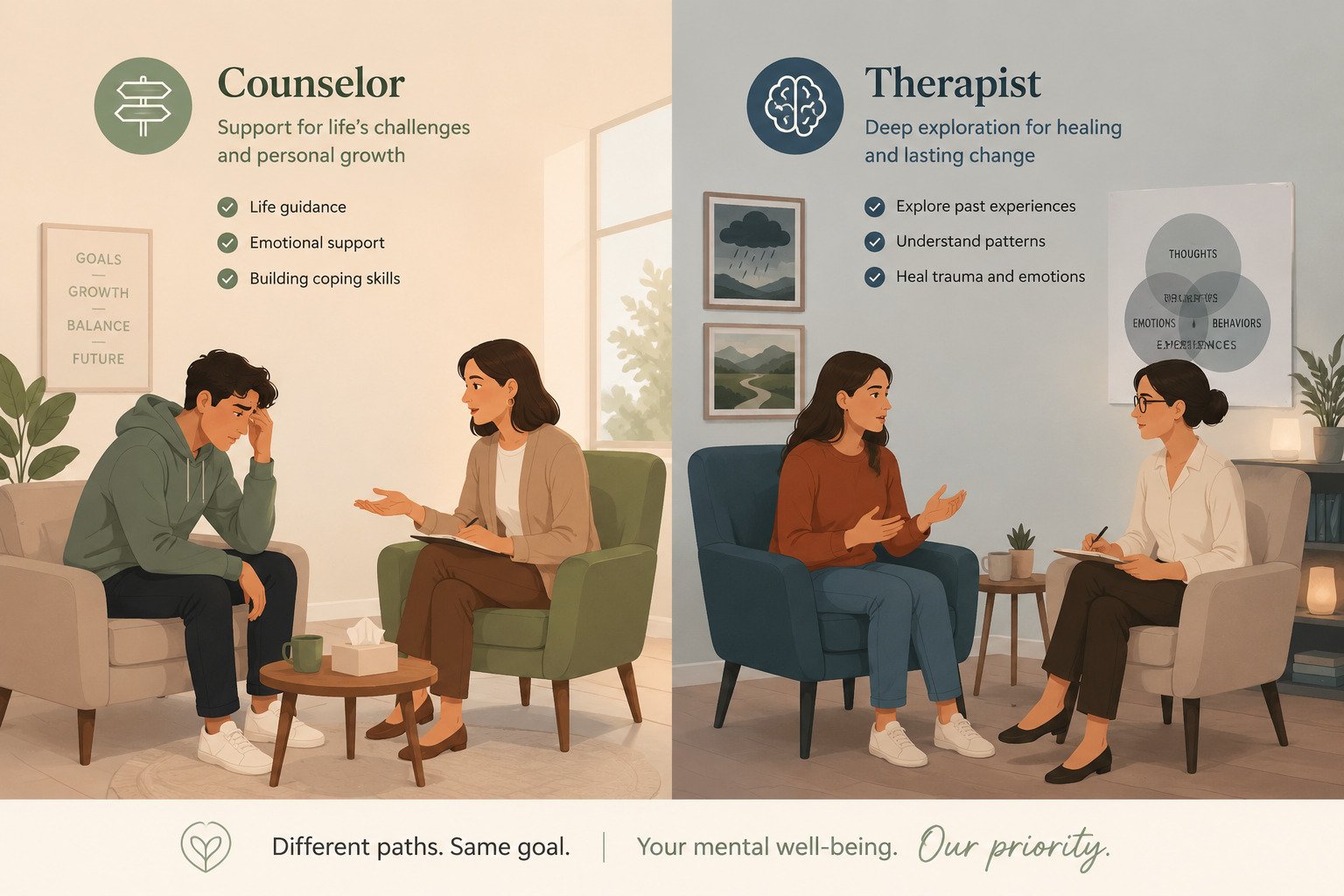
Therapy in India takes many forms across many settings. Understanding the training behind the professional matters.
Counselor vs Psychologist vs Therapist: The Key Differences Side by Side
These comparison tables are designed to give you a clear, honest overview of how these roles differ across the dimensions that matter most when choosing who to see.
Table 1 — Core Role Comparison: Counselor vs Psychologist vs Therapist| Factor | Counselor | Psychologist | Therapist |
|---|---|---|---|
| Primary Focus | Life challenges, emotional support, adjustment | Assessment, diagnosis, clinical treatment | Psychological therapy for emotional/mental health concerns |
| Can Diagnose? | No | Yes (Clinical Psychologist) | Depends on qualifications |
| Psychological Assessment | Generally not | Yes, formally trained | Some, depending on training |
| Can Prescribe Medication? | No | No | No |
| Typical Duration of Work | Short to medium term (8 to 20 sessions) | Variable; can be long-term for complex conditions | Short to long-term depending on therapy type |
| Works With Severe Mental Illness | Not typically | Yes | Some, in coordination with psychiatry |
| Regulated in India | Partially (no single body) | Yes (RCI for clinical) | No specific regulatory body |
| Role | Minimum Qualification | Advanced Qualification | Registration Body |
|---|---|---|---|
| School Counselor | B.A./B.Sc. Psychology | PG Diploma in Guidance & Counseling / M.A. Psychology | None mandated currently |
| General Counselor | B.A./B.Sc. Psychology | M.A. / M.Sc. Psychology (Counseling) | None mandated currently |
| Counseling Psychologist | M.A./M.Sc. Psychology (Counseling specialism) | Supervised clinical hours, certifications | No single body; RCI for some |
| Clinical Psychologist | M.A./M.Sc. Psychology | M.Phil in Clinical Psychology (RCI recognised) | Rehabilitation Council of India (RCI) |
| Psychiatrist | MBBS | MD Psychiatry / Diploma in Psychological Medicine | Medical Council of India (MCI/NMC) |
| Factor | Psychologist | Psychiatrist |
|---|---|---|
| Medical Degree? | No | Yes (MBBS) |
| Can Prescribe Medication? | No | Yes |
| Provides Psychotherapy? | Yes, primary role | Some, but not always |
| Conducts Psychological Assessment? | Yes (clinical psychologist) | Clinical interview only |
| Admission to Hospital Psychiatric Ward? | Cannot admit | Yes |
| Typical Cost per Session (India) | Rs 800 to Rs 3,000 | Rs 500 to Rs 2,000 (consultation, not therapy) |
| Session Duration | 45 to 60 minutes (therapy) | 15 to 30 minutes (consultation) |
The short version for India: If you need medication, you need a psychiatrist. If you need to talk through what you are feeling and work on your patterns of thought and behaviour, you need a psychologist or counselor. For a formal diagnosis of a mental health condition, a clinical psychologist registered with the RCI is your most qualified non-medical option. And for everyday emotional support, life challenges, or relationship work, a well-qualified counselor is often exactly the right choice.
Mental Health in India: The Landscape Behind the Confusion
India's mental health system carries the weight of its history. Decades of underinvestment, deep cultural stigma, and an overwhelming gap between need and provision have created a landscape where confusion between mental health professionals is not just understandable. It is almost inevitable.
The Stigma Problem
In many Indian families, seeking mental health support still carries significant social stigma. Mental illness is often interpreted through moral or spiritual frameworks, discussed in hushed tones, or denied entirely. This stigma delays help-seeking, sometimes until a crisis point, and it also creates a market for unqualified practitioners who offer quick reassurance without the clinical skill to actually help.
The growing willingness of younger generations in India to openly discuss mental health is one of the more encouraging cultural shifts of the past decade. But stigma remains a real barrier, particularly in smaller towns and rural areas.
Urban vs Rural Access
The reality is stark. Qualified clinical psychologists are concentrated overwhelmingly in cities, particularly in metros like Delhi, Mumbai, Bengaluru, Chennai, and Pune. Even in mid-sized cities across Himachal Pradesh, Uttarakhand, or the northeastern states, access to a registered clinical psychologist can require significant travel or long waiting times.
This gap has driven the rapid growth of online therapy platforms in India over the past few years. Services like iCall, Vandrevala Foundation, MindPeers, YourDOST, and Wysa have made access to trained counselors and psychologists possible for many people who previously had no local options. Online therapy is not a second-best alternative; for many people in India today, it is the most practical path to genuine support.
The Fake Practitioner Problem
Because the terms "counselor," "therapist," and even "psychologist" are not fully protected in India, unqualified individuals can and do offer these services commercially. Short online courses that promise a "certified counselor" credential in 30 hours are widely available, and while some may offer useful introductory learning, they do not produce a trained professional. Someone holding only a weekend certification should not be offering ongoing one-to-one mental health sessions to vulnerable individuals.
The Mental Healthcare Act of 2017 was a landmark step forward for India, establishing the right to access mental healthcare and creating a framework for regulation. But implementation across states remains uneven, and consumer protection in this area still has a long way to go.
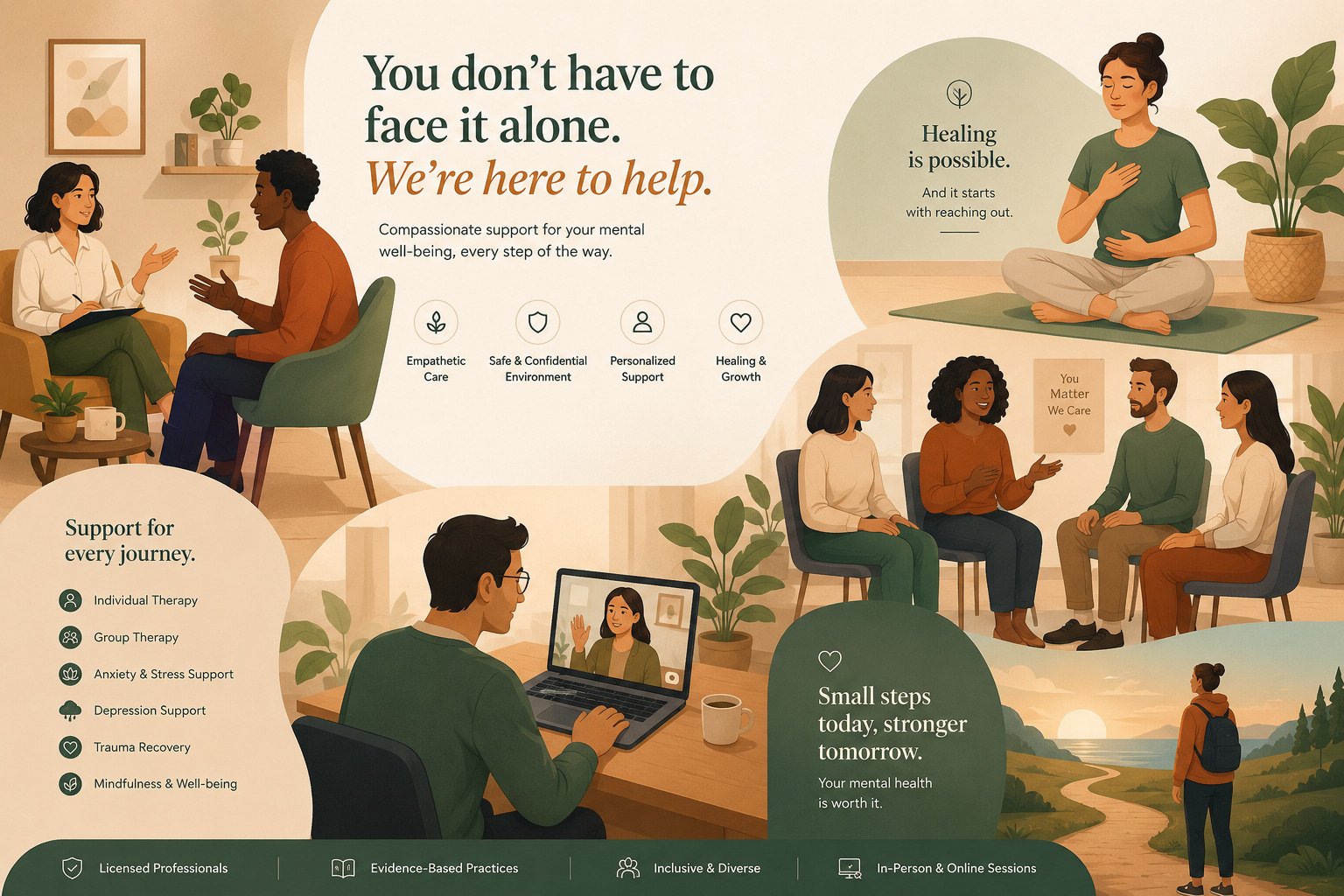
Access to qualified mental health support in India is improving, but significant gaps remain, particularly outside major cities.
Counselor vs Psychologist vs Therapist: Who Should You Actually See?
The most practical question is simply: given what I am dealing with, who is the right person to speak to? Here is a scenario-based guide that maps common situations to the most appropriate professional.
For general anxiety and worry, a counselor trained in CBT is a good starting point. If anxiety is severe, long-standing, or linked to panic attacks or OCD, a clinical psychologist is more appropriate.
A relationship or couples counselor creates a neutral space for both partners to communicate. This is their specialisation, and they are usually the best first port of call.
Grief is not a disorder. A compassionate, trained counselor or therapist who understands bereavement is well-placed to help. Only if grief becomes prolonged or deeply disabling should clinical assessment be considered.
Severe depression often needs both a psychiatrist for medication evaluation and a clinical psychologist for evidence-based therapy such as CBT or behavioral activation. Do not rely on counseling alone here.
Trauma work requires specific training. Look for someone qualified in EMDR, trauma-focused CBT, or somatic approaches. A general counselor without trauma training may not be equipped for this.
Career confusion and academic stress are exactly what career and school counselors are trained for. This does not need a clinical psychologist unless the distress is significantly affecting functioning.
Addiction requires a multi-professional approach. A psychiatrist manages detox and any co-occurring mental health conditions. An addiction counselor supports the psychological and emotional recovery.
Concerns about a child's development, learning, attention, or behavior are best assessed by a trained child psychologist who can conduct standardized developmental and cognitive assessments.
Active psychosis always requires a psychiatrist. Medication is typically the primary intervention. A clinical psychologist may support with psychoeducation and coping strategies alongside, but psychiatric care leads.
You do not need a crisis to seek support. Regular check-ins with a counselor for stress management, self-awareness, and emotional health are valuable and increasingly common across India.
Myths About Counselors, Psychologists, and Therapists That Keep Indians From Getting Help
Some of the barriers to mental health care in India are not logistical. They are rooted in beliefs that have been passed down and rarely questioned. Here are the most persistent myths, and the truth behind each.
"Counselors are not real professionals. Anyone can just give advice."
A trained counselor holds years of postgraduate education, supervised clinical hours, and professional training. Advice from a friend comes from care. Counseling comes from structured training in human psychology, therapeutic technique, and ethics.
"Only crazy people need a psychologist."
Psychologists work with people across the full spectrum of human experience, from everyday stress and relationship difficulties to serious mental health conditions. Seeking help from a psychologist is not a marker of severity. It is a marker of self-awareness.
"Therapists just listen. They don't actually do anything."
Therapy involves structured, evidence-based techniques. CBT changes cognitive patterns. EMDR processes traumatic memory. Psychodynamic work reshapes relational patterns. Listening is the medium, not the method.
"Psychologists will prescribe medicine for everything."
Psychologists in India cannot prescribe medication at all. Only psychiatrists, who are medical doctors, have that authority. A psychologist's tools are assessment, therapy, and psychoeducation.
"Therapy is a Western concept. It doesn't suit Indian culture or families."
Psychological suffering does not respect culture. The desire to understand oneself, resolve conflict, and heal from pain is universal. Many Indian practitioners specifically integrate cultural context and family dynamics into their therapeutic approach.
"If I go to a psychologist, it will go on my record and affect my career."
Mental health professionals are bound by strict confidentiality. Sessions are private. There is no central record that employers, insurance companies, or government bodies can access. Your information is yours.
Common Questions About Counselor vs Psychologist vs Therapist in India
A counselor in India typically holds a postgraduate qualification in psychology or counseling and works with life challenges, emotional difficulties, and relationship issues. They do not diagnose mental health conditions. A clinical psychologist holds an M.Phil in Clinical Psychology, is registered with the RCI, and is trained to formally assess, diagnose, and treat mental health conditions using evidence-based therapy. The psychologist operates at a higher level of clinical training and regulation.
No. A general counselor in India is not trained to formally diagnose mental health conditions. Formal diagnosis requires a clinical psychologist (who uses standardised psychological assessment tools) or a psychiatrist. A counselor may recognize signs of depression or anxiety and appropriately refer you to a qualified professional, but making a clinical diagnosis is outside their scope of practice.
RCI stands for Rehabilitation Council of India, the statutory body that regulates clinical psychologists in India under the Ministry of Social Justice and Empowerment. A clinical psychologist registered with the RCI has completed an M.Phil in Clinical Psychology at a recognised institution and met the professional and ethical standards required for registration. This is the most reliable indicator of formal clinical qualification for a psychologist in India. You can verify registration at rehabcouncil.nic.in.
Not necessarily. A psychologist is a specific professional role with defined qualifications. Therapist is a broader, informal term that refers to someone who provides psychological therapy, but it does not indicate a specific qualification level. A clinical psychologist who provides therapy can be called a therapist, but a therapist is not automatically a psychologist. In India, always ask about the specific qualifications behind the title rather than relying on the word "therapist" alone.
No. Psychologists in India, whether clinical, counseling, or otherwise, do not have the authority to prescribe medication. Only psychiatrists, who are fully qualified doctors with an MBBS and additional specialist training in psychiatry, are licensed to prescribe psychiatric medication in India. If you need medication for a mental health condition, you will need to see a psychiatrist.
Ask directly about their educational qualifications and, for a clinical psychologist, their RCI registration number. A genuine clinical psychologist will hold at minimum an M.Phil in Clinical Psychology from an RCI-recognised institution. You can verify their registration on the RCI's official website. If someone becomes evasive or defensive when asked about qualifications, treat that as a red flag. Qualified professionals are always comfortable with this question.
Costs vary significantly by city, experience, and practice type. A session with a counselor typically ranges from Rs 500 to Rs 1,500 in smaller cities and Rs 1,000 to Rs 3,000 in metros. A clinical psychologist may charge Rs 1,200 to Rs 4,000 per session depending on location and experience. Online therapy platforms often offer more affordable access. Government hospitals and some NGOs offer free or subsidised psychological services if private practice is beyond your budget.
Research increasingly supports the effectiveness of online therapy for a wide range of concerns including anxiety, depression, relationship issues, and stress management. For many people in India, particularly those in smaller cities or towns where qualified professionals are scarce, online therapy is not a compromise. It is the most practical route to genuine, qualified support. Some very severe or complex presentations may be better served by in-person care, but for most everyday concerns, online therapy with a qualified professional is a highly valid option.
For mild to moderate anxiety, a well-trained counselor with experience in CBT is a perfectly appropriate first step. If your anxiety is severe, has been present for a long time, significantly disrupts your daily functioning, or has not responded to counseling, a clinical psychologist can offer formal assessment, diagnosis, and more intensive evidence-based treatment. When in doubt, it is always reasonable to start with a consultation and get a professional opinion on what level of support is most appropriate for your situation.
Yes, qualified mental health support is available in Himachal Pradesh, including through practices like Vaishalya Healing based in Palampur, which offers both in-person and online sessions. Online therapy also significantly expands access for those in more remote parts of the state. The key is verifying qualifications regardless of location, asking about educational background, supervisory experience, and whether the professional holds any relevant registration or certifications.
Counselor vs Psychologist vs Therapist: The Bottom Line for India
The confusion between these three roles is real, understandable, and genuinely worth resolving, because the right support makes a meaningful difference. Here is the simplest way to remember what you have read.
A counselor works with you on life's challenges and emotional difficulties. They listen, guide, and support. They are your first port of call for relationship issues, grief, career confusion, academic stress, and mild emotional distress. A psychologist is trained to formally assess and diagnose mental health conditions, and a clinical psychologist registered with the RCI is the most rigorously qualified non-medical practitioner available in India for complex or serious concerns. A therapist is a broader term, often used to describe any professional who provides psychological therapy, and the quality of that label depends entirely on the training and ethics of the individual using it.
What matters more than the label is the person behind it: their training, their approach, and whether they make you feel genuinely heard rather than processed. Take time to ask questions. Check qualifications. Trust your instincts about fit. And remember that reaching out is never a sign of weakness. It is one of the most intelligent things a human being can do.

Still unsure who is the right person to speak to?
Start with a free consultation.
At Vaishalya Healing in Palampur, Himachal Pradesh, we offer compassionate, qualified counseling and psychological support, in person and online across India. Talk to us and we will help you understand exactly what kind of support would be most helpful for you.
Book a Free Consultation Explore Our ServicesVisit the Clinic
Vaishalya Healing, Palampur
Himachal Pradesh, India
In-person and online consultations available
Get in Touch
For appointments, queries, or a free initial call with our counselor:
Related Reading
Explore more articles on mental health, therapy approaches, and wellbeing in the Indian context:
Online Therapy India
Access qualified counseling support from anywhere in India, including Himachal Pradesh, Punjab, Delhi, and beyond.
Counseling
Help Center
Contact Us
Office Timings: Monday to Saturday, 10:00 AM to 5:00 PM
Address: Mohal Gugga Saloh
Tehsil Palampur, Distt. Kangra
Himachal Pradesh - 176102
Email: help@vaishalyahealing.com
Phone/WhatsApp: +91 7018148449