
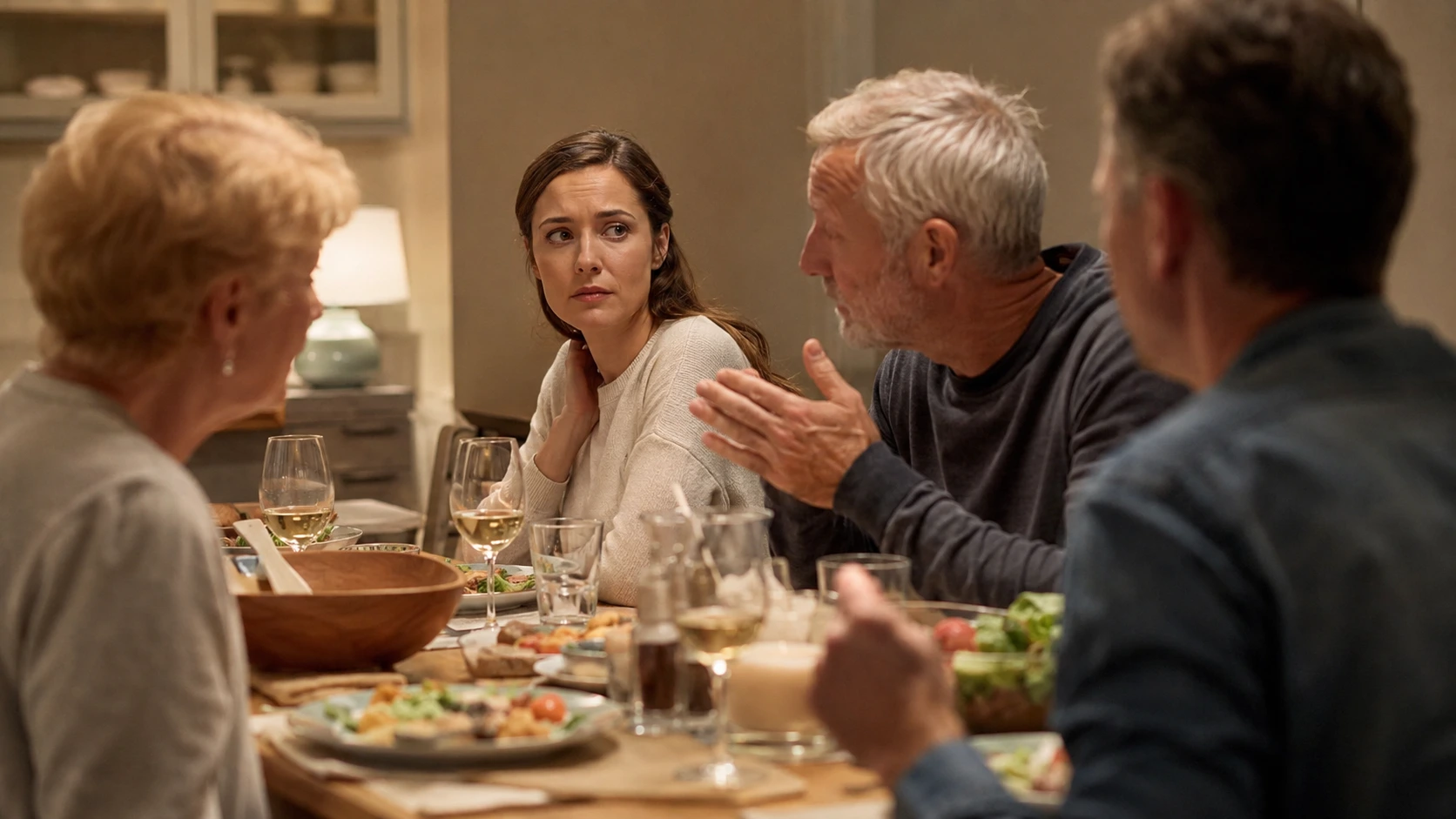
Are You a Highly Sensitive Person (HSP)? Signs, Causes, and How to Manage It
You cry at advertisements when no one else seems to notice them. Loud markets leave you exhausted in a way you cannot quite explain. You feel other people's emotions before they say a word. You need longer than most to decompress after a busy day. You were told growing up that you were "too sensitive," "too emotional," or that you needed to "toughen up." If any of that resonates, you are not broken. You might simply be a Highly Sensitive Person, and that is a very different thing from being weak.
A Highly Sensitive Person (HSP) is someone who has the innate trait of Sensory Processing Sensitivity (SPS): a nervous system that processes sensory and emotional information more deeply than average. It is not a disorder, not a diagnosis, and not something that needs to be fixed. It is a normal variation in human temperament found in roughly 15 to 30 percent of the population and, notably, in over 100 animal species, which tells us something important about its evolutionary purpose.
The concept was formally introduced in 1997 by American clinical psychologist Dr. Elaine N. Aron and her husband Dr. Arthur Aron, who identified sensory processing sensitivity as a distinct personality trait after over a decade of research. Dr. Aron, herself an HSP, describes the trait in her landmark book The Highly Sensitive Person as being present from birth, remaining stable across a lifetime, and carrying both real challenges and real gifts that most people never fully understand. Her 27-item Highly Sensitive Person Scale has been validated across multiple cultures and continues to be the primary research tool in the field.
The DOES Model: The Four Core Features of High Sensitivity
Dr. Aron developed the DOES model as a way to explain the four pillars that define high sensitivity. It is a useful framework because it moves the conversation beyond the popular shorthand of "just being sensitive" into something more precise and, frankly, more respectful of what HSPs actually experience.
-
Depth of ProcessingHSPs do not just notice things more, they process them more thoroughly. Before making decisions, HSPs naturally consider multiple angles, potential outcomes, historical patterns, and emotional implications that others may not consciously register. This depth is why HSPs are often described as thoughtful, careful, and intuitive. It is also why they can feel slower than others in environments that demand quick reactions, and why they need more time alone after stimulating situations to complete that internal processing.
-
OverstimulationBecause HSPs process everything more deeply, they reach a state of overstimulation sooner than others. Crowded malls, back-to-back meetings, loud music, strong smells, violent news, or even a conversation that is emotionally heavy can fill up the HSP's processing capacity faster than for someone with a less sensitive nervous system. This is not weakness. It is a direct consequence of a brain that is doing more work with incoming information than other brains are.
-
Emotional Reactivity and EmpathyHSPs tend to feel emotions more intensely, both their own and those of the people around them. They are often described by others as deeply empathetic, sometimes to a degree that leaves them absorbing the emotional states of those around them without realising it. Research using fMRI scans has found that HSPs show greater activation in brain regions associated with awareness, empathy, and emotional processing than non-HSPs, particularly in the insula and in mirror neuron systems.
-
Sensitivity to SubtletiesHSPs pick up on things that others miss. A shift in someone's tone of voice, an almost imperceptible change in a room's atmosphere, the detail in a painting that no one else noticed, an inconsistency in a story that seemed fine on the surface. This sensitivity to subtleties is why HSPs often make excellent artists, therapists, writers, counsellors, and managers, because they perceive nuance that others genuinely cannot see.
15 Signs You Might Be a Highly Sensitive Person
Not every HSP looks the same, and sensitivity does not always present in the ways people expect. Below are some of the most consistent patterns that show up across research and in therapeutic work with HSPs. Reading through these, pay attention to which ones feel less like descriptions and more like recognition.
A particular song comes on and something in you shifts completely. You stand in front of a painting longer than anyone else in the gallery. You find yourself unexpectedly moved by a scene in a film while others in the room seem unaffected. This is not performative. HSPs process aesthetic experiences at a neurological depth that produces a genuinely different quality of response. The technical term is aesthetic chills or frisson, and HSPs experience it far more frequently and intensely than the general population.
"I have to be careful about what music I play while I work because certain songs completely derail me. Not because they are sad, just because they are beautiful."
This one gets misread as introversion, but there is a real difference. HSPs need recovery time not because people drain them, but because social situations involve high sensory and emotional input, and the HSP nervous system has been doing a lot of processing throughout the event. A wedding, a family gathering, even a dinner with good friends can be genuinely enjoyable and still require hours of quiet solitude afterward to decompress. This is not antisocial behavior. It is biological necessity.
"I genuinely had a wonderful time. I just need the rest of the day to myself now. Please do not take it personally."
When your colleague arrives in a bad mood, your own day shifts. When someone in the house is upset, you feel it as almost a physical presence in the room. HSPs are not imagining this. Research on mirror neuron activation in HSPs shows that when they observe someone experiencing an emotion, the relevant neural circuits in their own brain fire more strongly than in non-HSPs. The popular word "empath" often describes this quality in HSPs, though the mechanism is neurological rather than mystical.
The restaurant the rest of the group loves is too loud for you to enjoy a conversation in. You need to remove the tag from every piece of clothing. Certain artificial fragrances give you an immediate headache. Fluorescent lighting makes you feel vaguely unwell after a while. This heightened physical sensitivity is one of the clearest markers of the trait. It is not pickiness. The sensory information is genuinely registering more intensely at a neurological level.
"Everyone else seems fine with the noise, but I can feel my focus dissolving. I am not being dramatic. It literally becomes hard to think."
The depth of processing that is central to the HSP trait means that quick decisions feel genuinely uncomfortable. When you are asked to decide something on the spot, you are not being indecisive. Your brain is running a more thorough analysis than most people's do, examining more options, more possible outcomes, more potential impacts on other people. Under time pressure, this process gets interrupted and the result is anxiety, not incompetence. In contexts where you can take your time, HSPs often make exceptionally thoughtful and thorough decisions.
A disturbing news story from the morning is still sitting with you in the evening. A violent scene in a film replays in your mind for days. You find yourself avoiding certain kinds of content not because you are squeamish but because your nervous system processes distressing images with an intensity that makes them genuinely difficult to discharge. Many HSPs are selective about what they consume in media precisely because the residue of disturbing content costs them real mental and emotional energy.
HSPs tend to have a strong moral compass and a low tolerance for injustice. Watching someone be treated unfairly, even a stranger, produces a visceral response. They are often the person who speaks up in a meeting when something does not sit right, or the one who checks in on the colleague who seemed off. This conscientiousness is one of the genuine strengths of the trait. It also means HSPs can carry other people's pain in a way that is exhausting when it goes unrecognised.
"I cannot watch anyone suffer, even in fiction. Even if I know it is not real, my body does not seem to know that."
You notice when someone rearranged the furniture slightly. You catch the change in a person's breathing when something bothers them. You spot the error in the document that the entire team reviewed. You notice when a relationship dynamic in the room has subtly shifted. This sensitivity to subtleties is one of the most professionally valuable aspects of the HSP trait, and it is also one of the least understood by the people around them.
Even mild or well-intentioned feedback can sit with you for hours or days. You replay it, examine it from multiple angles, and feel the sting of it long after the other person has moved on. This is not oversensitivity in the pejorative sense. HSPs process evaluative information about themselves with the same depth that they process everything else. Criticism does not just sting, it gets examined thoroughly, and that examination takes time and emotional energy.
"I know the feedback was helpful and my manager was kind about it. But I still lay awake for two hours replaying it."
Dreams are vivid. Your inner monologue is detailed and ongoing. You can become genuinely absorbed in a book, a piece of music, or a train of thought in a way that makes the outside world temporarily recede. This depth of inner experience is one of the characteristics Dr. Aron identified early in her research, and it is part of why HSPs are disproportionately represented in creative fields: they are drawing on an inner world that is, quite literally, richer in detail and feeling than average.
A change in plans at the last minute produces a disproportionate amount of internal turbulence. An unexpected meeting in the middle of a planned work block can derail your whole morning. This is not inflexibility of character. The HSP nervous system functions best with predictability, because predictability reduces the amount of incoming information that needs to be processed. Disruption means more to process, often without having prepared for it.
When your blood sugar drops, it does not just make you hungry, it makes you irritable, unfocused, and emotionally vulnerable in a way that feels out of proportion. Poor sleep affects you more dramatically than it seems to affect those around you. Physical pain is more distracting. The body's signals come through louder in an HSP, which is why managing the basics of sleep, food, and rest is not a luxury for HSPs but a genuine functional necessity.
When the volume of demands, social contact, decisions, and stimulation reaches a certain threshold, you do not simply want quiet. You need it, in the same way you need water. This is the overstimulation aspect of high sensitivity making itself known. The withdrawal is not depression or avoidance in the clinical sense. It is the nervous system calling for the space to complete its processing backlog.
"After a full week, if I do not get a full quiet day on Saturday I feel like something in me starts to malfunction."
Conflict, even conflict that is not about you, activates the HSP nervous system significantly. You may find yourself going to great lengths to prevent disagreement, staying quiet in situations where you have something valid to say simply because the emotional cost of the conflict feels too high. This is one area where understanding the trait can make a real difference, because avoiding necessary conflict becomes its own kind of cost over time.
This is perhaps the most universal HSP experience. The message, from parents, teachers, siblings, peers, that there was something excessive, problematic, or childish about the depth of your feeling. That you needed to toughen up, stop taking things personally, or grow a thicker skin. The tragedy is that most of these messages came from people who genuinely cared about the child and did not understand that what they were observing was a fixed, neutral trait rather than an emotional habit that could or should be trained away.
"I spent twenty years trying to be less sensitive. It was not until I understood what was actually happening that I stopped trying to fix something that was not broken."
What High Sensitivity Actually Feels Like From the Inside

For an HSP, being in the middle of an ordinary crowd is not just stimulating. It is full of information: moods, sounds, undercurrents, details. The challenge is not the world. It is the gap between how much you are taking in and how little of that is visible to others.
One of the most frustrating things about being an HSP is that the experience is largely invisible. The processing is internal. The overstimulation does not show on your face. The exhaustion after a social event looks, from the outside, like you are just tired. And because none of it is visible, it tends to get interpreted through whatever lens the observer has available: laziness, antisocial behavior, moodiness, weakness.
"It is like everyone else is watching a film at normal volume and I am watching the same film but with every emotional scene turned up. I feel it, I process it, I carry it. And nobody around me seems to be doing the same thing. It is not that I cannot handle it. It is that I handle much more of it than anyone realises."
Dr. Aron made a point in her research that the trait is not about being fragile. In the right environment, with the right support and self-understanding, HSPs thrive in ways that non-HSPs simply do not. They notice more, feel more, create more, and often understand other people with a depth that makes them exceptional in roles that demand genuine human attunement. The problem is not the sensitivity. It is the mismatch between the trait and environments that were not designed with HSPs in mind.
What Causes High Sensitivity? The Science Behind the Trait
High sensitivity is not a response to trauma, a phase, or the result of a childhood that was too comfortable. It is an innate, stable trait with identifiable biological underpinnings. Research points to three main contributing factors.
-
Genetics and the Nervous SystemResearch has identified at least three gene clusters associated with high sensitivity, including variations in the serotonin transporter gene (5-HTTLPR). Importantly, this variant does not cause sensitivity in a straightforward way. What it does is make the person more responsive to their environment in both directions: a challenging childhood combined with this genetic profile is associated with higher risk of anxiety and depression, but a supportive, enriching environment combined with the same profile produces outcomes that often exceed those of non-HSPs. The gene is better described as a plasticity gene than a risk gene.
-
Brain Structure and ActivityNeuroimaging studies have shown that HSPs demonstrate increased activation in areas of the brain associated with empathy, self-awareness, and integration of information, particularly the insula and regions of the prefrontal cortex. A key 2014 fMRI study by Bianca Acevedo found that when HSPs were shown photographs of people expressing emotions, their brain responses were measurably stronger than those of non-HSPs, particularly in regions related to empathy and awareness. This is not metaphorical sensitivity. It is neurological.
-
Early EnvironmentResearch by Michael Pluess at Queen Mary University London found that approximately 50 percent of the variation in sensitivity levels is explained by environmental factors, particularly early life experiences. Children who were raised in consistently supportive, attuned environments tend to develop the strengths of the HSP trait more readily. Children who were raised in invalidating or high-stress environments may develop the challenges of the trait more prominently. This does not mean sensitivity is caused by environment. It means the trait is shaped by it in important ways.
Orchids, Tulips, and Dandelions: A New Way of Understanding Sensitivity

The orchid-dandelion framework reminds us that sensitivity is not a flaw. Orchids require specific conditions to flourish, but when those conditions are met, they produce something that dandelions simply cannot.
A 2018 study published in the journal Translational Psychiatry by Lionetti, Aron, Aron, and colleagues provided a data-driven framework that has become one of the most useful in understanding where HSPs fit in the broader population. Rather than two categories, the research identified three distinct sensitivity groups across a sample of 906 adults.
Orchids need the right conditions to thrive. But when those conditions are present, they produce something that dandelions simply cannot.
On what sensitivity research tells us about human potentialAbout 30 percent of the population were classified as Dandelions: people with low environmental sensitivity who are relatively robust regardless of their circumstances. They do not particularly flourish in ideal environments, but they also do not wilt in difficult ones. Another 30 percent were classified as Orchids: the highly sensitive group, more affected by both positive and negative environments than others. The remaining 40 percent, the largest group, were Tulips: people with moderate sensitivity who sit between the two extremes.
What makes this framework genuinely useful, beyond the pleasant imagery, is what it implies about the value of high sensitivity in positive conditions. Orchids do not just "cope" with good environments. They thrive in them at levels that dandelions never reach. This has been referred to as vantage sensitivity: the idea that HSPs benefit more from positive experiences, enriching relationships, good therapy, and supportive environments than anyone else. The trait works both ways.
HSP vs Introvert vs Anxiety: Three Things That Get Confused
These three things overlap in ways that make the confusion understandable, but they are meaningfully different, and treating them as the same leads to misunderstanding and missed support.
| Factor | HSP High Sensitivity | Introvert Introversion | Anxiety Anxiety Disorder |
|---|---|---|---|
| What It Is | An innate personality trait: a nervous system that processes sensory and emotional input more deeply than average. | A personality dimension describing how a person gains and loses energy in relation to social interaction. | A mental health condition involving persistent, disproportionate fear or worry that interferes with daily function. |
| Is It a Disorder? | No. A normal variation in temperament. | No. A personality dimension on a spectrum. | Yes. A clinical condition that requires treatment. |
| Key Feature | Depth of processing: everything is processed more thoroughly, including emotions, sensory input, and information. | Energy: introverts are drained by social interaction and recharged by solitude, regardless of sensitivity. | Fear: anxious people avoid situations due to anticipated threat, not because of processing depth. |
| Social Behavior | 30% of HSPs are extroverts. Social situations can be enjoyable and still overstimulating. | Introverts may prefer smaller gatherings but are not necessarily more emotionally affected by them. | Social avoidance in anxiety is driven by fear of judgment or harm, not sensory or processing load. |
| Response to Good News / Positive Events | HSPs are more deeply affected by positive experiences too, not just negative ones. | Not specifically associated with stronger positive emotional response. | Anxiety can interfere with the ability to enjoy positive events due to anticipatory worry. |
| Can They Overlap? | Yes. An HSP can also be introverted, and an HSP can also develop an anxiety disorder, particularly if they grew up in an invalidating or unpredictable environment. But they are separate things with different implications for support. | ||
| What Helps | Self-understanding, environmental design, appropriate boundaries, and learning to use the trait rather than fight it. | Honouring the need for solitude without shame, and communicating that need to others. | Therapy (particularly CBT or exposure-based approaches), and sometimes medication. Requires professional support. |
Being an HSP can make you more vulnerable to developing anxiety, particularly if your sensitivity was met with repeated invalidation, shame, or an unpredictable environment growing up. But HSP and anxiety are not the same thing. An HSP who has never developed an anxiety disorder can still find the world intensely stimulating. And treating high sensitivity as if it were anxiety, trying to extinguish the sensitivity itself, misses the point entirely. The goal is not to be less sensitive. It is to understand the sensitivity well enough to work with it.
Well-Known Highly Sensitive People: When Sensitivity Becomes Strength
The trait that the world called weakness has quietly driven some of the most extraordinary creative and humanitarian lives in history.
Princess Diana spoke often about her emotional depth and her sensitivity to the suffering of others. It was not her title that made her beloved. It was her willingness to sit beside people who were dying of AIDS when the rest of the world was afraid to be in the same room. Her emotional attunement was not a soft quality. It was her defining power.
Albert Einstein was known by those close to him as someone who felt things deeply, who was moved by music in ways that affected his thinking about physics, and who processed the world with an intensity that those around him found both extraordinary and sometimes exhausting. The same nervous system that made him socially awkward in large groups produced the kind of deep, unconventional thinking that changed our understanding of the universe.
Alanis Morissette, who appeared in Dr. Aron's documentary Sensitive: The Untold Story, has spoken directly about identifying as an HSP and about how her emotional intensity has been both the source of her creative power and the thing that has required the most careful management in her life. Jane Goodall, Martin Luther King Jr., and Mahatma Gandhi have all been identified by researchers and biographers as people whose extraordinary empathy and sensitivity to the suffering of others was the engine of their life's work, not a side effect of it.
In India, public identification with the HSP trait remains uncommon, partly because emotional sensitivity in our culture carries its own specific set of gender-based and social stigmas. This is worth naming directly. The cultural expectation to be "strong," to not show feeling, to not be affected, costs HSPs in Indian families in ways that are not always visible.
Being a Highly Sensitive Person in India: The Specific Challenges

In a culture that prizes resilience and composure, HSPs often carry the private weight of sensitivity alone, without language for it.
The specific cultural context of India creates some particular challenges for HSPs that are worth addressing directly.
The "Drama" Label
In many Indian households, the HSP child's emotional responses get labelled as drama, attention-seeking, or weakness. The child who cries at films, who cannot manage noisy joint family gatherings the way their cousins can, who is described as "too sensitive" at every family event, often internalises the message that there is something wrong with them. This message, repeated across childhood, can produce real psychological damage that is separate from the trait itself. The shame around sensitivity is often the problem, not the sensitivity.
Collective Living and the Need for Solitude
Many Indian families live in close quarters, with little concept of the legitimacy of needing time alone. For HSPs, who require meaningful solitude to process and recover, this can be genuinely depleting. The need for alone time is not rejection of the family. But in contexts where it is interpreted that way, HSPs often suppress the need and pay for it with chronic overstimulation, exhaustion, and irritability that gets read as difficult character rather than nervous system needs.
Gender Expectations
Indian women who are HSPs are often told they are "too emotional" in ways that dismiss what is actually a sophisticated nervous system trait. Indian men who are HSPs face a different version of the same problem: the cultural expectation of emotional stoicism means that male HSPs frequently have no framework at all for understanding what they experience, and may instead express their sensitivity through chronic anxiety, workaholism, or somatic symptoms.
If you have a child, partner, or family member who has always been described as "too sensitive," it is worth considering whether what you are observing is a trait rather than a problem. The sensitive child who cried at everything at age seven often becomes the adult who reads the room most accurately, who does the most careful and thorough work, who holds the family together emotionally in ways no one else can. That sensitivity, supported rather than shamed, is a resource. Dismissed and shamed, it becomes a wound.
How to Manage High Sensitivity: Practical Strategies That Actually Work
Managing high sensitivity is not about making yourself less sensitive. That is both impossible and, if you understand the research, not something you would want. The goal is to understand your own nervous system well enough to create conditions where the trait works for you rather than against you.
You are not managing a problem. You are learning to work with a trait. The sensitivity itself is neutral. What determines whether it is an asset or a burden is primarily the environment you are in, the understanding you have of yourself, and the quality of the boundaries you maintain around your own needs.
Dr. Aron found in her research that HSPs who received a positive, validating message about their sensitivity in childhood showed dramatically better outcomes as adults than those who were shamed for it. The most important therapeutic work with HSPs is often this reframing: from "what is wrong with me" to "what is different about me, and how do I work with it."
Build in Recovery Time Without Guilt
Solitude is not optional for an HSP. It is not a preference or a luxury. It is a biological necessity for a nervous system that is doing more processing than average all day long. Protecting your recovery time, treating it with the same seriousness you would give sleep or food, is not selfish. It is the prerequisite for functioning well in every other area of your life. The HSP who does not protect their recovery time does not become less sensitive. They become dysregulated, irritable, and eventually burnt out.
Curate Your Environment
HSPs benefit enormously from intentional environmental design. This might mean negotiating a quieter workspace, choosing to live somewhere with access to nature, being selective about how many social obligations you take on in a week, or creating a physical space at home that is genuinely calm and low-stimulation. These are not accommodations for fragility. They are how the HSP brain performs at its best. A surgeon does not operate in a noisy, chaotic room. An HSP does not process, create, or connect well in an environment that is constantly overwhelming their nervous system.
Know Your Specific Triggers
Not all HSPs are triggered by the same things. Some are primarily auditorily sensitive, some primarily emotionally, some primarily visually. Mapping your own trigger pattern is one of the most practically useful things you can do, because it allows you to be proactive rather than reactive. If you know that back-to-back social events across a weekend will leave you completely depleted on Monday, you plan for recovery. If you know that certain news content stays with you, you manage your consumption of it. Knowledge of your own pattern is the beginning of self-management.
Learn to Communicate the Trait
Many HSPs spend years managing their sensitivity in secret because they are not sure how to explain it or because they fear being seen as weak. Learning to name the trait clearly, to the people who matter, changes the dynamic significantly. "I need some time alone after the party to decompress. This does not mean I did not enjoy myself" is a sentence that takes courage to say the first time and becomes easier with practice. The people who love you deserve the chance to understand what you actually need.
Seek Therapy That Understands the Trait
Therapy with a therapist who understands high sensitivity is different from therapy with one who does not. A therapist who does not understand the trait may inadvertently frame the sensitivity as a symptom to be reduced. One who does understand it will work with the trait: building skills for overstimulation management, processing the shame messages from childhood, and helping the HSP develop a life structure that honours their nervous system rather than fighting it. At Vaishalya Healing, this is precisely the approach we take in individual counselling work with HSPs.

An HSP in the right environment does not just cope. Research consistently shows that HSPs benefit more from positive conditions, good therapy, and enriching relationships than less sensitive people do.
If Someone You Love Is an HSP: How to Actually Support Them
The most common mistake well-meaning people make with the HSPs in their lives is trying to toughen them up. The encouragement to "stop overthinking," "just enjoy yourself," "not take everything so personally" is offered with love and lands as a message that the person is doing something wrong by being themselves. Here is what actually helps.
- Validate the experience, not just the behaviorThere is a difference between saying "you are allowed to feel this way" and "that reaction was completely reasonable." The first affirms the person. The second judges the reaction. HSPs need to know that their emotional experience is valid, not that it has passed some threshold of proportionality.
- Give them advance noticeHSPs process change and new situations better when they have time to prepare. Springing plans on an HSP at the last minute, even exciting ones, can feel destabilising. A simple "we are going to a party on Saturday" earlier in the week is not a small thing. It is the difference between a prepared nervous system and an overwhelmed one.
- Respect their recovery time without making it about youWhen an HSP needs quiet after a social event, it is not rejection. When they decline the third social invitation of the week, they are managing their own nervous system, not avoiding you. If you can hold space for that without taking it personally, you will have done something genuinely rare and genuinely valuable.
- Do not use their sensitivity against them in conflictSaying "you are too sensitive" in the middle of a disagreement is one of the most invalidating things you can do to an HSP. It redirects the conversation from the issue to their character, and it reactivates every childhood message they ever received about being too much. Address the issue. Leave the trait alone.
- Learn about the trait yourselfDr. Aron's book The Highly Sensitive Person is readable, research-backed, and often experienced by HSPs as the first time they have ever fully seen themselves in writing. Reading it as the partner, parent, or friend of an HSP is one of the most concrete acts of understanding you can offer.
Common Questions About Being a Highly Sensitive Person
No. High sensitivity, or Sensory Processing Sensitivity, is not a disorder, not a diagnosis, and not something that appears in the DSM-5 or ICD-11. It is a normal, innate variation in human temperament found in approximately 15 to 30 percent of the population and in over 100 animal species. It cannot be treated away, and it should not be. Being an HSP can make a person more vulnerable to developing certain mental health challenges, particularly anxiety or depression, if their sensitivity was met with consistent invalidation or stress in childhood. But the sensitivity itself is the trait, not the problem.
Yes, and this surprises many people. Research by Dr. Elaine Aron found that approximately 30 percent of HSPs are actually extroverts. They genuinely enjoy social interaction and gain energy from it, but they also reach overstimulation sooner than non-sensitive extroverts. An extroverted HSP might love a party but need significant quiet time the following day. The confusion arises because introversion and sensitivity often co-occur, but they are separate traits. Introversion describes how you relate to social energy. Sensitivity describes how deeply you process all environmental and emotional input.
High sensitivity is a temperament trait: an innate way of processing sensory and emotional information more deeply. Anxiety is a clinical condition involving persistent, disproportionate fear or worry that impairs functioning. The two can co-exist, and research suggests that HSPs, particularly those who grew up in invalidating or unpredictable environments, are more vulnerable to developing anxiety disorders. But an HSP who has not developed an anxiety disorder still experiences the world with greater intensity than most people. The key practical difference: high sensitivity is managed by understanding and working with the trait. Anxiety is a mental health condition that responds to therapy, and sometimes medication.
The key is whether the pattern is lifelong and cross-situational, or recent and situational. High sensitivity is an innate trait that has been present since childhood, across all contexts and circumstances. If you have always processed things more deeply, always been more affected by stimulation and other people's emotions, always needed more recovery time than those around you, that pattern points toward the trait rather than a phase. If the heightened sensitivity is new and emerged following a stressful event, grief, burnout, or major life change, that is worth exploring separately with a professional, as it may reflect a different process entirely.
Research suggests that high sensitivity is equally distributed across genders, but it presents differently and is identified differently depending on gender. Women who are HSPs tend to be more readily identified because emotional sensitivity in women is more culturally visible and talked about. Men who are HSPs often go unrecognised because emotional depth in men conflicts with cultural expectations of stoicism. Male HSPs may express their sensitivity through somatic symptoms like headaches or chronic fatigue, through perfectionism, or through anxiety, rather than through the emotional openness that tends to get labelled as sensitivity. Both need support. Both deserve to understand themselves accurately.
The underlying trait does not change. High sensitivity is an innate feature of your nervous system, present from birth and stable across your lifetime. What can and does change is how you relate to the trait. HSPs who understand themselves well, who have built environments that suit their nervous system, who have worked through the shame messages they received in childhood, and who have developed practical skills for managing overstimulation often report feeling significantly more comfortable in their own skin as they get older. They are not less sensitive. They are more skilled at working with sensitivity, and more at peace with what it means about them.
Dr. Elaine Aron's 27-item Highly Sensitive Person Scale is available at her website, hsperson.com, and is the most widely used and validated measure of the trait. The self-test is not a clinical diagnosis but a useful starting point for self-understanding. Reading the 15 signs listed in this article and reflecting honestly on which ones have been present across your life is also a good starting point. If you score highly and want to explore what that means for your mental health, relationships, and daily functioning, speaking with a counsellor or psychologist who is familiar with the trait will give you a much more nuanced and useful picture than any online test alone.
Awareness of the HSP trait among mental health professionals in India is growing, but unevenly. In larger cities, there are therapists who work specifically with HSPs. Online therapy has made HSP-aware counselling much more accessible across India. At Vaishalya Healing in Palampur, Himachal Pradesh, we work with clients who are navigating high sensitivity, including the anxiety, exhaustion, and relationship challenges that often accompany an unrecognised trait. Sessions are available both in person and online across India. iCall, run by TISS, is available at 9152987821 for general mental health support and can provide referrals.
High Sensitivity Is Not Something to Overcome. It Is Something to Understand.
If you have recognised yourself in this article, whether in the DOES model, the 15 signs, the descriptions of how it feels from the inside, or the specific Indian cultural pressures around emotional depth, that recognition matters. Not because it gives you an excuse for anything, but because accurate self-knowledge is the foundation of every form of psychological wellbeing that actually lasts.
The research is consistent and clear: HSPs who understand their trait, who stop fighting it and start working with it, report higher life satisfaction than HSPs who do not. The sensitivity that you were told was your weakness is, in the right conditions, your deepest source of creativity, empathy, integrity, and connection. The conditions are what matter. And the conditions are, to a significant degree, within your power to change.
If you want to explore what understanding and working with your sensitivity could look like, with professional support, we are here. In person at Vaishalya Healing in Palampur, and online across India.

Your sensitivity is not the problem.
Not understanding it is.
At Vaishalya Healing in Palampur, we work with Highly Sensitive People who are ready to stop fighting their nervous system and start building a life that works with it. In person and online across India. The first step is always just a conversation.
Book a Free Consultation Explore Individual CounsellingVisit the Clinic
Vaishalya Healing, Palampur
Himachal Pradesh, India
In-person and online sessions
Related Reading
Borderline Personality Disorder →
Anxiety & Stress Counselling →
Hidden Triggers of Anger →
Online Counselling India
HSP-aware counselling accessible from anywhere in India. Confidential and qualified.
Counseling
Help Center
Contact Us
Office Timings: Monday to Saturday, 10:00 AM to 5:00 PM
Address: Mohal Gugga Saloh
Tehsil Palampur, Distt. Kangra
Himachal Pradesh - 176102
Email: help@vaishalyahealing.com
Phone/WhatsApp: +91 7018148449