
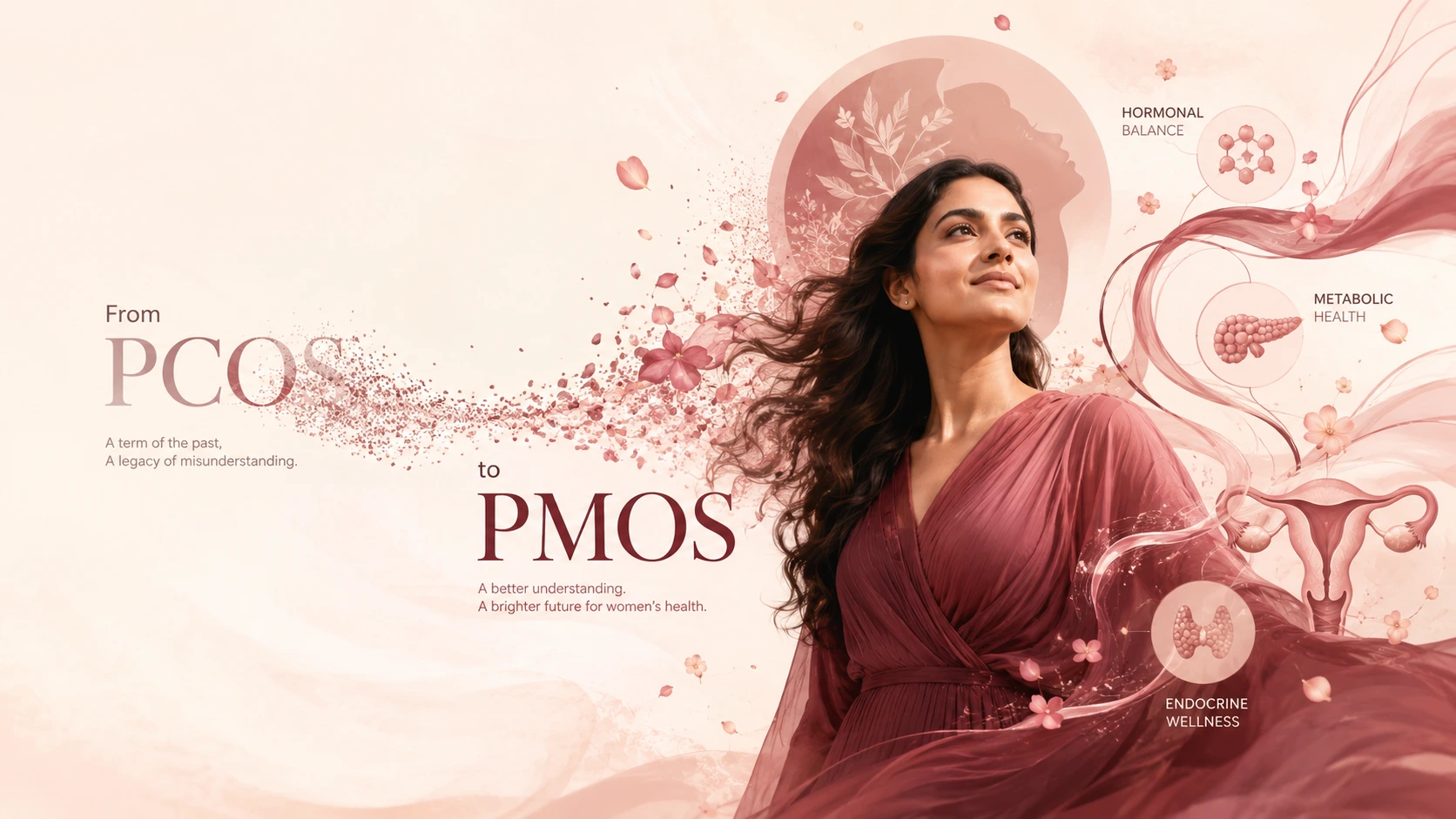
PCOS Is Now Called PMOS: Why the Name Changed and What It Means for Women in India
On 12 May 2026, a paper published in The Lancet officially renamed PCOS to PMOS. Over 50 global organisations, 14,300 patients, and 11 years of research led to this moment.
If you or someone you know has been living with PCOS, something significant just happened. The name you have been using for years, the name that has shaped every diagnosis, every conversation with a doctor, every Google search at midnight, has officially been changed. Polycystic Ovary Syndrome is now Polyendocrine Metabolic Ovarian Syndrome, or PMOS. This is not a rebrand. It is a reckoning with decades of medical mislabeling that left millions of women confused, misdiagnosed, and undertreated.
For women in India, where this condition affects an estimated 18 to 22 percent of women of reproductive age, this change carries particular weight. Here is everything you need to understand about what happened, why it happened, who made it happen, and what it actually means for you.
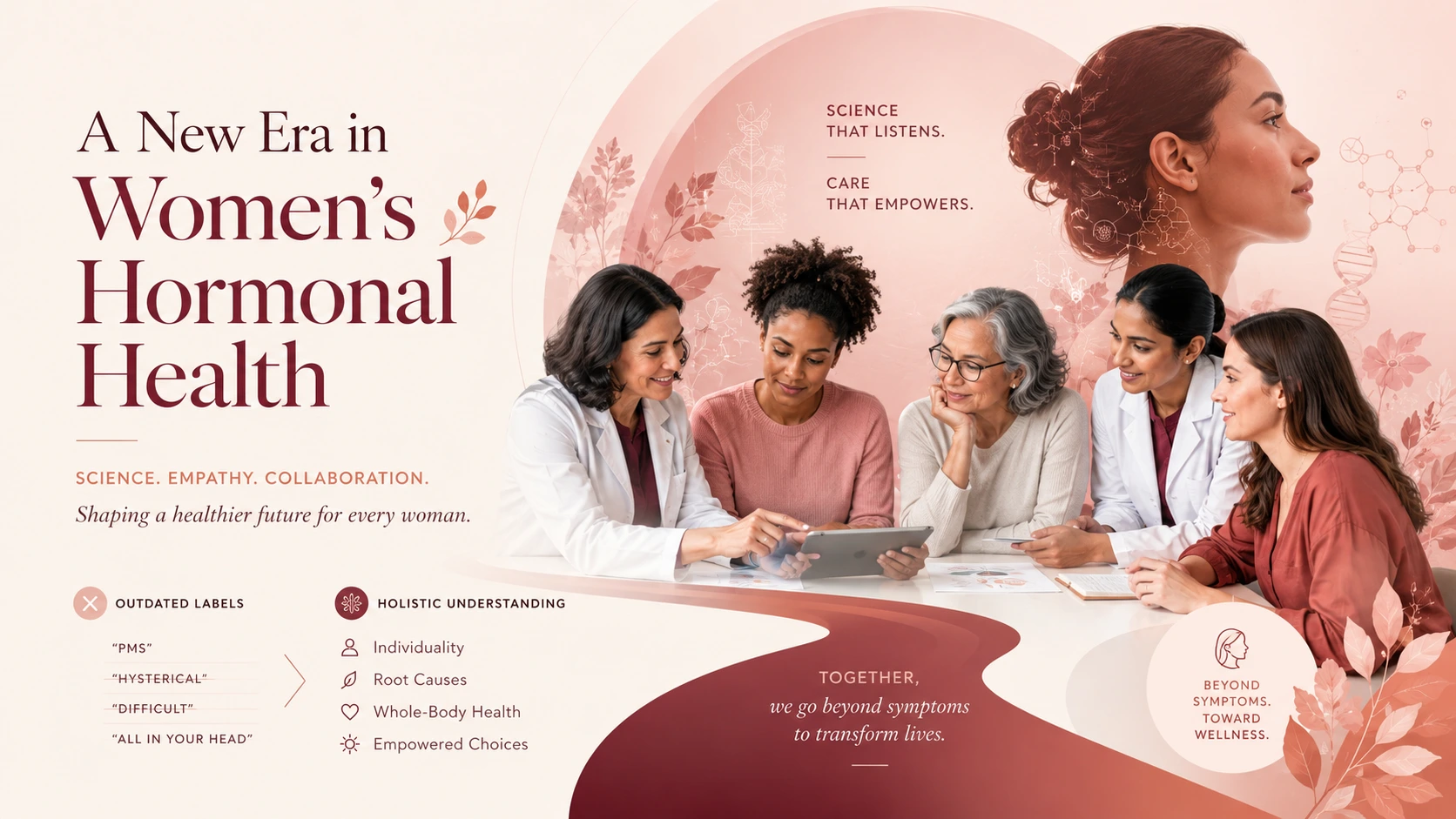
PMOS reframes the condition as a multi-system hormonal and metabolic syndrome, not merely an ovarian disorder.
What Does PMOS Stand For? Breaking Down the New Name
PMOS stands for Polyendocrine Metabolic Ovarian Syndrome. Each word was chosen deliberately to describe what the condition actually is, rather than what it is not.
Recognises that PMOS is driven by multiple interacting hormonal disturbances, including insulin, androgens (male hormones), and neuroendocrine signals. It is fundamentally a hormone disorder, not an ovarian one. "Poly" means many. The endocrine system is the body's hormonal communication network.
Directly acknowledges insulin resistance, weight gain, increased risk of type 2 diabetes, and cardiovascular disease as core features of the condition, not side effects. For too long, doctors treated the reproductive symptoms while the metabolic risks were overlooked entirely.
The ovaries remain in the name, but in their proper place: as one part of a multi-system condition, not the whole story. The ovaries are affected by the hormonal chaos, not its sole origin. Ovulatory dysfunction, irregular periods, and fertility challenges remain part of the clinical picture.
Correctly identifies this as a syndrome, meaning a cluster of symptoms and features rather than a single, discrete disease. A syndrome cannot be pinned to one cause or one organ. This framing opens up research, treatment, and funding in ways that the old name actively restricted.
Why PCOS Was the Wrong Name All Along
The name Polycystic Ovary Syndrome was coined in the 1930s when medical understanding of hormonal disorders was in its infancy. The name came from the observation that some women's ovaries appeared to contain multiple small follicles on ultrasound scans, follicles that were described as cysts. The problem is that this observation was never accurate, and it was never sufficient to define the condition.
The "Cysts" Were Never Really Cysts
This is perhaps the most fundamental problem with the old name. The fluid-filled follicles visible on ultrasound in women with PCOS are not pathological cysts in the way that word implies. They are immature follicles that did not complete ovulation. Calling them cysts created an immediate misunderstanding, both for patients and for many doctors. Women with PCOS spent years worrying about cysts rupturing or requiring surgery. Women without visible follicles on ultrasound were sometimes told they did not have PCOS, even when they had every other symptom. And women who had ovarian cysts for completely unrelated reasons were sometimes incorrectly told they had PCOS.
The Lancet paper published on 12 May 2026 states this directly: the term PCOS is "inaccurate, implying pathological ovarian cysts." That single word, cysts, contributed to a cascade of diagnostic errors affecting hundreds of millions of women over decades.
The Ovary-First Framing Buried the Bigger Picture
By centering the name on the ovaries, the medical community unconsciously narrowed how doctors thought about the condition and how they treated it. PMOS causes insulin resistance, raises the risk of type 2 diabetes three to seven times above the general population, increases cardiovascular disease risk, causes significant skin changes including acne and hirsutism, affects mental health, disrupts sleep, and alters how the body manages weight throughout a woman's life. None of that is captured by "polycystic ovary."
Dr. Melanie Cree, a pediatric endocrinologist and professor at the University of Colorado who worked on the renaming process, put it plainly: "The majority of women don't get appropriate metabolic screening." The old name made doctors think about fertility. It made them miss diabetes risk. It made them miss cardiovascular risk. That is not a minor oversight. That is a structural failure baked into the language itself.
For too long, the name reduced a complex, long-term hormonal disorder to a misunderstanding about cysts and a focus on ovaries. This contributed to missed diagnoses and inadequate treatment.
Endocrine Society, May 2026The Name Created Stigma
The word "polycystic" also carried stigma that the condition itself did not deserve. Women were made to feel that something was structurally wrong with their ovaries, that they were "broken" in a way that was visible and permanent. The clinical reality is that PMOS is a hormonal and metabolic disorder. The ovarian appearance is a consequence, not the cause. A name that placed the ovaries at the centre of the story sent women down the wrong path emotionally as well as medically.
Who Led the PCOS Name Change Campaign?
This name change did not happen overnight, and it did not happen because of one person. But if there is one name that sits at the centre of this story, it is Professor Helena Teede.
Professor Helena Teede
Professor Teede is the Director of Monash University's Monash Centre for Health Research and Implementation and an endocrinologist at Monash Health in Australia. She has spent decades researching PCOS, treating patients with the condition, and watching firsthand how the wrong name was leading to wrong care. The push toward renaming the condition began building momentum from a presentation she gave at the International Congress of Endocrinology in 2012, and she led the global consensus process that culminated in the Lancet publication this May.
Teede is characteristically clear-eyed about the resistance she expected. "It costs them money, and they have a loud voice and a loud platform," she said, referring to businesses and influencers who had built brands around the PCOS identity. "And yet, we know from women in the community they really want this."
Rachel Morman and the Patient Voice
Rachel Morman, Chair of Trustees at Verity, the United Kingdom's leading charity for people with PCOS, represented the lived experience perspective throughout the global process. Her role mattered enormously because the name change was never purely academic. It was designed, from the beginning, to reflect what patients actually needed from a name. When the three final candidate names were put to a vote of 90 clinicians, researchers, patients, and advocates, PMOS won with 87 votes in favour. "I'm incredibly pumped about what's to come as a result of this," Morman said after the result.
56 Organisations and 14,300 People
The process that produced this name change involved 56 leading academic, clinical, and patient organisations. The global surveys gathered responses from over 14,300 people living with the condition and from multidisciplinary health professionals across every world region. The paper in The Lancet describes it as "an unprecedented, rigorous, multistep global consensus process." This was not a committee decision made behind closed doors. It was one of the largest patient-centred naming exercises in modern medical history.
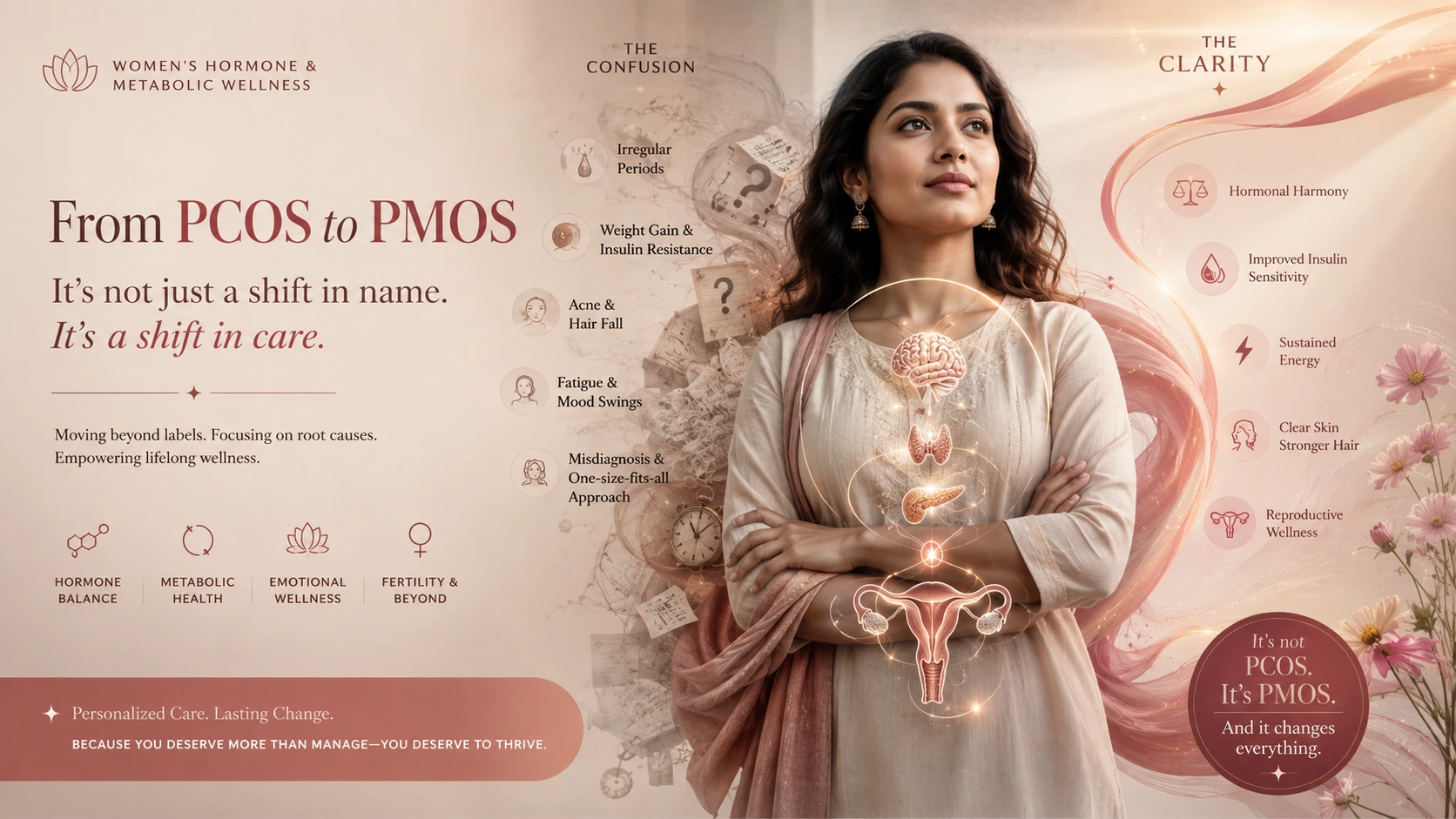
For the estimated 1 in 5 Indian women of reproductive age living with PMOS, the renaming represents a shift in how the condition is understood and treated.
11 Years to Change a Name: The Timeline
NIH panel calls PCOS name "a distraction and an impediment to progress"
A US National Institutes of Health workshop panel formally recommended the name be changed, noting it "causes confusion and is a barrier to effective education." At an international endocrinology congress the same year, 72 percent of 3,500 participants agreed the name should change. But no consensus on a new name could be reached.
Helena Teede proposes "metabolic reproductive syndrome" at endocrinology congress in New Orleans
The push intensifies. A new candidate name enters the conversation. The argument is now not just about whether to rename but about what the replacement should capture. The campaign moves from debate to structured research.
Global consensus process begins with 56 organisations, iterative surveys of 14,300+ people
The formal naming process establishes governing principles: scientific accuracy, clarity, stigma avoidance, cultural appropriateness, and implementation feasibility. Three finalist names emerge from the process.
PMOS officially announced in The Lancet and at the European Congress of Endocrinology in Prague
PMOS wins the vote 87 to 3 among a panel of 90. The paper is published simultaneously in The Lancet and announced at a major international conference. The Endocrine Society and over 50 global partner organisations release coordinated statements of support.
PCOS replaced by PMOS in the International Classification of Diseases
The WHO's ICD system is the global standard that governs medical coding, insurance claims, research databases, and clinical guidelines worldwide. When PMOS enters the ICD, the old name is formally retired from the medical system internationally.
What the Lancet Paper Said and Why It Matters
The paper published in The Lancet on 12 May 2026 is not just a naming announcement. It is a foundational document that argues for a complete restructuring of how this condition is understood, classified, and treated globally.
The authors state that the old name was "inaccurate, implying pathological ovarian cysts, obscuring diverse endocrine and metabolic features, and contributing to delayed diagnosis, fragmented care, and stigma, while curtailing research and policy framing." This is significant language in a medical journal. It is an explicit acknowledgment that the wrong name caused real harm to real patients.
The paper also describes the principles that guided the naming process: scientific accuracy came first, ahead of retaining the familiar PCOS acronym. That decision reflects how seriously the working group took the task. Keeping PCOS-adjacent branding would have been easier and cheaper. But it would have undermined the entire purpose of the change.
What happens next, practically: Over the next two years, clinical guidelines will be updated to reflect the new name and the expanded understanding of the condition it represents. Medical education curricula will change. Research funding bodies will begin using PMOS as the classification. Insurance and billing codes will update when the ICD revision takes effect in 2028. The coalition anticipates pushback from commercial entities that have built products and platforms around the PCOS brand.
The change will not happen instantly everywhere. But the medical consensus has now been established. The direction is set.
PCOS vs PCOD: Still Confusing? Here Is the Actual Difference
In India, the terms PCOS and PCOD have been used almost interchangeably for years, often by doctors, gynaecologists, and patients alike. Now that PCOS has become PMOS, it is worth getting clear on what PCOD actually refers to, because it is a distinct condition.
| Factor | PMOS (formerly PCOS) | PCOD (Polycystic Ovarian Disease) |
|---|---|---|
| What it is | A complex endocrine and metabolic syndrome affecting multiple body systems | A condition where ovaries release immature or partially mature eggs that accumulate as cysts |
| Severity | More complex, systemic, and long-term | Generally considered milder and more reversible |
| Hormone involvement | Multiple hormonal disruptions: insulin, androgens, LH/FSH ratio, neuroendocrine signals | Hormonal imbalance primarily affecting ovarian egg maturation |
| Insulin resistance | Core feature, present even in lean women | Less prominent; not always present |
| Metabolic risks | Significantly elevated risk of type 2 diabetes, cardiovascular disease | Lower metabolic risk overall |
| Fertility | Can affect ovulation and fertility significantly | Pregnancy often achievable with lifestyle changes |
| Mental health impact | Higher rates of anxiety, depression, eating disorders | Some emotional impact, generally less severe |
| Treatment approach | Long-term management across endocrinology, gynaecology, metabolic health, mental health | Often manageable through lifestyle changes alone |
The confusion between PCOS and PCOD in India has led to significant under-treatment of PMOS. Women diagnosed with "PCOD" (the milder version) may not be receiving the metabolic screening and long-term monitoring they need if they actually have PMOS. If you have received a PCOD or PCOS diagnosis and have not been screened for insulin resistance, blood sugar levels, or cardiovascular risk factors, it is worth asking your doctor about this specifically.
What the PCOS Renamed PMOS Means Specifically for Women in India
India carries one of the highest burdens of this condition globally. Studies estimate that PMOS affects 18 to 22 percent of Indian women of reproductive age, which is significantly above the global average of 1 in 8. The reasons are layered: genetic predisposition in South Asian populations, dietary patterns heavy in refined carbohydrates, sedentary urban lifestyles, high chronic stress, and historically low awareness of the condition's metabolic dimensions.
A study published in NCBI examining ethnic Indian women with PCOS found a one-year delay in seeking medical help and a seven-month diagnostic delay after that. Women reported poor satisfaction with the information provided about their condition and its treatment. Poor quality of life scores in weight and emotional domains were common. These are not statistics from a distant era. They describe what Indian women are experiencing right now.
The Diagnosis Problem in Indian Healthcare
In India, PMOS is still most often discovered through a gynaecologist, because the presenting symptoms, irregular periods, difficulty conceiving, or skin changes, bring women to obstetric and gynaecological care first. What frequently happens next is that treatment focuses almost entirely on the reproductive symptoms, regulating periods with oral contraceptive pills, or addressing fertility, and the metabolic investigation that should happen alongside this rarely does.
The new name, and the new framing it carries, is intended to change this. When a condition is called Polyendocrine Metabolic Ovarian Syndrome, it becomes harder for a gynaecologist to treat only the "ovarian" part and send the patient home. The name itself demands a broader clinical conversation.
Stigma in the Indian Context
In India, symptoms like facial hair growth (hirsutism), acne, and weight gain carry significant social stigma. Women with PMOS often describe years of being told by family members that they need to lose weight, that their skin issues are a hygiene problem, or that their irregular cycles will "sort themselves out after marriage." These dismissals delay diagnosis and cause real psychological harm. The reframing of PMOS as a hormonal and metabolic condition, rather than something connected to the appearance of ovaries or fertility alone, is a step toward taking the condition and the people who have it more seriously.
What Will Actually Change Because of This Rename?
-
Clinical guidelines will be updatedMedical associations globally are expected to update their guidelines to reflect both the new name and the expanded understanding of PMOS as a multi-system condition. This means new protocols for metabolic screening alongside reproductive care.
-
Research funding is likely to expandOne of the quieter but significant consequences of the old name was that it limited which funding bodies and research disciplines engaged with the condition. A name that explicitly includes "metabolic" and "endocrine" opens doors to cardiology, diabetes, and endocrinology research streams that previously sat at a distance.
-
Medical education will shiftFuture doctors trained under the PMOS framework will learn from the beginning that this is a multi-system condition requiring multi-disciplinary care. The metabolic risks will not be an afterthought. They will be in the name.
-
Patient conversations will changeWomen newly diagnosed with PMOS will receive information that more accurately reflects what is happening in their bodies. The confusion about cysts, the narrow focus on fertility, and the dismissal of metabolic symptoms should all reduce over time as the new framing becomes standard.
-
ICD classification will update by 2028The International Classification of Diseases is used for everything from hospital billing to global health statistics. When PMOS replaces PCOS in the ICD, the change becomes embedded in the infrastructure of global healthcare.
-
Some things will not change immediatelyDoctors, patients, pharmacies, support groups, and apps will not switch overnight. The Endocrine Society notes that over the next three years the new name should percolate through the medical and scientific communities. Expect a transition period where both names are in use simultaneously.
The Mental Health Dimension of PMOS That the Old Name Ignored
One of the least discussed aspects of this condition has always been its psychological dimension. Women with PMOS experience significantly higher rates of anxiety, depression, eating disorders, and poor quality of life compared to women without the condition. Research consistently shows that the emotional burden of living with unpredictable symptoms, body changes, fertility uncertainty, and a condition that many doctors do not fully understand is substantial.
Part of the psychological burden came directly from the name. Telling someone they have "polycystic ovaries" without adequate explanation frequently led to catastrophic thinking, fears about cancer, fears about permanent infertility, and shame about body changes that were hormonal and not within the woman's control. Better language does not erase these experiences, but it does make the honest conversation between patient and doctor more possible.
If you are living with PMOS and find that the emotional and psychological weight of the condition is significant, that is a legitimate part of your care to address. Anxiety and depression related to chronic health conditions are well understood by counselling psychologists, and the connection between hormonal disruption and mental health is increasingly recognised in clinical practice. You do not need to manage that dimension alone. Our piece on 10 signs of anxiety you might not realise you have explores how this kind of background distress can sit quietly in the body and mind without always being obviously named.
Real Questions About PCOS Being Renamed PMOS
Yes, this is official. On 12 May 2026, a global consensus paper published in The Lancet, one of the most respected medical journals in the world, formally announced the rename from PCOS to PMOS (Polyendocrine Metabolic Ovarian Syndrome). The announcement was supported by over 50 global academic, clinical, and patient organisations, including the Endocrine Society. The change will be reflected in the International Classification of Diseases by 2028, making it the global standard. The process behind the name change involved 14,300 patients and health professionals from all world regions over more than a decade.
The name Polycystic Ovary Syndrome was inaccurate in two fundamental ways. First, the "cysts" it referred to are not true cysts. They are immature follicles that did not complete ovulation. Many women with the condition have no visible follicles on ultrasound at all, while some women without the condition do. Second, the name focused entirely on the ovaries, ignoring the fact that the condition is actually a complex hormonal and metabolic disorder affecting insulin regulation, androgen levels, cardiovascular health, skin, mental health, and the neuroendocrine system. This narrow framing led doctors to treat only the reproductive symptoms while missing the metabolic risks. The name change is designed to fix that at a structural level.
The condition you have is the same. What has changed is the name and the framework around it. The most useful thing you can do right now is to ask your doctor whether your care has included metabolic screening, specifically blood sugar levels, insulin resistance, lipid panel, and blood pressure monitoring. If your treatment has focused mainly on your periods or fertility and you have not been assessed for metabolic risk, this is the moment to raise it. The rename is a good opening to have a more complete conversation about your health. You do not need to wait until PMOS replaces PCOS everywhere to benefit from a more thorough approach to your care.
PMOS (formerly PCOS) is a complex multi-system hormonal and metabolic syndrome. PCOD (Polycystic Ovarian Disease) is a condition where the ovaries release immature eggs that can accumulate as follicles, but it is generally considered milder and more reversible. PMOS carries a significantly higher risk of insulin resistance, type 2 diabetes, cardiovascular disease, and long-term metabolic complications. PCOD is often manageable with lifestyle changes alone. The two conditions share some surface symptoms like irregular periods and ovarian follicles on ultrasound, which is why they are often confused, but their clinical significance and long-term management are quite different.
No, and this is one of the most important clarifications the new name addresses. PMOS is diagnosed based on a combination of clinical features including irregular or absent ovulation, elevated androgen levels (which cause symptoms like acne, excess hair, or hair thinning), and hormonal and metabolic markers. Ultrasound showing multiple follicles (which were historically and inaccurately called cysts) is one part of the diagnostic picture, but not a requirement. Some women with PMOS have no visible follicles on ultrasound. Others may have visible follicles with no other features of the syndrome. The name PMOS removes this confusion by not centering the definition on a visual finding that was never either necessary or sufficient for diagnosis.
Professor Helena Teede, Director of Monash University's Monash Centre for Health Research and Implementation and an endocrinologist at Monash Health, led the decade-long global process. The broader campaign involved 56 academic, clinical, and patient organisations, including the Endocrine Society, and drew responses from over 14,300 people living with the condition and health professionals from all world regions. Rachel Morman, Chair of Verity (the UK's PCOS patient charity), was a central patient advocate throughout the process. Dr. Melanie Cree from the University of Colorado was also a key contributor to the renaming research.
The transition will be gradual. Most Indian doctors will continue using PCOS for the near term, as the guidelines, prescription pads, lab reports, insurance codes, and patient-facing materials will not all update simultaneously. The ICD update in 2028 will be the most significant structural trigger. However, the clinical understanding behind the name change does not need to wait for a linguistic switchover. Doctors who understand the metabolic and multi-system nature of the condition can begin applying that understanding in their practice immediately, regardless of what they write on the prescription.
Yes, significantly. Women with PMOS experience higher rates of anxiety and depression compared to women without the condition. The hormonal disruption itself, particularly elevated androgens and insulin dysregulation, has direct neurological effects. But the psychological burden of living with unpredictable symptoms, body changes, fertility uncertainty, and a condition that is frequently misunderstood or dismissed by healthcare providers adds substantially to that load. Mental health support is a legitimate and important part of holistic PMOS care, not a secondary concern.
Prevalence estimates for PMOS in India range from 18 to 22 percent of reproductive-age women, which is among the highest globally. Several factors contribute. South Asian women have a genetic predisposition to insulin resistance that can amplify the metabolic features of PMOS. Diets heavy in refined carbohydrates worsen insulin dysregulation. Urban sedentary lifestyles, high chronic stress from academic and professional pressures, and family-related stress all affect hormonal balance. Additionally, low awareness means many cases go undiagnosed for years, particularly in rural areas and among women whose symptoms are dismissed as lifestyle issues or pre-marriage irregularities that will "fix themselves."
PCOS Was the Wrong Name. PMOS Is a More Honest One. Now Comes the Harder Work.
A name change does not cure a single person. It does not undo years of missed diagnoses or inadequate metabolic care. What it does is shift the frame through which millions of patients, thousands of doctors, dozens of research institutions, and dozens of governments understand this condition.
For women in India, where one in five may have PMOS and where the diagnostic journey is still too often slow, fragmented, and fertility-focused, this shift matters. A name that says hormonal and metabolic out loud is a name that makes it harder to ignore those dimensions of care. A name that tells a doctor "this is not just about the ovaries" is a name that might finally get insulin resistance screened, cardiovascular risk acknowledged, and mental health addressed alongside the period irregularities.
The renaming of PCOS to PMOS is the culmination of 11 years of persistent advocacy by researchers, clinicians, and patients who refused to accept that a wrong name was a harmless inconvenience. It was not harmless. And now, at least on paper, it is no longer the name.

Living with PMOS and finding the emotional weight is real?
You do not have to carry that alone.
At Vaishalya Healing in Palampur, we support individuals navigating the psychological and emotional dimensions of chronic health conditions, hormonal disorders, and the anxiety that so often accompanies them. In person and online across India.
Book a Free Consultation Explore Our ServicesVisit the Clinic
Vaishalya Healing
Palampur, Himachal Pradesh
In-person and online sessions available
Related Reading
More on women's mental health, anxiety, and emotional wellbeing in India:
Online Counseling India
Qualified support accessible from anywhere in India, including remote Himachal Pradesh.
Counseling
Help Center
Contact Us
Office Timings: Monday to Saturday, 10:00 AM to 5:00 PM
Address: Mohal Gugga Saloh
Tehsil Palampur, Distt. Kangra
Himachal Pradesh - 176102
Email: help@vaishalyahealing.com
Phone/WhatsApp: +91 7018148449